
Why AAA Veterans Are Abandoning Unreal Engine 5 for Their Own Game Engines


For the past five years, Unreal Engine 5 has dominated the AAA scene. Its Nanite and Lumen technologies promised stunning graphics and unprecedented possibilities. For small studios, UE5 is practically a magic wand.
But 2024–2025 tells a different story: the bigger and more experienced the studio, the more likely it is to ditch Unreal.
Why? Because what works for indie teams often becomes a bottleneck for AAA veterans. For large-scale projects, UE5 can be heavy, slow, and restrictive.
1️⃣ Why AAA Veterans Are Going Against Unreal Engine

Reason 1 — Performance Over Hype
Nanite and Lumen look amazing in demos, but they consume massive GPU power. AAA studios often have to scale back graphics just to maintain stable FPS on consoles like PS5 or Xbox Series X. UE5 shines in marketing videos, but not always in real-world, large-scale games.
Reason 2 — Slow Builds and Massive Project Sizes
Developers report:
- Long build times for large projects
- Frequent engine updates breaking existing work
- Heavy tools requiring high-end hardware just to function
Reason 3 — Open World Limitations
UE5 assumes you’re building a Fortnite-sized sandbox. For studios creating rich, narrative-driven worlds, the engine can get in the way rather than help.
Reason 4 — Licenses, Royalties, and Dependency
Veterans don’t want Epic’s schedule or licensing to dictate how they release or update their games. Controlling your own tech stack removes this risk.
Why Game Studios Like Larian Are Turning to AI (And What It Means for Players)
Top 10 Asian Games That Conquered the World
2️⃣ Real Cases: Studios Moving Away from UE5 (2023–2025)
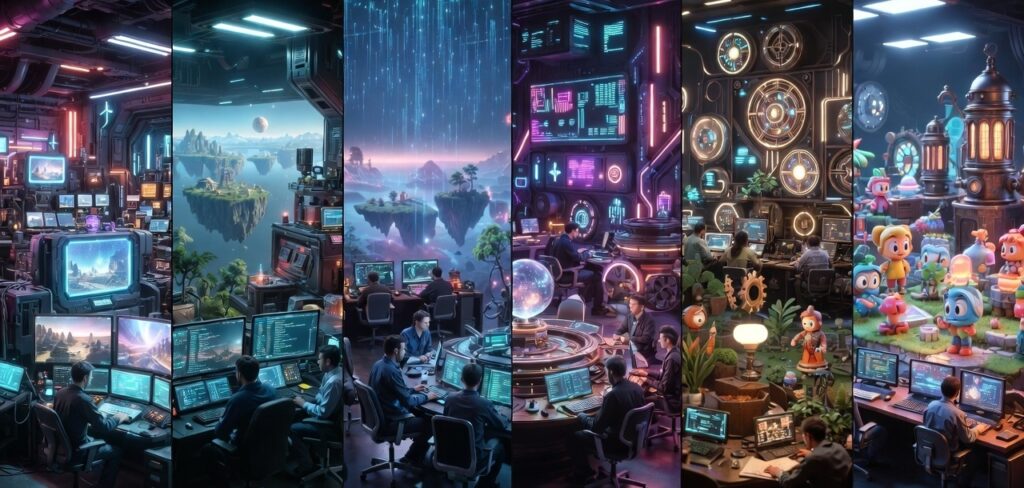
Bungie – Tiger Engine
Bungie abandoned UE years ago to develop Tiger Engine, giving them flexibility for complex online systems.
CD Projekt Red – REDengine + UE5 experiments
While CD Projekt experimented with UE5 tools, they still rely on REDengine for R&D and complex internal processes, preferring a mix of proprietary and external tech.
IO Interactive – Glacier Engine
Creators of Hitman and Project 007 insist that off-the-shelf engines can’t provide the fine-grained control their games require.
Larian Studios
After Baldur’s Gate 3, Larian stopped relying on third-party tech. “We don’t want to be dependent on anyone,” says Sven Vinke.
Ironmace – Dark and Darker
Abandoned Unreal due to legal constraints and limitations, building a proprietary engine instead.
Kojima Productions – Decima Engine
Hideo Kojima refuses to use Unreal, choosing Decima Engine for full control over every aspect of production.
3️⃣ Key Takeaways
The more experienced a studio, the less it needs Unreal Engine. UE5 is not the “future of AAA”; it’s a tool for those who cannot afford their own engine.
AAA veterans move away from UE5 to:
- Optimize performance
- Gain full control over technology
- Build an engine tailored to their game, not adapt their game to the engine
- Avoid breaking updates and licensing constraints
4️⃣ Final Thoughts
Is the Era of UE5 Ending for AAA?
Some of the most successful recent games — Baldur’s Gate 3, Helldivers 2, GTA 6, Spider-Man 2, Death Stranding — do not rely on UE5.
What we’re seeing now:
- UE5 is the engine for the masses
- Custom engines are the choice for true AAA veterans
The industry may be returning to bespoke technologies, proving that owning your engine is still the ultimate power move in AAA development.