
The “Dopamine Detox” Trend: Does It Actually Work or Is It Just Cope?

Every few months, Silicon Valley discovers mindfulness and gives it a scarier name.
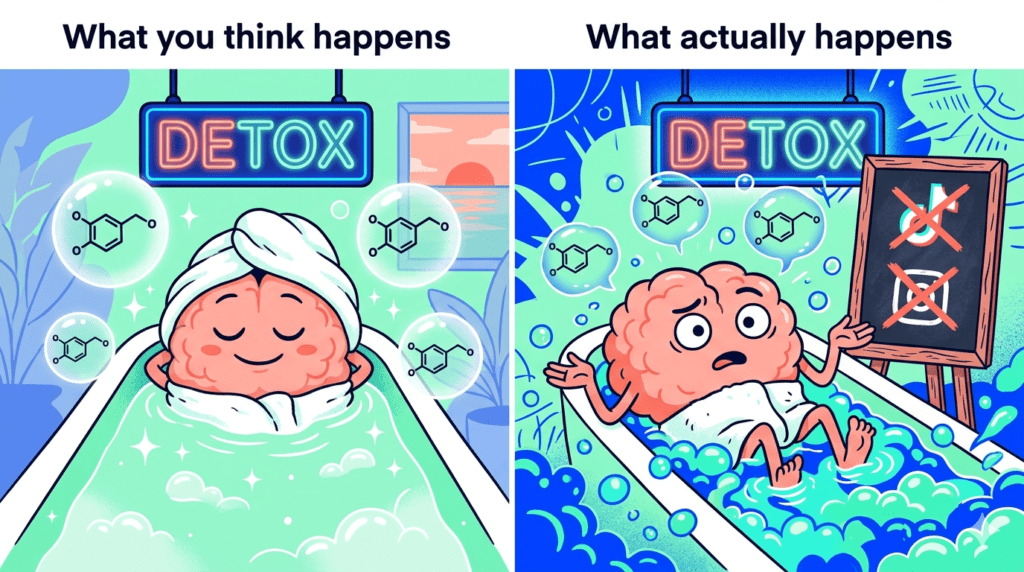
This time it’s “dopamine detox” — the idea that you can fast from your phone, social media, junk food, and pleasure in general, then emerge reborn with a clean reward system and the focus of a monk.
It sounds compelling. It’s also largely pseudoscience.
But that doesn’t mean doing it is entirely pointless. The truth is more interesting than either the hype or the debunking.
Where the Term Actually Came From
In 2019, California psychologist Dr. Cameron Sepah coined “dopamine fasting 2.0” in a LinkedIn post aimed at Silicon Valley types struggling with compulsive behavior.
His actual idea was a form of cognitive behavioral therapy (CBT) — a well-established, evidence-based approach to changing habits. The goal was to interrupt impulsive behaviors like emotional eating, excessive scrolling, and compulsive shopping by creating deliberate pauses between urge and action.
It was sensible. Not revolutionary — CBT has existed for decades — but sensible.
Then the internet got hold of it.
Best Supplements for Focus in 2026: What Science Actually Supports
The Digital Hallucination: How Social Media Algorithms Decide What You Believe Is Normal in 2026
What People Think It Is (vs. What It Actually Is)
Here’s where the wheels came off:
| What Sepah meant | What the internet made it |
|---|---|
| Reduce specific compulsive behaviors using CBT | “Detox” from dopamine itself |
| Take intentional breaks from problematic habits | Avoid all pleasure for 24–48 hours |
| Gradual, personalized behavior change | Extreme fasting from food, people, music, sunlight |
| Evidence-based habit intervention | Neuroscience-flavored wellness product |
Sepah himself later clarified the name was not meant to be taken literally. The internet took it very literally.
The Actual Science on Dopamine
Dopamine is not a drug you build tolerance to by living your life. It’s a neurotransmitter your brain needs — for movement, motivation, learning, memory, and mood.
Key facts:
- Dopamine levels don’t drop when you stop scrolling TikTok
- Blocking dopamine in rats made them less motivated to seek food — but they still enjoyed it when it arrived (BBC Science Focus, 2024)
- Levodopa, a drug that specifically boosts dopamine, doesn’t increase happiness or focus — which undermines the core claim that “more dopamine = better you”
- Ciara McCabe, Associate Professor of Neuroscience at University of Reading, calls the brain “resetting” via a short detox “nonsense”
- Harvard Health Publishing called dopamine fasting a “misunderstanding of science that spawns a maladaptive fad”
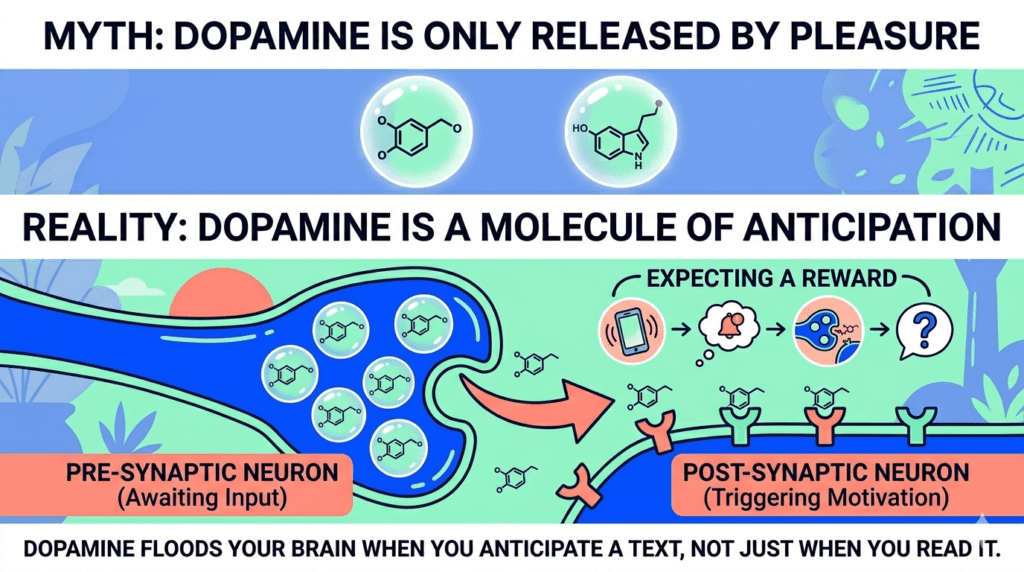
The fundamental premise — that you can reset dopamine by avoiding stimulation the way you might clear a cache — doesn’t work that way in biology.
What Actually Does Happen When You Do It
Here’s the honest part: people who try dopamine detoxes often do feel better afterward. Why?
Not because dopamine reset. Because:
- You stopped compulsive behavior — scrolling, binge-watching, emotional eating — and your nervous system got a break from constant reaction mode
- You created space for reflection — noticing your own patterns is genuinely valuable
- You slept better — less blue light and stimulation before bed has actual, measured effects
- The placebo effect is real — believing you’re resetting creates behavioral change independent of any neurochemistry
A 2024 literature review in Cureus (PMC) found that people engaging in “dopamine-fasting-like” practices reported reduced impulsive behavior and better focus. The authors also noted that the benefit had nothing to do with dopamine levels changing — it came from behavioral interruption.
The practice works. The explanation for why it works is wrong.
When It Goes Too Far
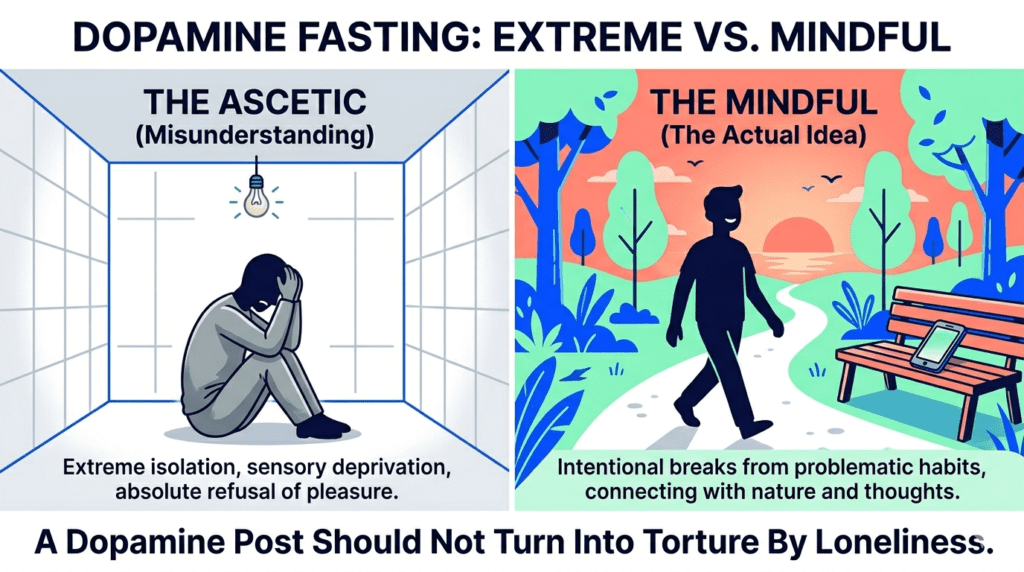
The extreme versions — isolation, food restriction, avoiding human contact — can actively harm you.
The same 2024 literature review flagged that intense dopamine fasting can cause anxiety, malnutrition, and loneliness.
There’s also a documented rebound effect: after extreme restriction, behaviors feel more compelling when they return, not less. You watch TikTok with more intensity after a 48-hour ban, not less.
What Actually Works Instead
If the goal is to feel less scattered, less reactive, and more in control of your attention — there are evidence-based approaches that are less dramatic:
- Behavioral reduction over abstinence — cutting problematic habits by 20–30% works better than cold turkey, which has an 89% failure rate within 2 weeks (behavioral research data)
- Environmental design — phone in another room improves cognitive performance by 26% and reduces anxiety by 18% (University of Texas research)
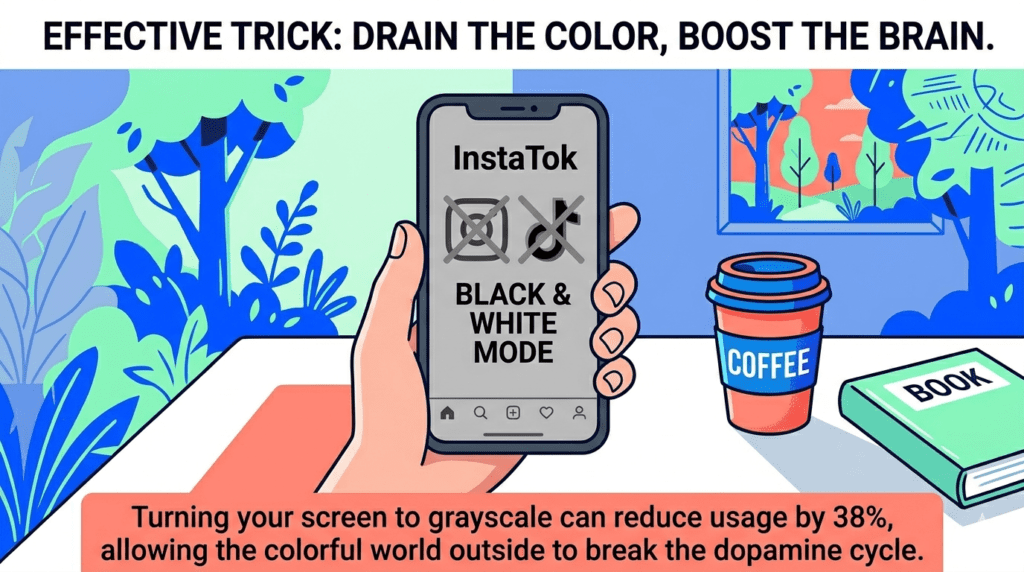
- Grayscale phone screen — reduces average usage by 38% by eliminating color-triggered dopamine responses
- Positive replacement — tracking what you gain (books read, conversations had, hours outside) rather than what you restrict increases habit longevity by 91% vs. restriction-only approaches
- Exercise — provides natural dopamine release without variable-reward feedback loops; February 2025 research shows it can normalize dopamine function in internet addiction patients
CBT with a therapist is the most evidence-backed version of everything “dopamine detox” promises. It’s just less photogenic as content.
Final Thoughts
Is dopamine detox real science? No. You cannot detox from a neurotransmitter. The name is misleading and the neurochemical explanation is wrong.
Does taking a break from compulsive behaviors help? Yes — genuinely, measurably. But it works through behavioral psychology, not brain chemistry.
Is it cope? Partly. The extreme version — 48-hour isolation with no food, no friends, no music — is cope dressed up in science vocabulary. The moderate version — deliberately stepping away from habits that are eating your attention — is just… mindfulness. Which has decades of research behind it.
The trend isn’t useless. It’s just been given the wrong name, the wrong explanation, and — in its extreme forms — the wrong execution.
If you want to feel less overstimulated: put your phone in another room, go outside, and stop expecting a quick fix to a slow-building habit problem.
That’s not as shareable. But it’s what the science actually says.