
“The Frozen Mind”: The Brutal Neuroscience of Why You Can’t Start (Even When You Want To) in 2026

The Great Misconception: Why It’s Not About Time Management
By mid-2026, clinical psychology has officially decoupled procrastination from laziness. We now define it as a failure of emotional regulation, not a lack of discipline. When you look at a daunting task—be it a complex 2026 coding project or a high-stakes financial report—your brain doesn’t see a “to-do” list; it sees a threat. Specifically, your amygdala (the brain’s emotional smoke detector) perceives the task as a source of potential failure, boredom, or anxiety. To protect you, the brain triggers a microscopic “fight-or-flight” response, and since you can’t fight the spreadsheet, you flee to the nearest source of dopamine: your social media feed.
The Battleground: Limbic System vs. Prefrontal Cortex
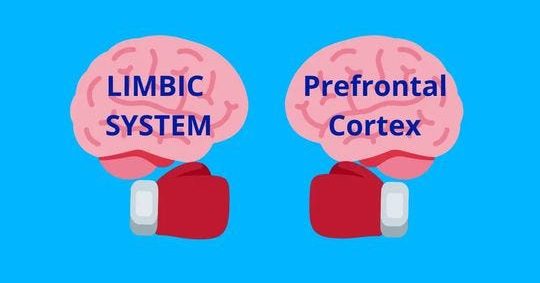
To understand procrastination in 2026, you have to visualize the internal war happening inside your skull. This is a struggle between two primary players:
- The Limbic System (The Instant Gratification Monkey): This is one of the oldest parts of the human brain. It is fast, intuitive, and focused entirely on the present. It wants pleasure now and safety now. It sees no value in a “better future” if it means “uncomfortable present.”
- The Prefrontal Cortex (The Wise Architect): This is the newer, evolved part of the brain that handles planning, logic, and long-term goals. It knows that finishing the project today means a stress-free weekend.
The problem? The Prefrontal Cortex is easily exhausted. In our 2026 environment, where we are bombarded by “Decision Fatigue” from AI tools and endless digital choices, the Prefrontal Cortex loses its grip by 2 PM. Once it weakens, the Limbic System takes control, and “just five minutes of YouTube” turns into a three-hour spiral.
Best Supplements for Focus in 2026: What Science Actually Supports
The Digital Hallucination: How Social Media Algorithms Decide What You Believe Is Normal in 2026
Why 2026 Has Made Procrastination More Dangerous
We are living in an era of “Optimized Temptation.” In 2024, distractions were distracting. In 2026, they are surgically precise.
- AI-Driven Feedback Loops: Short-form video platforms now use real-time biometric feedback (via your 2026 smartwatch or eye-tracking) to show you content that specifically counters the type of stress you are feeling. If you are procrastinating due to anxiety, the algorithm shows you “calming” but addictive content.
- The “Productivity Paradox”: We have so many tools designed to help us start (AI summarizers, auto-schedulers) that we now procrastinate by “preparing to work.” We spend 4 hours tweaking our 2026 workspace settings instead of doing the actual 20 minutes of deep work. This is known as Productive Procrastination, and it is the most insidious form of the condition.
The “Deep Reset” Protocol: How to Thaw the Frozen Mind
If the problem is emotional regulation, the solution cannot be a better calendar. It must be a neurological intervention. Here is how experts in 2026 suggest “paying back” your focus debt:
1. Lower the “Activation Energy”
Your brain freezes because the task looks like a giant boulder. Your goal is to make the first step so ridiculously small that the amygdala doesn’t recognize it as a threat. Instead of “Write 2,000 words,” the goal is “Open the document and write one sentence.” This bypasses the fight-or-flight response.
2. Tactical Boredom (The Stimulus Fast)
In 2026, our baseline dopamine levels are too high. To cure procrastination, you must embrace the “Dead Zone.” This means sitting for 10 minutes with absolutely no stimulation—no phone, no music, no AI. When the alternative is doing nothing, your Limbic System will eventually find even a difficult task “interesting” by comparison.
3. Forgiveness as a Performance Tool
Self-criticism is fuel for procrastination. When you beat yourself up for “wasting the morning,” you increase your stress levels. Increased stress makes the task look even more threatening, leading to more procrastination. In 2026, studies show that students and professionals who practice self-forgiveness are 40% more likely to start their next task on time.
The Biological Cost of Chronic Delay
Procrastination isn’t just a career killer; it’s a health hazard. By 2026, we have clear evidence linking chronic procrastination to high cortisol levels, cardiovascular strain, and weakened immune systems. When you “put it off,” you aren’t removing the stress; you are simply stretching it out over a longer period. You are forcing your body to stay in a state of low-level “threat alert” for days or weeks instead of a high-level “focus burst” for a few hours.
Final Thoughts: Reclaiming Your Agency
In the 2026 economy, Focus is the New Gold. The ability to move from “intent” to “action” without getting stuck in the emotional mud of the limbic system is the ultimate competitive advantage. Procrastination is a signal that you are afraid—of failure, of judgment, or of the effort required. Acknowledge the fear, lower the bar for starting, and stop waiting for “the right mood.” The mood follows the action; the action never waits for the mood.