
“The Innovation Gap”: 7 Brilliant Game Mechanics Every Developer Should Steal Right Now

The 2026 Reality: Systemic Depth vs. The Visual Plateau
In 2026, we have reached “Peak Fidelity.” When every game looks photorealistic, graphics stop being a competitive advantage. The real battlefield for modern game development has shifted to Systemic Depth—how the game world feels, reacts, and respects the player’s intelligence.
While AAA giants spend $300M on motion-captured eyebrows, the most successful titles this year are those that “steal” proven, yet criminally underutilized mechanics to create emergent, unscripted joy. Here is the definitive list of mechanics that shouldn’t just be admired—they should be mandatory in your next project.
1. Diegetic UI: Immersion Over Instruction
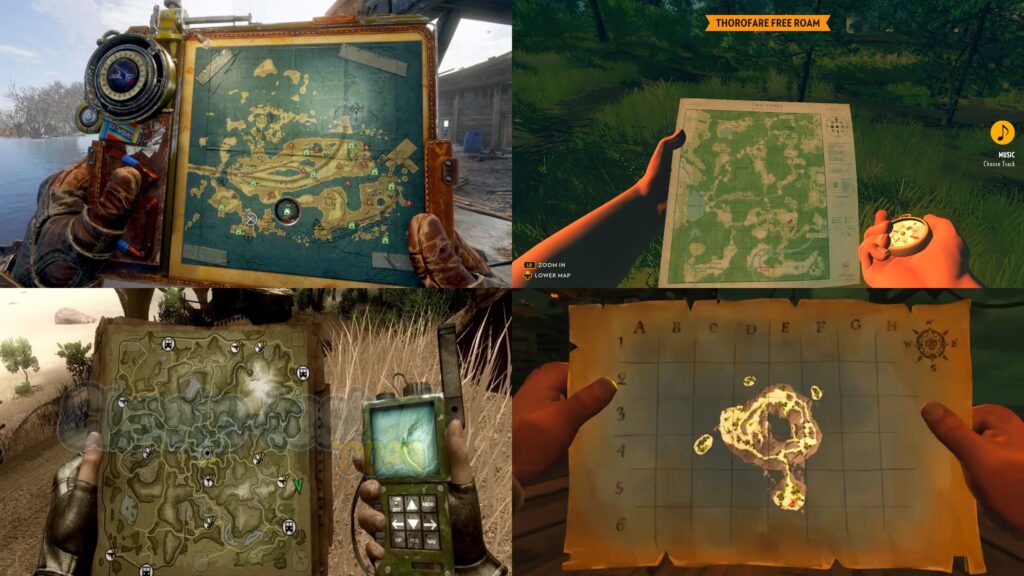
Seen in: Metro Exodus, STALKER 2: Heart of Chornobyl, Dead Space.
Diegetic UI treats information as a physical object within the game world rather than a 2D overlay.
- The Logic: Every time a player looks at a floating mini-map, the immersion breaks. In STALKER 2, checking your radiation levels on a physical Geiger counter or pulling out a weathered PDA keeps the player “grounded” in the zone.
- The Steal: Move status indicators into the environment. Use muzzle flashes to indicate low ammo, or have the character physically check their watch for the time of day instead of an on-screen clock.
RTX 5080 vs RX 9070 XT vs Arc B580: Which GPU Should You Actually Buy in 2026?
Top 10 Asian Games That Conquered the World
2. Knowledge-Based Progression
Seen in: Outer Wilds, Tunic, Baldur’s Gate 3.
Traditional progression uses arbitrary XP bars. Knowledge-based progression uses the player’s actual brain.
- The Logic: In Outer Wilds, the character never gets “stronger,” but the player learns how the universe works. In Baldur’s Gate 3, realizing that “Grease + Fire = Explosion” is a level-up that no skill tree can match.
- The Steal: Design “soft gates.” Instead of requiring a “Level 10 Keycard,” require the player to observe a patrol pattern or understand a physical law of your world to progress. It respects the player’s IQ.
3. Procedural Rivalries (NPC Memory)
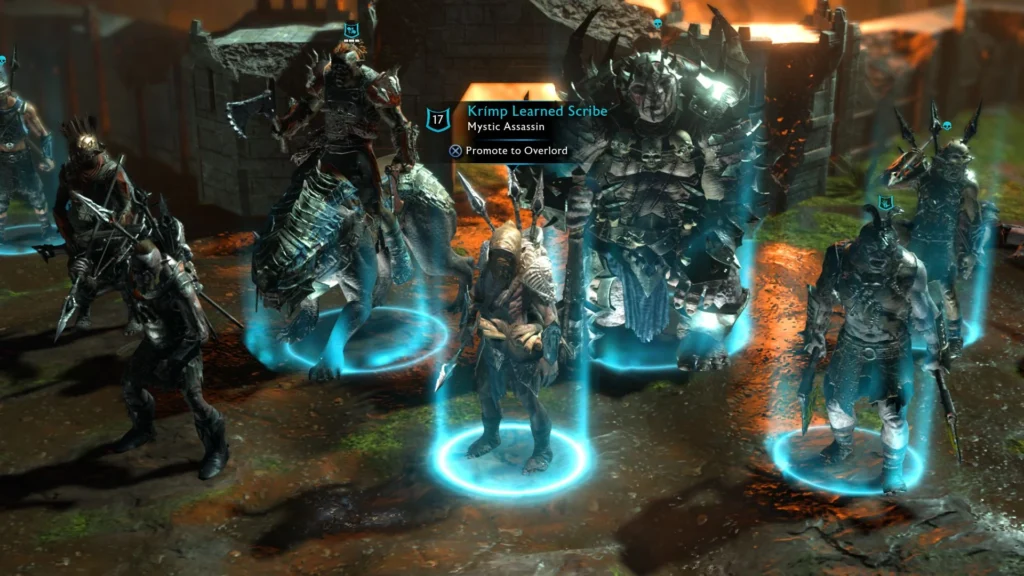
Seen in: Middle-earth: Shadow of War, Helldivers 2.
You don’t need a patented “Nemesis System” to give your enemies a personality.
- The Logic: When a generic bug in Helldivers 2 survives a stratagem and evolves, or an NPC remembers that you spared their life, it creates a personal narrative. Players don’t remember scripted bosses; they remember the one grunt who ruined their 20-minute run.
- The Steal: Implement “Grudge Logic.” If an NPC survives an encounter, bring them back later with a physical scar and dialogue that references your previous fight.
The Innovation Matrix: Why These Mechanics Matter
- DIEGETIC UI
- Impact: Removes “Digital Noise” and increases player focus.
- Best For: Horror, Survival, Stealth.
- KNOWLEDGE GATES
- Impact: Rewards player curiosity and makes exploration feel earned.
- Best For: Metroidvanias, Immersive Sims.
- PROCEDURAL GRUDGES
- Impact: Creates infinite, unscripted storytelling for social media.
- Best For: Open World, Roguelikes.
- CHEMISTRY ENGINES
- Impact: Encourages creative problem-solving and “emergent” play.
- Best For: Sandboxes, Tactical RPGs.
- ACTIVE DOWNTIME
- Impact: Keeps the player in the “Flow State” during maintenance.
- Best For: Shooters, Action-Adventure.
4. Active Downtime (The Engagement Tax)
Seen in: Gears of War, Monster Hunter Wilds.
Most games treat “maintenance” (reloading, sharpening blades, healing) as a boring tax.
- The Logic: Monster Hunter Wilds turns weapon maintenance into a tactical choice. Finding the right window to sharpen your blade becomes as intense as the fight itself.
- The Steal: Don’t let the player “wait” for a bar to fill. Add a skill check to reloading or a “perfect timing” window for harvesting resources that grants a temporary boost.
5. Contextual Ping & Tactical Comms
Seen in: Apex Legends, Helldivers 2.
Communication shouldn’t require a microphone or a toxicity-filled voice chat.
- The Logic: A single contextual button that highlights an enemy, a supply drop, or a tactical retreat point allows for high-level strategy across language barriers.
- The Steal: Make “the Ping” a core part of your co-op loop. If a player marks an objective, have their character yell a specific line of dialogue to keep the immersion diegetic.
6. The Chemistry Engine (Rule-Based Physics)
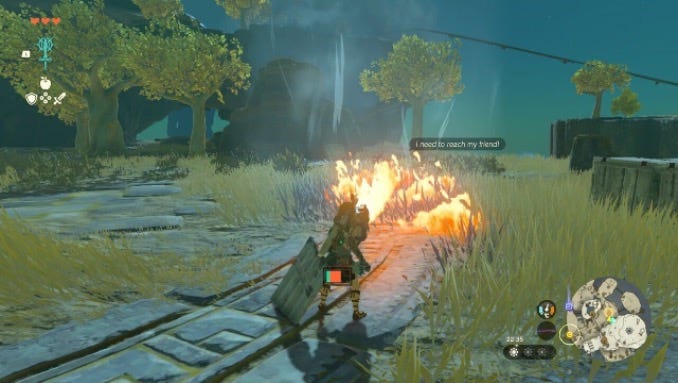
Seen in: The Legend of Zelda: Tears of the Kingdom, Dragon’s Dogma 2.
Stop scripting puzzles and start writing universal laws for your game world.
- The Logic: In Dragon’s Dogma 2, if you are covered in oil and hit with fire, you burn. If you are wet, you conduct lightning. These aren’t scripts; they are rules.
- The Steal: Define 3–4 elemental interactions and apply them to everything. Let the player use a rainstorm to safely cross an electric trap. When players “break” your game using your own rules, they love it.
7. Social Reactivity (The “Gossip” System)
Seen in: Kingdom Come: Deliverance II, Red Dead Redemption 2.
The world should treat you like the person you are choosing to be.
- The Logic: In Kingdom Come 2, if you haven’t washed in days and are covered in blood, NPCs will be terrified or refuse to speak with you. This turns roleplay into a mechanical necessity.
- The Steal: Link shop prices, quest availability, and guard aggression to the player’s visual appearance and recent actions.
The Corporate Blind Spot: Why AAA Ignores Innovation
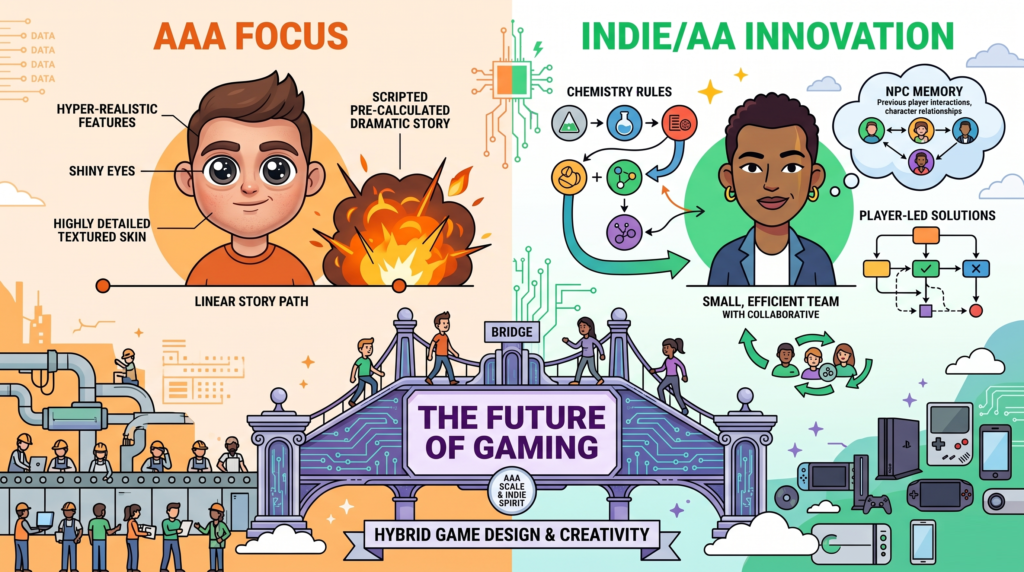
If these mechanics are so powerful, why are $300M games still filled with “follow the yellow line” missions?
- The QA Nightmare: Systemic games are incredibly expensive to test. Scripted events are easy to control; emergent physics are a “bug” factory.
- The “Casual” Fear: Shareholders believe that respecting the player’s intelligence is “too hard” for a mass audience. They prefer shiny graphics because they are easier to sell in a trailer.
- Visual Over Value: Graphics sell pre-orders; mechanics sell long-term legacies. Most AAA studios are incentivized to win the “Launch Week,” not the “Decade.”
Dev Action Checklist
- Delete 1 HUD Element: Can that health bar be a physical color change on the character’s armor?
- Add NPC Memory: Track just one specific thing about a player’s interaction with an NPC and reference it later.
- The Law of Two: Pick two elements (e.g., Water and Electricity) and make them interact consistently across your map.
- The “Dumb” Check: Can a player solve your main puzzle by being “too smart”? If so, reward it instead of patching it.
Final Thoughts: Don’t Build a Park; Build an Ecosystem
In 2026, the most valuable currency in gaming is Agency. Players are tired of being tourists in a “theme park” world where every interaction is pre-written. They want to be agents in a reactive ecosystem that respects their choices and their intelligence.
By “stealing” these underrated mechanics, you aren’t just following a trend—you are filling the void that AAA studios are too afraid to touch. Don’t build a game that people play once and forget; build a system that people live in and talk about for years.