
How to Pick a Mini-LED Monitor in 2026: Top-5 Best Panels for HDR and Bright Environments

Mini-LED displays have firmly established their dominance as the undisputed brightness kings of the monitor industry. While OLED captures headlines for dark-room gaming, it physically cannot keep pace in daylight-flooded spaces, office environments with heavy ambient glare, or grueling 12-hour workflows filled with static toolbars, financial charts, and code structures.
As Ross Young, CEO of Display Supply Chain Consultants, points out, physical panel layout, backlight tuning, and local dimming zone algorithms dictate real-world display quality far more than simple resolution specs. In 2026, Mini-LED stands as the mature, indestructible alternative to organic matrices. With sustained full-screen brightness reaching up to an incredible 2,000 nits, zero burn-in risk, and high dimming zone counts, these panels deliver premium HDR mastering performance built to last a decade.
If you are looking for blinding HDR performance and unmatched reliability in bright rooms, here are the top 5 Mini-LED monitors dominating the market right now.
Quick Comparison Table
| Model | Specs Summary | Panel Tech | Dimming Zones | Price Tier |
| AOC Q27G3XMN / Q27G40XMN | 27″, 1440p, VA, 180Hz | Mini-LED Fast VA | 336 Zones | ~$280–$330 |
| BenQ MOBIUZ EX321UX | 32″, 4K, IPS, 144Hz | Mini-LED Fast IPS | 1,152 Zones | ~$990–$1,150 |
| ASUS ROG Swift PG32UQX | 32″, 4K, IPS, 144Hz | Mini-LED Quantum Dot | 1,152 Zones | ~$1650–$1,100 |
| Samsung Odyssey Neo G8 | 32″, 4K, VA, 240Hz | Mini-LED Quantum VA | 1,196 Zones | ~$750–$1,000 |
| Acer Nitro XV275K | 27″, 4K, IPS, 160Hz | Mini-LED Fast IPS | 576 Zones | ~$550–$650 |
1. The Budget Mini-LED Titan: AOC Q27G3XMN ( / Q27G40XMN)
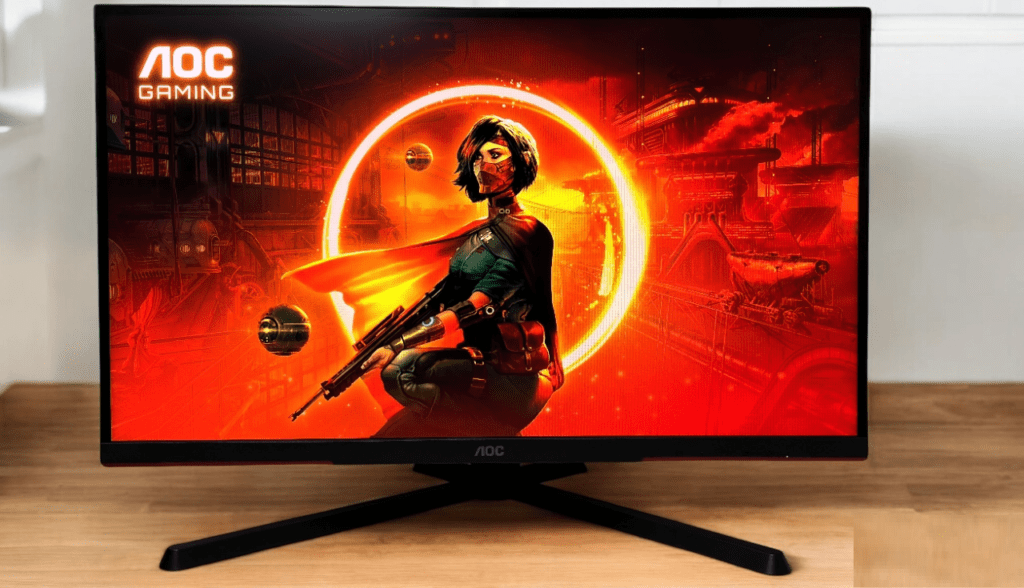
Best For: Budget-conscious buyers demanding legitimate HDR gaming, high-contrast media consumption, and mixed daily productivity.
Price Range: $280–$330 | Panel Type: Mini-LED Fast VA | Peak Brightness: 1,000+ nits
Pros:
- Unprecedented HDR value: Breaks the traditional barrier by delivering legitimate full-array local dimming under $350.
- Deep native VA contrast: Inherently blocks light better than standard IPS matrices, keeping dark scenes ink-black even with active backlight zones.
- Impressive highlight punch: Pushes past 1,000 nits in small highlight windows, providing a true transformative HDR gaming feel.
- Immune to image wear: Inorganic layout handles static desktop layouts, video games, and web browsing all day with zero degradation anxiety.
Cons:
- Lower dimming zone count: 336 zones mean visible halo blooming around bright mouse cursors or subtitles on completely black backgrounds.
- VA viewing angles: Shifting off-center causes a minor color and contrast variance compared to wider IPS options.
Verdict: The absolute budget marvel of the era. It proves that you do not need to spend thousands of dollars to escape flat, washed-out SDR monitors and step into real HDR tracking.
2. The Ultimate 4K Entertainment Hub: BenQ MOBIUZ EX321UX
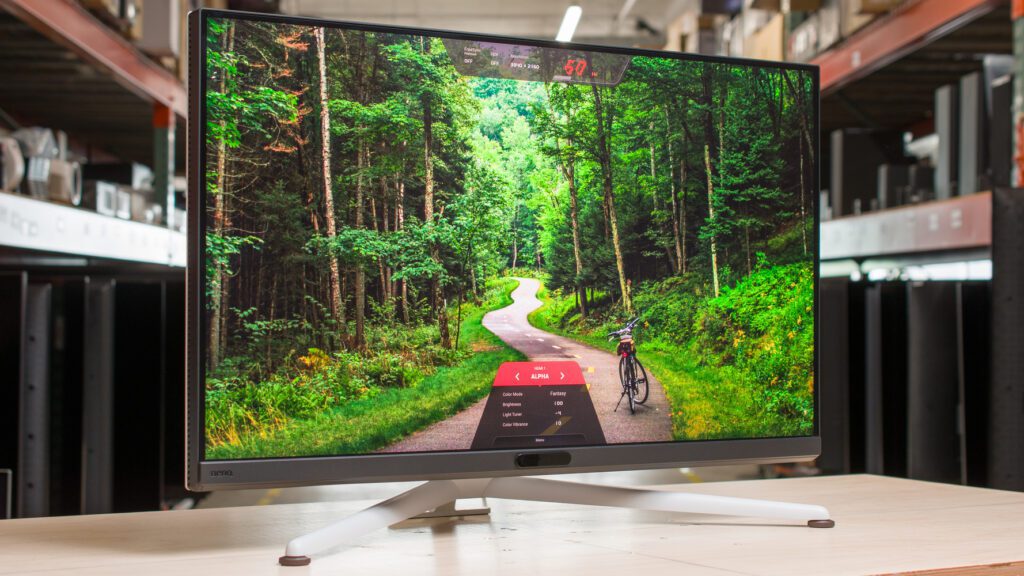
Best For: Mixed media consumers, console and PC gamers, and creators who require great colors alongside blinding brightness headroom.
Price Range: $990–$1,150 | Dimming Zones: 1,152 Zones | Resolution: 4K UHD (3840×2160)
Pros:
- Elite zone density: 1,152 structural dimming zones drastically minimize blooming paths, turning dark cinematic space titles into breathtaking experiences.
- Premium IPS color space: Fast IPS panel structure provides stellar color consistency across wide angles, covering 99% Adobe RGB and DCI-P3.
- Full-featured console companion: eARC audio return channel tracking and HDMI 2.1 inputs optimize layout mapping for PS5 Pro and next-gen PC setups.
- Blinding sustained brightness: Locks down incredible full-screen illumination without aggressive automatic dimming limiters getting in your way.
Cons:
- Premium investment tier: Commands a major price hike over traditional mainstream screens.
- Slightly higher input response: While fast at 144Hz, it trailing steps behind sub-0.1ms OLED layouts for competitive esports tracking.
Verdict: The definitive 32″ 4K premium standard. It manages blooming better than almost any other IPS-based Mini-LED monitor on the market, offering a gorgeous, indestructible hybrid creative and entertainment canvas.
Best AI Tools for Students in 2026 That Professors Haven’t Banned Yet
Why Every Gadget Looks the Same in 2025 — and Why That’s a Problem
3. The Pro Studio Standard: ASUS ROG Swift PG32UQX
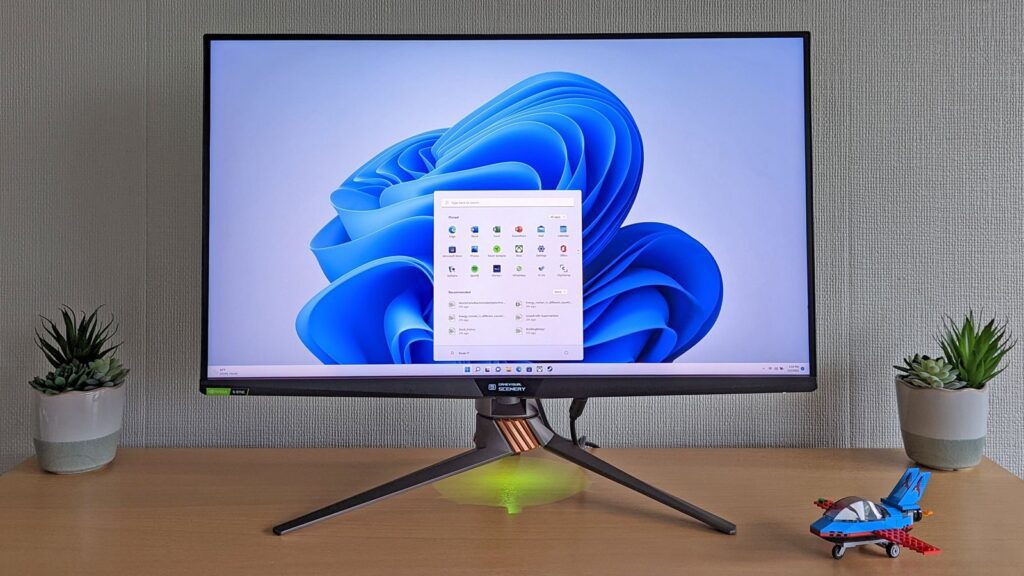
Best For: HDR mastering, professional video editors, high-tier content creators, and luxury workstations.
Price Range: $650–$1,100 | Peak Brightness: 1,400–2,000 nits | Certification: VESA DisplayHDR 1400
Pros:
- Reference-grade mastering platform: Industrial-grade accuracy makes it the absolute target choice for professional HDR color-critical workflows.
- Extreme luminous headroom: Sustains over 1,400 nits continuously, reaching up to 2,000 nits in dynamic windows, leaving OLED alternatives in the dust.
- Quantum Dot color layer: Unlocks massive color volumes, producing intensely saturated reds and greens required for modern cinema pipelines.
- Zero retention lifespan: Built to run fixed studio application timelines 10+ hours a day with zero cell degradation risk.
Cons:
- Luxury pricing tier: Heavy financial entry cost limits accessibility to high-tier professional studios and enthusiast budgets.
- 60Hz limitation on older ports: Requires specific pipeline configurations to leverage full speed, lacking the latest DisplayPort 2.1 layout protocols.
Verdict: An engineering masterclass for studio production. While overkill for casual gaming, it remains the reference ruler by which HDR accuracy and peak brightness volume are measured in 2026.
4. The Simulator King: Samsung Odyssey Neo G8
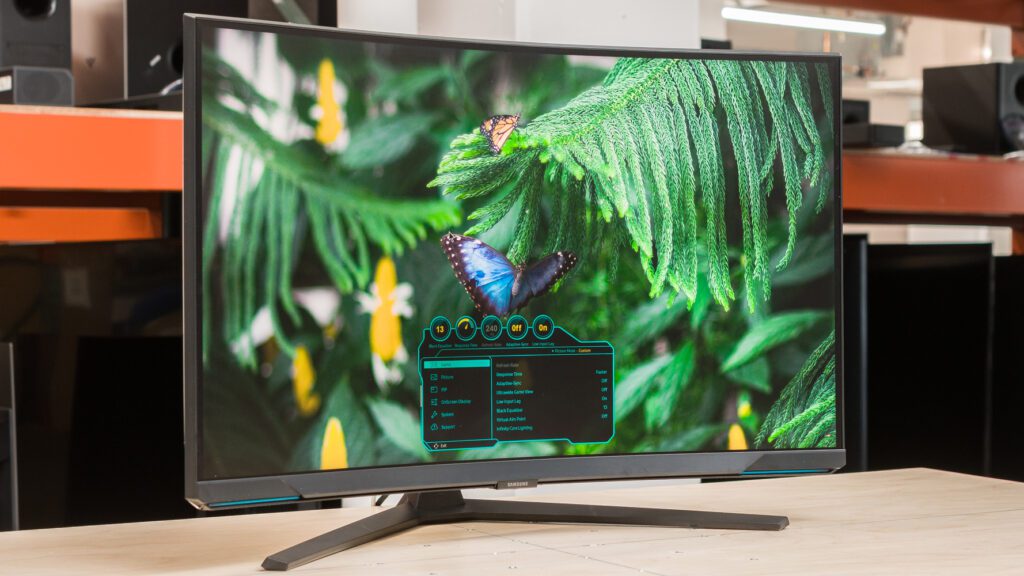
Best For: Racing simulators, flight setups, immersion-heavy single-player gamers, and rooms with extreme natural daylight.
Price Range: $750–$1,000 | Refresh Rate: 240Hz | Curve: Aggressive 1000R
Pros:
- Hyper-immersive 1000R curvature: Wraps the entire 32-inch 4K frame tightly to your field of view, matching internal vehicle cockpits beautifully.
- Massive 1,196-zone control: Deeply integrated matrix architecture paired with Samsung’s Quantum Matrix engine limits halo artifacts efficiently.
- Lightning-fast 240Hz engine: Delivers hyper-fluid movement tracking rarely found on traditional, heavy Mini-LED models.
- Outstanding dark-room contrast: The combined force of high-tier VA native contrast and over a thousand dimming zones achieves near-OLED inkiness.
Cons:
- Aggressive curve profile: The heavy 1000R arc is fantastic for interactive entertainment but warps horizontal lines, making it poorly suited for blueprint modeling or CAD work.
- Viewing angle falloff: Colors wash out quickly if you step out of the central sweet spot zone.
Verdict: The ultimate simulation monitor. It delivers blistering brightness and blinding sun reflections right to your eyes, wrapping your peripheral view in an indestructible high-refresh cage.
5. The Balanced 4K Value Entry: Acer Nitro XV275K
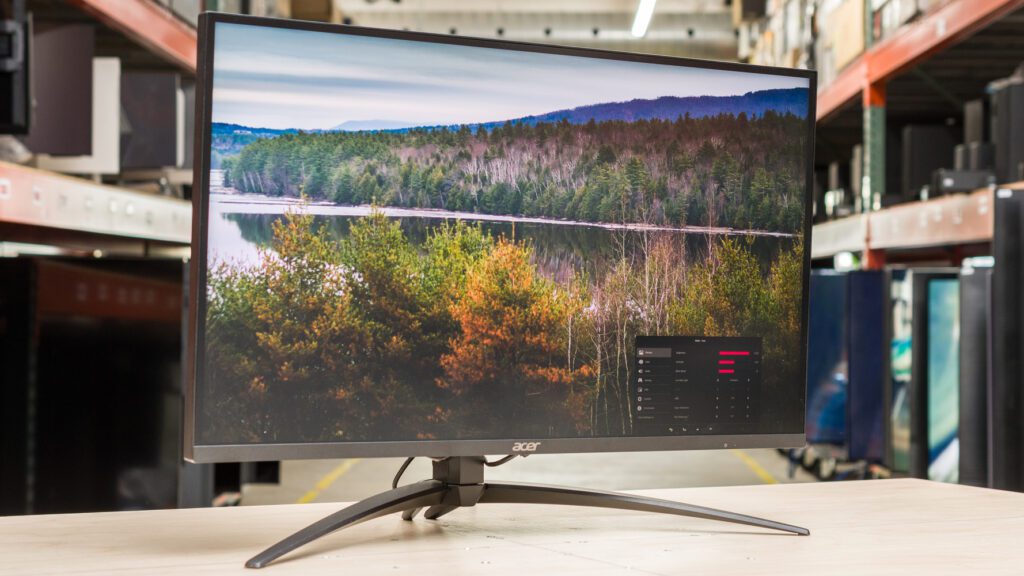
Best For: Mainstream console players (PS5/Xbox Series X), budget-conscious digital artists, and daily high-resolution productivity.
Price Range: $550–$650 | Panel Technology: Fast IPS | Dimming Zones: 576 Zones
Pros:
- Affordable 4K entry tier: Brings crisp 4K pixel mapping and a fluid 160Hz panel down to a highly competitive intermediate price point.
- Balanced 576-zone configuration: Substantially cleaner dark-room tracking and higher contrast depth than standard edge-lit or basic IPS screens.
- Excellent wide-view accuracy: Wide IPS angles hold color values solid, allowing multiple people to watch movies or look at creative layouts together.
- Modern connectivity options: Fully loaded with high-speed Type-C ports to charge laptops and feed video through a single clean cord interface.
Cons:
- Moderate blooming presence: Complex starfields or white subtitles over dark backgrounds will still show slight ambient lighting glow paths.
- Basic industrial housing: Simple, plasticky outer build compared to premium ROG or Alienware monitor shells.
Verdict: The smart value bridge. It offers a flawless balance for the user who wants beautiful 4K creative clarity for their day job and authentic, bright HDR performance for a console setup at night without breaking the bank.
The Zone Count Reality for Mini-LED
When navigating the market for a Mini-LED display, remember this golden rule: The zone count is the critical spec.
- Under 500 Zones: Tends to suffer from distracting, large blooming halos around text and bright interface elements. They are excellent for bright room visibility but struggle in dark rooms.
- 1,000+ Zones: The sweet spot tier. Halos are minimized to thin, tight borders that are easily ignored, providing close-to-OLED black depths while preserving spectacular, continuous full-screen brightness levels.
Panel Tech Decision Matrix (Mini-LED Focus)
| Specific Workspace Scenario | Primary Recommendation | The Structural Reason Why |
| Ultra-Bright Daylight Office & Financial Trading | Samsung Odyssey Neo G8 / BenQ Array | Overpowers extreme ambient window glare with up to 2,000 nits while staying immune to static ticker burn-in. |
| Professional HDR Color Grading & Video Production | ASUS ROG Swift PG32UQX | Studio-grade calibration, huge color volume scaling, and pristine VESA DisplayHDR 1400 tracking. |
| High-Density 4K Gaming on Budget (PC + PS5/Xbox) | Acer Nitro XV275K | Low-cost entry to 4K Mini-LED space with reliable IPS viewing consistency. |
| Maximum HDR Experience for Under $350 | AOC Q27G3XMN / Q27G40XMN | Deep native VA contrast combined with a functional full-array local dimming engine. |