
Studios That Went Bankrupt After One Game

A long-form investigation into studios that died after a single major project — backed by real facts and verified history.
Game development is often romanticized as a creative craft, but behind every celebrated launch lies a brutal economic reality. For many studios, the difference between survival and death rests on a single game — one hit, one failure, one lawsuit, or one disastrous business decision.
This article explores five studios that truly died, either through formal bankruptcy or complete corporate dissolution, after releasing or attempting a single large project. No myths, no exaggerations — only confirmed history, verified through reputable publications such as The Verge, Kotaku, Eurogamer, Polygon, PC Gamer, and official bankruptcy filings.
1. 38 Studios — The MMO Dream That Devoured an Entire Company
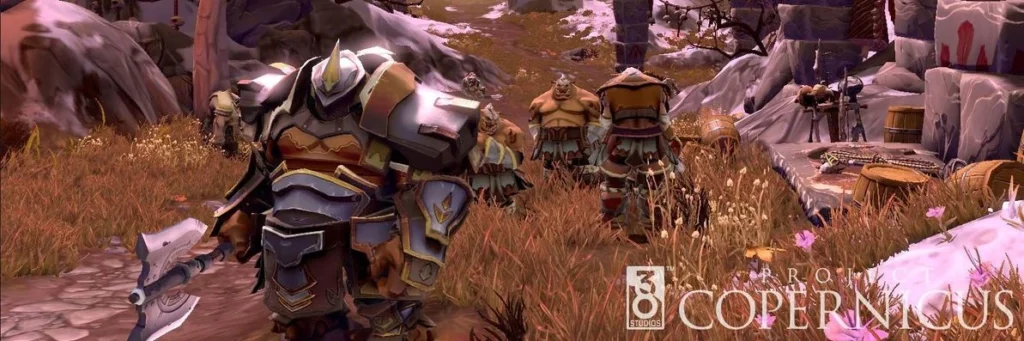
Key Project: Kingdoms of Amalur: Reckoning (2012)
Founded: 2006
Died: 2012 (bankruptcy)
The Rise
38 Studios was founded by baseball legend Curt Schilling with an ambitious dream: to create a massive fantasy universe called “Project Copernicus” — a full-scale MMORPG intended to compete with World of Warcraft.
The company secured a $75 million loan guarantee from the state of Rhode Island, tied to job-creation requirements.
The One Game That Hit Stores — But Couldn’t Save Them
Before completing the MMO, the team released Kingdoms of Amalur: Reckoning — an action RPG meant to introduce players to the world of Copernicus and generate revenue.
KOA sold ~1.2 million copies, which was good, but not nearly enough.
EA stated KOA needed to sell at least 2 million to break even.
The Collapse
The MMO was nowhere near completion. Loan payments came due. Revenue from KOA wasn’t sufficient. Rhode Island declared the company in default, and 38 Studios laid off all 379 employees without warning.
On June 7, 2012, the company filed for Chapter 7 bankruptcy.
Cause of Death:
- Massive debt from the MMO
- Insufficient sales of KOA
- No additional funding
- Mismanagement and unrealistic scope
Verdict:
38 Studios is a textbook example of a company destroyed after releasing just one retail game, consumed by a far larger dream that never came to life.
Check Kingdoms of Amalur: Reckoning on: Steam
Best Games for Couples to Play Together in 2026: Co-op From Easy to Competitive
Top 10 Asian Games That Conquered the World
2. Human Head Studios — Rune II and the Strange Collapse That Followed
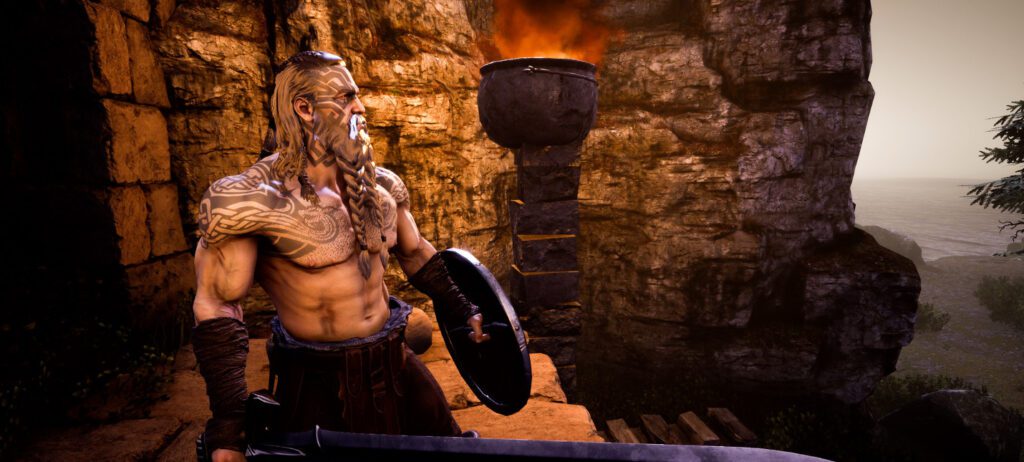
Key Project: Rune II (2019)
Founded: 1997
Died: 2019 (studio dissolved same day as release)
The Strange Timeline
Human Head Studios had a long history (the original Rune, Prey 2006), but their final act is so bizarre it turned into a mini-scandal.
On November 12, 2019, Human Head released Rune II through the publisher Ragnarok Game LLC.
That very same day, Human Head announced the studio was shutting down and that the entire team would reform under Bethesda as a new entity, Roundhouse Studios.
The Lawsuit
Ragnarok Game filed a lawsuit claiming:
- Human Head abandoned the game immediately after launch
- The studio refused to provide source code and assets
- The team had secretly planned the transition to Bethesda
- Rune II was left in an unpatchable state
The lawsuit contains exact dates proving the shutdown happened hours after Rune II went live.
Cause of Death:
- Financial instability
- Bethesda acquisition of the team
- Legal conflict with publisher
- Poor launch reception
Verdict:
Human Head didn’t “go bankrupt” in a legal sense — but the company died completely, replaced the same day by a Bethesda-owned studio.
Rune II was effectively the last straw that ended the original company’s existence.
3. Yager Productions GmbH — Dead Island 2 Kills a Studio Before the Game Even Releases
Key Project: Dead Island 2 (cancelled version)
Founded: 2011 (subsidiary)
Died: 2015 (insolvency)
The Setup
The parent studio Yager Development (creators of Spec Ops: The Line) formed a special subsidiary, Yager Productions GmbH, exclusively to work on Dead Island 2 under Deep Silver.
This was a common practice in Germany: each large project gets its own legal entity.
The Termination
In July 2015, Deep Silver abruptly cut ties with Yager and removed them from the project.
The team openly stated they had a “different vision” than the publisher.
Sources:
- GamesIndustry.biz: “Yager Productions files for insolvency…”
- Eurogamer: “Yager removed from Dead Island 2…”
- PC Gamer coverage of the breakup.
Insolvency
Just five weeks later, Yager Productions GmbH filed for insolvency (German equivalent of bankruptcy). The company’s entire purpose was the project, and without it, the subsidiary had no income or path forward.
Cause of Death:
- Losing the publishing contract
- No alternative funding
- Project cancellation
- Corporate structure that isolated risk into one studio
Verdict:
This is a rare example of a studio dying over a game that didn’t even launch.
4. Radical Entertainment — Prototype 2 and the End of a Veteran Studio
Key Project: Prototype 2 (2012)
Founded: 1991
Died: 2012 (mass closure and restructuring)
The Background
Radical Entertainment were industry veterans: Crash Tag Team Racing, The Hulk: Ultimate Destruction, the first Prototype.
But development costs soared, Activision became stricter with under-performing IPs, and Prototype 2 was supposed to be their breakthrough.
The Failure
Activision publicly admitted:
“Prototype 2 did not find a broad commercial audience.”
— Activision official statement (PC Gamer, 2012)
Sales were significantly below expectations. Development costs were high.
The Shutdown
Radical wasn’t technically “bankrupt,” but Activision eliminated almost the entire studio, firing most employees and turning the remainder into a “support team” without the ability to create their own IP.
Effectively, the studio ceased to exist as a real developer.
Sources:
- PC Gamer: “Activision lays off staff at Prototype developer Radical Entertainment.”
- Kotaku: “Prototype studio suffers massive layoffs.”
- IGN coverage of the restructuring.
Cause of Death:
- Underperforming Prototype 2
- Activision’s cost-cutting strategy
- No viable alternative projects
Verdict:
Radical wasn’t legally bankrupt, but economically and creatively the studio died immediately after the failure of one major game.
5. Silicon Knights — One Game, One Lawsuit, and a Total Corporate Meltdown
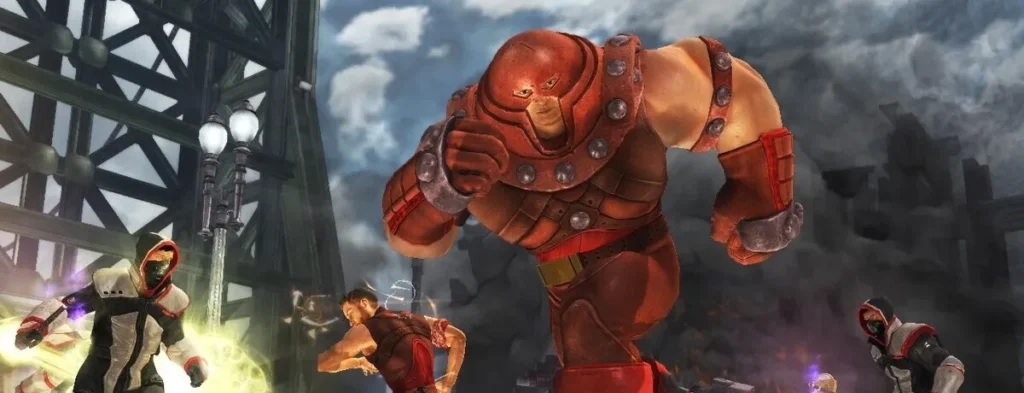
Key Project: X-Men: Destiny (2011)
Founded: 1992
Died: 2014 (bankruptcy and asset liquidation)
The Collapse Begins
Silicon Knights was known for Eternal Darkness and Metal Gear Solid: Twin Snakes. But troubles began during the development of Too Human and escalated dramatically with X-Men: Destiny.
The game was critically panned and commercially weak.
But the real death blow came from a lawsuit against Silicon Knights, filed by Epic Games, accusing them of:
- Misusing Unreal Engine 3
- Stealing code
- Slandering Epic publicly
In 2012, the court ruled against Silicon Knights and ordered:
- $4.45 million in damages
- Immediate destruction of all copies of Too Human and X-Men: Destiny
- Destruction of all infringing code and assets
Sources:
- Eurogamer: “Silicon Knights ordered to destroy all unsold games.”
- Kotaku: “Epic wins lawsuit against Silicon Knights.”
- Official court judgment (Epic Games, Inc. v. Silicon Knights, Inc.)
The Final Years
After the lawsuit, the studio could not recover financially.
In 2014, Silicon Knights quietly filed for bankruptcy and closed permanently.
Cause of Death:
- Commercial failure of X-Men: Destiny
- Losing the lawsuit to Epic
- Massive legal penalties
- Forced destruction of game inventory and engine code
Verdict:
This is one of the closest real-world examples of “one bad game + one bad lawsuit = total death.”
Final Thoughts — What Actually Kills Studios?
The deaths of these studios share a pattern:
✔ Overambitious projects
38 Studios and Yager gambled everything on one huge project.
✔ Publisher conflict
Human Head and Yager died partly because a single publishing deal collapsed.
✔ One commercial failure too many
Radical died because Prototype 2 couldn’t justify its budget.
✔ Legal disaster
Silicon Knights is the definitive case of how a lawsuit can erase a studio.
✔ A single point of financial failure
All five studios depended entirely on one game or one contract.
Game development is a high-risk industry; for many studios, one misstep is fatal.
These stories prove that even experienced teams can collapse overnight when budgets spiral, publishers walk away, or the legal system intervenes.