
The Sovereign Holder’s Manifesto: Wallets, Tools, and the Biology of Crypto Success

The Great Filtering
The crypto market is a brutal machine designed to separate emotional capital from its owners. Every bull run, millions enter the space; every bear market, 90% are wiped out. The survivors aren’t the luckiest—they are the most systematic.
This isn’t about “getting rich quick.” This is about the professionalization of your digital sovereignty. If you want to move from being a “retail trader” to a “serious holder,” you need to upgrade your stack, your security, and your biology.
1. The Architecture of Custody: Beyond “Not Your Keys”
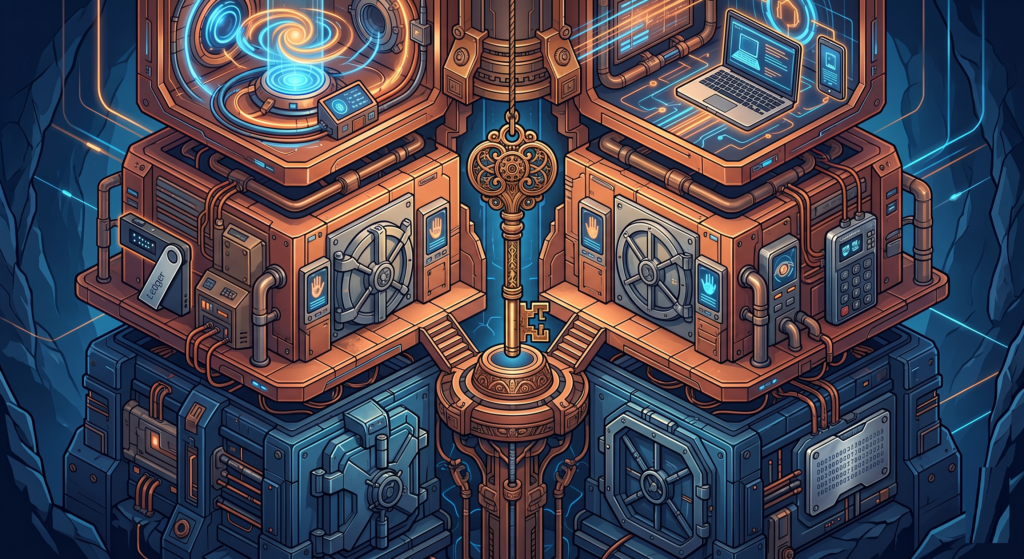
Beginners think a wallet is just an app. Professionals treat it as a tiered security clearance system.
Layer 1: The Deep Cold Storage (The “Fort Knox”)
This is where 80% of your net worth lives.
- The Hardware: Ledger or Trezor are the baseline, but “maximalists” move toward air-gapped solutions like Foundation Passport or Coldcard.
- The Protocol: This device never touches a smart contract. It only sends and receives. You don’t “connect” this to Uniswap.
- The Recovery: Serious holders use Steel Plates (like Cryptosteel) for their seed phrases. Paper burns; flood destroys it. Stainless steel survives both.
Layer 2: The “DeFi” Hot Cell (The “Workshop”)
For farming, staking, and minting.
- The Tool: Rabby Wallet has effectively replaced MetaMask for pros. Why? It has a built-in “Security Simulation” that shows you exactly what a contract will do to your balance before you click sign. It alerts you if a site is a known scam or if the contract was created 2 hours ago.
| Wallet Type | Exposure Risk | Maintenance | Ideal Tool |
| Cold (Air-Gapped) | Zero | High (Physical) | Coldcard / Keystone |
| Warm (Hardware) | Low | Medium | Ledger / Trezor |
| Hot (Extension) | High | Low | Rabby / Phantom |
Uniswap vs Curve vs dYdX: How DeFi Exchanges Actually Compare in 2026
“The Invisible Ledger”: How Blockchain is Quietly Running the World Outside of Finance in 2026
2. The Invisible Tech Stack: On-Chain Intelligence
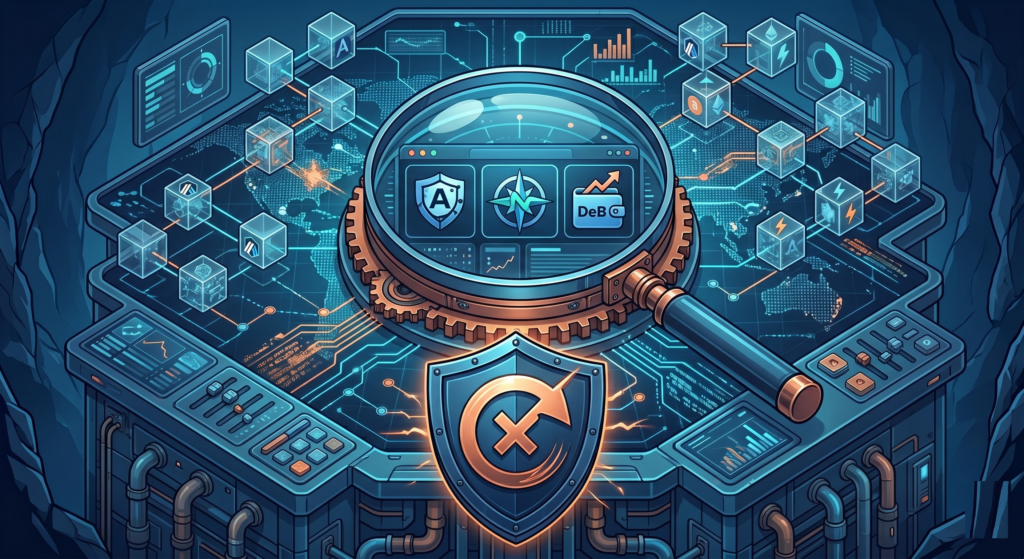
While the crowd follows “KOLs” (Key Opinion Leaders) on X, the smart money follows the Value Flow.
- The Forensic Lens (Arkham & Nansen): In 2026, you don’t guess who is buying. You tag wallets. If a “VC fund” wallet is moving 5,000 ETH to Binance, the “news” will hit Twitter in 2 hours, but the “on-chain” data shows it now.
- Liquidity Management (DeBank): As you grow, your money scatters across L2s (Arbitrum, Optimism, Base). DeBank isn’t just a tracker; it’s your command center to see where you’re losing money on “impermanent loss” or where unclaimed airdrops are hiding.
- The “Kill Switch” (Revoke.cash): This is the most underrated tool. Every time you “Approve” a platform to use your USDC, you leave a door open. Serious holders “clean their room” every weekend by revoking all unnecessary permissions.
3. Psychology: Fighting the “Retail Brain”
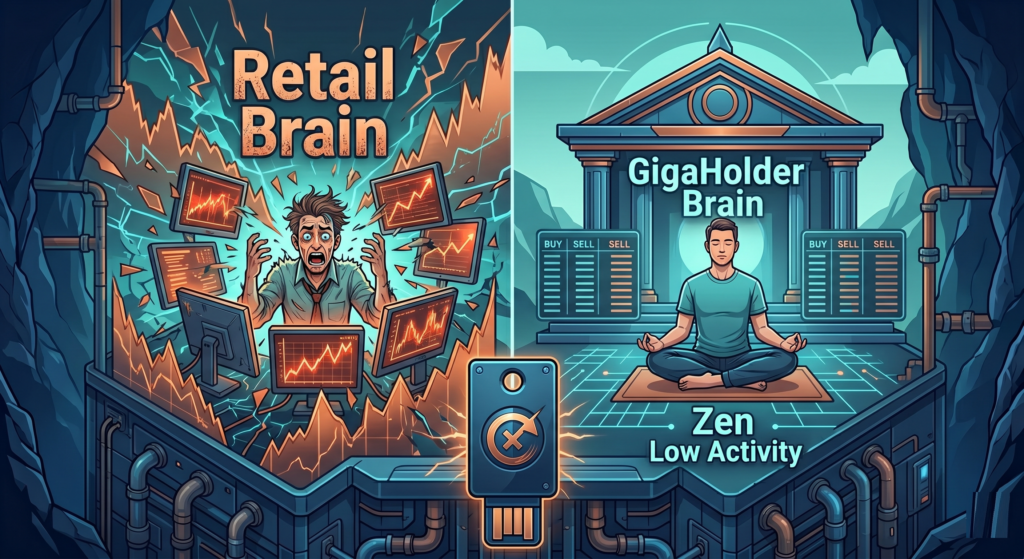
The hardest part of crypto isn’t the code; it’s the 100,000-year-old brain designed for survival, not 24/7 trading.
The Alpha of Boredom
The most profitable habit is Low Activity. High-frequency trading for a retail holder is a guaranteed way to pay more in gas fees and taxes than you make in profit.
- System: Set “Buy Walls” and “Sell Walls.” Use tools like Jupiter or 1inch for limit orders. Let the market come to you.
Security Paranoia as a Service
- The “Burner” Laptop: Many pros use a dedicated, wiped MacBook or Linux machine solely for crypto. No Chrome extensions, no “free” movies, no Discord links.
- The 2FA Lie: If you use SMS 2FA, your security is zero. A $20 bribe to a telecom employee gets your SIM swapped. Use Yubikeys. If it’s not physical, it’s not secure.
Final Thoughts: The 2026 Paradigm
As crypto becomes a “regulated” asset class, the “Wild West” days are fading. The winners of the next decade will be those who treat their portfolio like a tech-enabled family office.
The strategy is simple but hard to execute:
- Minimize Surface Area: The fewer apps you use, the safer you are.
- Verify, Don’t Trust: Check the contract on Etherscan before signing.
- Think in Cycles: Stop looking at the 15-minute chart. The only chart that matters for wealth is the 1-year.