
The “Hard 75” vs “75 Soft” Challenge: What People Are Actually Getting From It

The 75-day challenge trend exploded online for a reason: it promises structure, discipline, and visible results. But there’s a split — some people swear by the strict Hard 75, while others prefer the more flexible 75 Soft.
So what’s the real difference? And more importantly — what do people actually gain from each? Let’s break it down without hype.
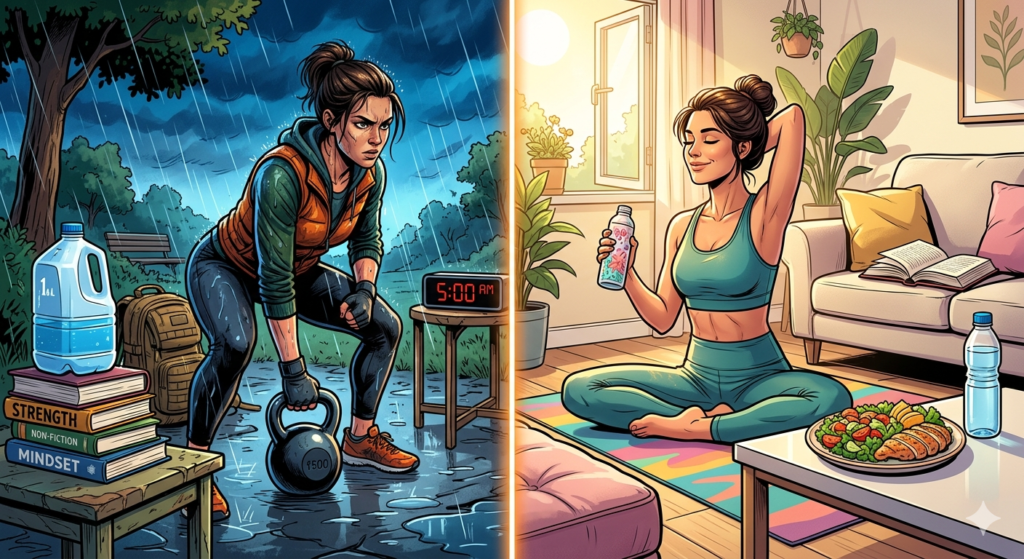
What Are These Challenges?
Hard 75 (Strict Version)
Created by Andy Frisella
Core rules:
- Follow a strict diet (no cheat meals, no alcohol)
- 2 workouts per day (one must be outdoors)
- Drink ~3.7L of water
- Read 10 pages (non-fiction)
- Progress photo daily
- Miss one rule → restart from Day 1
👉 It’s designed as a mental toughness program, not just fitness.
75 Soft (Flexible Alternative)
A community-driven adaptation (not official)
Typical rules:
- Eat well most of the time (no extreme restriction)
- 1 workout per day
- Drink water (no fixed amount)
- Read daily
- Allow balance (social life, rest days if needed)
👉 Focus = sustainability over intensity
Best Supplements for Focus in 2026: What Science Actually Supports
The Digital Hallucination: How Social Media Algorithms Decide What You Believe Is Normal in 2026
Key Differences (Quick View)
| Factor | Hard 75 | 75 Soft |
|---|---|---|
| Intensity | Very high | Moderate |
| Flexibility | None | High |
| Failure rule | Restart | Continue |
| Target | Discipline | Lifestyle |
| Risk of burnout | High | Lower |
What People Actually Get From Hard 75
1. Discipline (Real, Not Motivational)
Doing tasks daily — especially when you don’t feel like it — builds routine under pressure.
- You stop negotiating with yourself
- You rely less on motivation
👉 This is the biggest real benefit.
2. Visible Physical Results
Two workouts a day + strict diet = predictable outcome:
- Fat loss (for most people)
- Improved conditioning
- Noticeable body changes in ~4–8 weeks
👉 But results depend heavily on starting point and consistency.
3. Mental Fatigue & Drop-Off
Here’s the honest part:
- Many people quit before Day 30
- The “restart rule” kills momentum
- Social life becomes difficult
👉 It’s effective — but not realistic long-term for most.
What People Actually Get From 75 Soft
1. Consistency Over Perfection
Instead of restarting, you just continue.
- Builds long-term habits
- Less guilt when you miss a day
👉 This is closer to how real life works.
2. Better Balance
You can:
- Go out with friends
- Adjust workouts
- Avoid extreme dieting
👉 Lower stress = higher adherence.
3. Slower (But Sustainable) Results
You won’t transform as fast, but:
- Progress is steadier
- Less rebound after finishing
👉 This matters more than people think.
The Real Truth (No Hype)
Hard 75 Works Best If:
- You want a mental reset
- You thrive under strict rules
- You’re okay sacrificing comfort short-term
75 Soft Works Best If:
- You want a long-term lifestyle change
- You’ve failed strict programs before
- You care about balance and sustainability
What People Think vs Reality
| Expectation | Reality |
|---|---|
| “I’ll transform in 75 days” | You’ll improve, not become a new person |
| “Harder = better” | Harder = higher quit rate |
| “Soft is lazy” | Soft often leads to longer consistency |
| “It’s just fitness” | It’s mostly about habits |
Final Thoughts
Both challenges can work — but they serve different purposes.
- Hard 75 is like a shock to your system: intense, structured, effective… but hard to maintain.
- 75 Soft is closer to real life: slower, more forgiving, but more sustainable.
If you’re choosing between them, don’t pick what looks impressive online.
Pick what you can actually finish — and repeat.
Because in the end, consistency beats intensity.