
Battle Royale Is Dying — Or Evolving?

1. From DayZ to The Finals: How We Got Here
If you zoom out, the “battle royale era” looks almost like a timeline of hype:
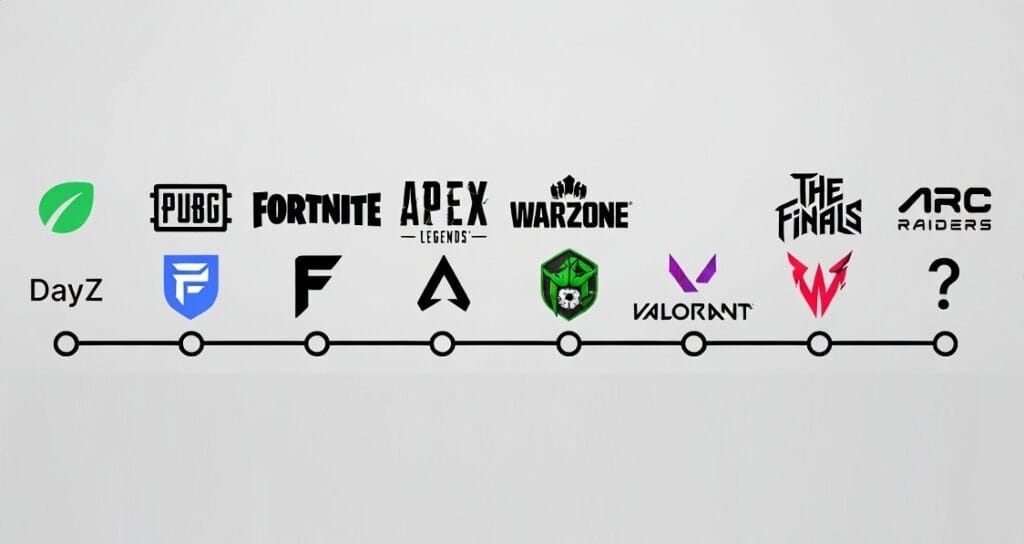
DayZ → H1Z1 → PUBG → Fortnite → Apex → Warzone → Valorant → The Finals
- DayZ / H1Z1 brought the idea of tense last-man-standing survival.
- PUBG turned that into a focused 100-player PvP formula and hit over 3.25 million concurrent players on Steam at its peak in 2018.
- Fortnite then mainstreamed battle royale with building, events, and aggressive live-service content — today estimates put its user base at around 650 million registered players and tens of millions of daily actives.
- Apex Legends and Warzone proved the formula works even inside giant franchises like Titanfall and Call of Duty, with Apex peaking at more than 624k concurrent players on Steam and Warzone surpassing half a million concurrent during its best periods on PC.
- The Finals by Embark showed you can still surprise people with wild movement, destruction and game-show aesthetics, while keeping the BR-adjacent “teams drop in, fight, extract” loop.
On paper, it looks like the genre is stronger than ever. But talk to players, look at engagement trends, and a different picture appears: people are tired of doing “the same drop” for the thousandth time.
2. The Problem: Battle Royale Stopped Evolving
There are a few reasons why a lot of players feel “done” with classic BR:
- Formula fatigue.
Jump from the bus/plane, loot, circle closes, third-party chaos, die, repeat. After years of this, the loop feels solved. - Monetization over meaning.
Cosmetics, battle passes and bundles became the main form of progression. You get more skins, but your character rarely grows. - High variance, low stakes.
A 20–30 minute match can end in two unlucky minutes. There’s little long-term persistence between matches beyond cosmetic unlocks. - Too many competitors.
A few giants dominate. New BRs struggle to stand out, so studios pivot to something more hybrid (like extraction or PvPvE).
Despite this, the big names still look huge on charts. PUBG still averages 300k+ players on Steam in many months of 2024–2025, and Apex sits in the 70–120k range on Steam alone, with many more on consoles.
Numbers are decent, but the cultural conversation has clearly shifted elsewhere.
Best Games for Couples to Play Together in 2026: Co-op From Easy to Competitive
Top 10 Asian Games That Conquered the World
3. Why Fortnite Is the One That Refuses to Die
If battle royale is “dying,” no one told Fortnite.
- Estimates suggest around 30M daily players and peaks over 60M during special periods, with ~14–15M concurrent during the biggest live events.
- It’s less a single game now and more a platform: BR, creative maps, rhythm events, Lego collabs, rhythm modes, Roblox-style UGC with Unreal Editor for Fortnite (UEFN).
Fortnite survived BR fatigue by mutating:
- From pure BR → to party hub, social space, concert venue.
- From “last man standing” → to “do literally anything with friends in this engine.”
So when we ask “Does battle royale have a future?” Fortnite is a strong argument that BR survives best when it becomes one of many modes, not the only pillar.
4. Apex, PUBG, Warzone, Valorant: Stable, But No Longer “The New Thing”
These games are still big, but their role in the ecosystem changed.
PUBG
- Still pulls hundreds of thousands of players on Steam each month, and in mid-2025 its average concurrent on PC actually grew compared to 2023.
- But it’s now a legacy BR — relatively static design, appealing to a loyal niche rather than driving the next big trend.
Apex Legends
- Steam concurrents peaked at over 600k in early 2023, but active averages in late 2024–2025 are much lower (typically under 150k on Steam).
- Community discussions often blame balance issues, monetization and technical problems more than the core gameplay.
Warzone
- Estimates for 2025 still talk about tens of millions of monthly players across all platforms, but PC peaks are far below launch highs, and Warzone 2 in particular saw a steep drop in engagement after its initial explosion.
- Returning Verdansk events still spike interest, but it’s more nostalgia than innovation.
Valorant
- Not a BR, but a tactical hero shooter that siphoned a huge segment of competitive FPS players away into a more structured, round-based format.
The pattern: no apocalypse, just a shift from frenzied growth → to mature, stabilized live services. The hype moved on.
5. The Rise of “Something Else”: Extraction, PvPvE, and Hybrid Shooters
So where did players go when they got tired of BR?
A few key directions:
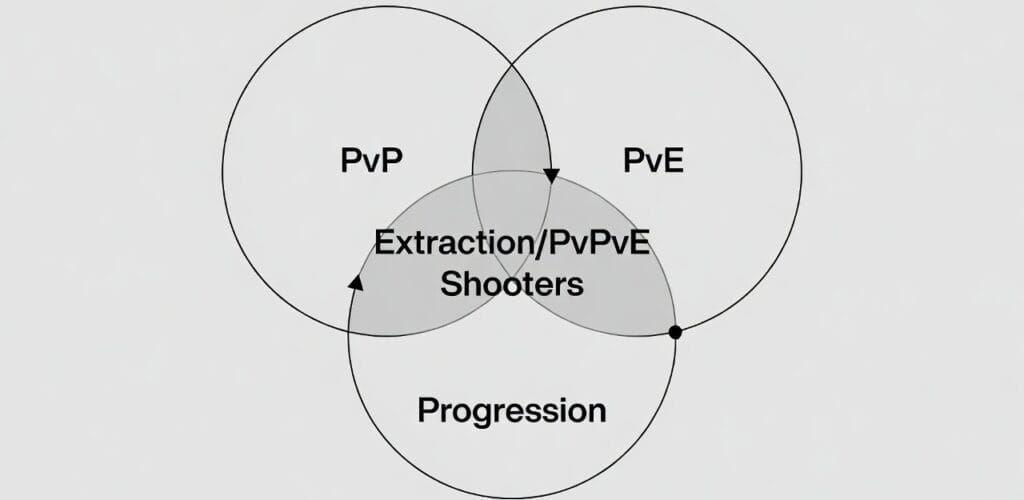
- Extraction shooters.
Escape from Tarkov, Hunt: Showdown, DMZ-style modes, now ARC Raiders — all about going in, taking risks, and trying to leave alive with loot.- Tarkov estimates: roughly 1.4–1.5M monthly active users and ~130k peak concurrent in 2025, according to aggregated stats.
- Hunt: Showdown sits much smaller but impressively stable, with ~13–20k average concurrents over multiple years and spikes over 30k during content drops.
- PvPvE hybrids.
Mix of AI enemies + real players + extraction or objective mechanics (DMZ, The Finals, ARC Raiders, even Destiny-like activities). - Arena and objective shooters.
Smaller maps, tight rounds, big spectatorship potential (Valorant, The Finals, even certain Overwatch and Battlefield modes).
Players didn’t abandon shooters — they just wanted more structure, persistence, and variety than a pure BR circle could give.
6. ARC Raiders: Not Free-to-Play, and That’s the Point
ARC Raiders is a perfect symbol of where the genre is going — and it’s crucial to get the facts correct here.
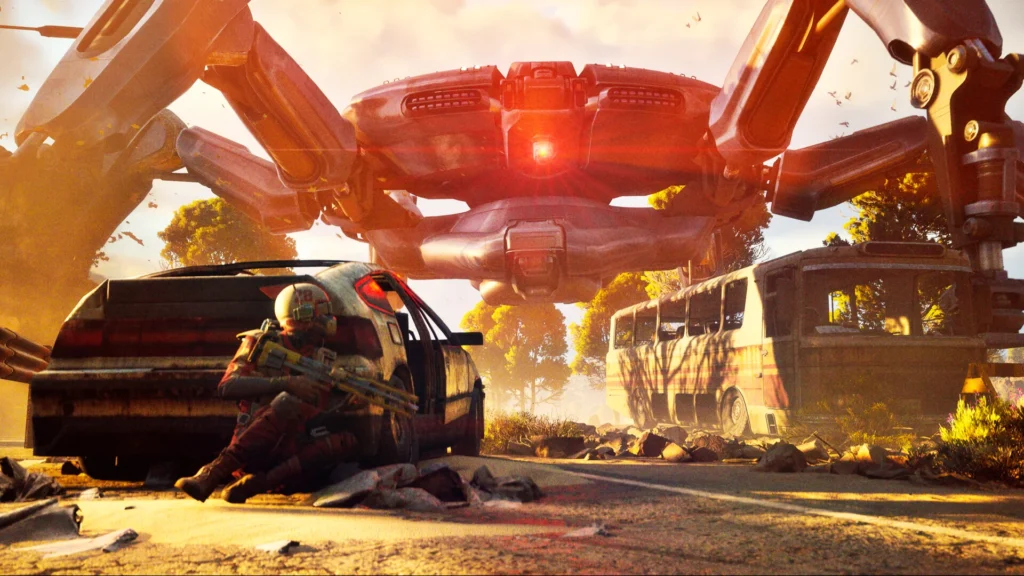
- It’s a sci-fi extraction shooter set on a ruined future Earth, where squads fight both other players and mechanized enemies while trying to extract with valuable loot.
- Originally announced as a free-to-play game, the studio later changed direction and stated publicly they would release ARC Raiders as a $40 premium title, arguing that this model better fit the focused, survival-driven design they wanted.
- At launch (Oct 30, 2025), coverage reports millions of copies sold and peaks from ~350k to 700k+ concurrent players across platforms, putting it among the biggest extraction shooters ever at release.
So no, ARC Raiders is not a F2P Fortnite-style BR. It’s a paid extraction/PvPvE shooter with optional in-game currency, and Embark clearly positions it as an alternative to classic BR, not another copy.
7. Why Extraction Shooters Hit Different
Extraction shooters solve several pain points of battle royale:
- Every minute matters.
In BR, the first 5–10 minutes can feel “wasted” if you die to RNG or third party. In extraction, even a short successful run can be profitable and meaningful. - Persistent progression.
- You care about your stash, your hideout, your gear.
- Success and failure have real consequences — not just “+50 XP to battle pass”.
- Multiple win conditions.
You don’t have to be the last survivor. Sometimes a smart, quiet extraction with good loot is more valuable than chasing kills. - Built-in tension and storytelling.
Every raid is a mini-story: you barely escape with 1 HP, drag a friend’s body to extract, or lose your best build to a desperate fight in the fog.
ARC Raiders leans into this with:
- AI enemies that interrupt PvP fights.
- Varied objectives and contracts.
- Co-op focus where even casual players can enjoy successful short runs without dominating in PvP every match.
It’s no coincidence that even parody games like Escape From Duckov (a comedic spin on Tarkov) are suddenly pulling hundreds of thousands of concurrent players and over a million sales in weeks.
That’s a signal: the extraction loop itself is compelling, not just one specific brand.
8. Why Battle Royale Still Won’t Completely Die
So is BR “over”? Not exactly.
A few reasons it will stick around:
- Incredible spectator value.
One life, shrinking circle, clutch 1v3 — perfect for streaming and highlight clips. - Low rules complexity.
Drop in and survive is easy to understand even for casuals. - Installed giants.
Fortnite, PUBG, Apex, Warzone are deeply embedded with infrastructure, esports circuits, and massive content pipelines.
However, we’re likely past the “everyone must ship a BR” phase. New projects increasingly weave BR elements inside other structures:
- Arenas with zones and extraction.
- Big-team modes with shrinking safe areas.
- Hybrid events in games like Battlefield 6 that borrow the tension of BR without copying the whole format.
BR isn’t dying; it’s becoming a mechanic rather than a genre monopoly.
9. What Comes After BR: 5 Likely Directions
Looking at current releases and what’s in development, you can see at least five clear “next steps”:
- Extraction as mainstream.
- ARC Raiders, Tarkov, Duckov, Hunt and future competitors.
- Expect more accessible variants (shorter raids, clearer UI, cross-play).
- Large-scale PvPvE worlds.
- Mix of MMO, live events, and tactical raids.
- Think: Destiny + Tarkov + BR circle in certain activities.
- Arena & tactical shooters.
- Valorant-style round-based shooters continue to replace BR as the main competitive esport format.
- UGC-driven ecosystems.
- Fortnite UEFN, Roblox, maybe future tools in other engines.
- Here, BR will be just one of thousands of modes the community experiments with.
- AI-driven dynamic match design.
- Smarter AI directors that adjust difficulty, spawn patterns, and rewards in real time.
- Imagine raids that literally “learn” your squad and adapt each session.
BR doesn’t disappear from this picture — it feeds into it. Circles, drops, and last-team-standing moments will live inside these broader systems.
10. Why Players Are Burned Out on Pure BR
At the emotional level, fatigue is simple:
- No sense of long-term progression.
After hundreds of hours, you can feel like you’re in the same spot, just with more skins. - High frustration per match.
Land, loot, die instantly, repeat. For aging audiences with less time, this loop becomes exhausting. - Content treadmill.
New seasons often mean: new cosmetic theme + maybe one weapon + a POI change. The core loop rarely changes. - Meta and cheaters.
BR’s big scale makes cheating and broken metas especially painful — one hacker or one badly tuned weapon can ruin a whole lobby.
Extraction and PvPvE shooters respond to this with shorter, meaningful runs, more persistent progression, and multiple ways to “win” beyond just surviving to the end.
11. 2025–2027: A Quick Forecast
If you look at the numbers and release pipeline, a plausible near future looks like this:
- Fortnite remains an ecosystem, not just a game — a mix of BR, concerts, UGC and licensed universes.
- PUBG, Apex, Warzone stabilize as “evergreen” shooters with loyal cores, but they no longer dictate where the genre goes next.
- Extraction shooters mature into a major pillar of the market, with multiple AA/AAA and indie entries competing for attention.
- Hybrid PvPvE sandboxes (ARC Raiders-like, Destiny-like, maybe new IPs) become the space where publishers chase the “next Fortnite moment”.
- BR mechanics survive as modes, events, and mini-games — not as the only monetization engine in town.
In other words: the future of “BG” (battle royale) is not extinction, but integration.
12. Final Thoughts
Battle royale changed the shooter landscape the way MOBAs once reshaped RTS. For a while, it felt like every studio needed its own “100 players, one winner” mode or risk being irrelevant.
But genres don’t stay on top forever:
- We watched BR go from experimental mod (DayZ/H1Z1),
- to breakout hit (PUBG),
- to mainstream cultural event (Fortnite/Warzone),
- to normalized live-service baseline…
- and now, to one ingredient among many inside more complex shooters.
Games like ARC Raiders are not just “the next BR.” They’re part of a broader movement toward persistent, extraction-style, PvPvE-driven shooters that offer higher stakes, more progression, and richer stories per match — while still giving streamers the chaos moments they crave.
So the real question is no longer “Is battle royale dead?”
It’s “What can we build on top of what BR taught us about tension, pacing, and spectacle?”
Right now, extraction shooters and hybrid PvPvE worlds look like the most convincing answer.