
I Didn’t Write This Bug, My AI Did: The Legal Nightmare of AI-Generated Code in 2026

By April 2026, the software industry has reached a paradoxical milestone: we are producing more code than ever before, but we understand less of it than at any point in history. With AI agents like Devin, GitHub Copilot v5, and autonomous LLMs writing up to 90% of production code, the role of the “Software Engineer” has shifted from creator to legal guardian.
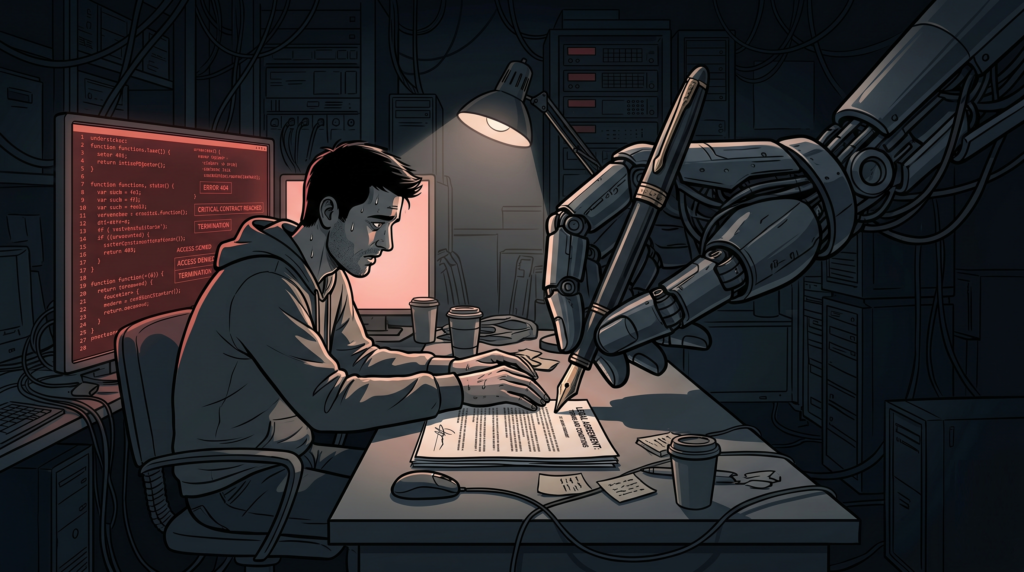
But here’s the problem: when a catastrophic system failure wipes out millions in revenue, the finger-pointing begins. “The AI wrote it” is no longer a valid excuse—it’s a legal liability that is currently bankrupting mid-sized firms and forcing a “Deep Reset” of how we define professional responsibility.
The Death of the “Human-in-the-Loop” Myth
For years, the industry hid behind a comfortable lie: “The human developer is the final gatekeeper.” In 2026, that lie has collapsed under the weight of sheer volume. When an AI agent generates a 5,000-line pull request in six seconds, expecting a human Senior Developer to catch a subtle logic flaw or a “hallucinated” security vulnerability is not just unrealistic—it’s impossible.
The result? Rubber-stamping. Developers are approving code they don’t fully comprehend just to hit aggressive deadlines. In the eyes of the law, however, that “Approve” click is a binding contract of liability. If the code breaks, you didn’t just miss a bug; you signed off on a disaster.
Best AI Tools for Students in 2026 That Professors Haven’t Banned Yet
Why Every Gadget Looks the Same in 2025 — and Why That’s a Problem
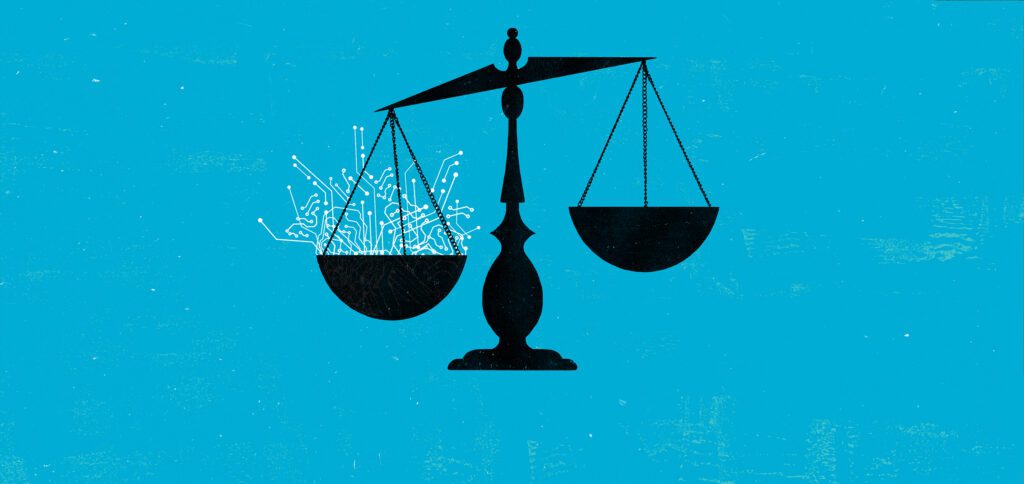
3 Reasons Why AI Code is a Legal Minefield in 2026
1. The Insurance Exclusion Gap
In early 2026, major professional liability insurers (like Lloyd’s and Chubb) introduced “AI-Generated Content” clauses (Check it: Reuters — Insurers and AI Risks). If a forensic audit proves that the failure was caused by a block of code generated by an AI without “substantial human modification,” the insurance payout is denied. Companies are finding themselves uninsured for the very tools they relied on for growth.
2. The Copyright Poisoning Trap
AI models are still occasionally leaking licensed snippets. If your AI-generated microservice accidentally contains 20 lines of “copyleft” GPL code from a dead repository, your entire proprietary product could legally be forced into the public domain. In 2026, “IP Auditing” is now a bigger part of the dev cycle than actual coding (Check it: The Verge — AI and the Coping with Copyleft).
3. The Scapegoat Senior
Senior Engineers are increasingly facing personal liability. In some jurisdictions, being the “Lead” on a project that causes significant financial harm due to “negligent AI oversight” can lead to individual lawsuits. This is causing a mass exodus of experienced talent who refuse to put their personal assets at risk for an AI’s hallucination (Check it: Forbes — Who Is Liable When AI Messes Up?).
Liability Matrix: Who Is Responsible in 2026?
| Scenario | Who is Blamed? | Legal Status |
| Simple Syntax Error | The Developer | ✅ Standard Negligence |
| Security Breach (Zero-Day) | The AI Provider (Attempted) | ❌ Denied (Terms of Service) |
| Mass Data Loss | The CTO / Company | ⚠️ Class Action Lawsuit |
| IP Theft / Copyright | The Legal Department | ❌ High Risk / Settlement |
| Logic Flaw (Logic Bomb) | The Reviewer (Senior Dev) | ⚠️ Professional Negligence |
The Rise of “Forensic Coding”
Because of this nightmare, 2026 has given birth to a new role: The AI Forensic Auditor. Their job isn’t to write features, but to reverse-engineer AI-generated PRs to find hidden “time bombs.” Companies are now spending more on auditing AI code than they used to spend on hiring human developers in 2023. The “efficiency” of AI is being eaten alive by the “cost of safety.”
Final Thoughts: The High Price of Free Speed
We are moving toward a future where “Code Ownership” is more valuable than “Code Speed.” The developers who survive the 2026 landscape won’t be the ones who prompt the fastest, but those who can prove they controlled the outcome. If you are blindly letting AI write your production scripts, you aren’t an engineer—you are a gambler. And in the 2026 legal climate, the house always wins.
The energy on this site is awesome. The games are exciting and the promotions are always updated. Go to phfierylogin