
Metaverse 2026: What Remains After the Collapse?

Between 2022 and 2024, the metaverse went from Silicon Valley’s hottest promise to one of its most discussed failures. Companies invested billions, developers built virtual worlds, brands rushed into “Web3 experiences,” and investors believed this was the “next internet.”
By 2025, most of that optimism evaporated.
Disney shut down its metaverse division. Microsoft dissolved its industrial metaverse team. Walmart backed out. Meta reported tens of billions of losses in Reality Labs. And everyday users simply never showed up.
By the end of 2024, the term “metaverse” had already become a punchline.
As 2026 approaches, the question isn’t when will the metaverse return?
It’s what—if anything—survived the collapse?
This article examines exactly that: the facts, the failures, and the small pieces still moving forward.
🟦 1. The Metaverse Failed Because No One Ever Agreed On What It Was
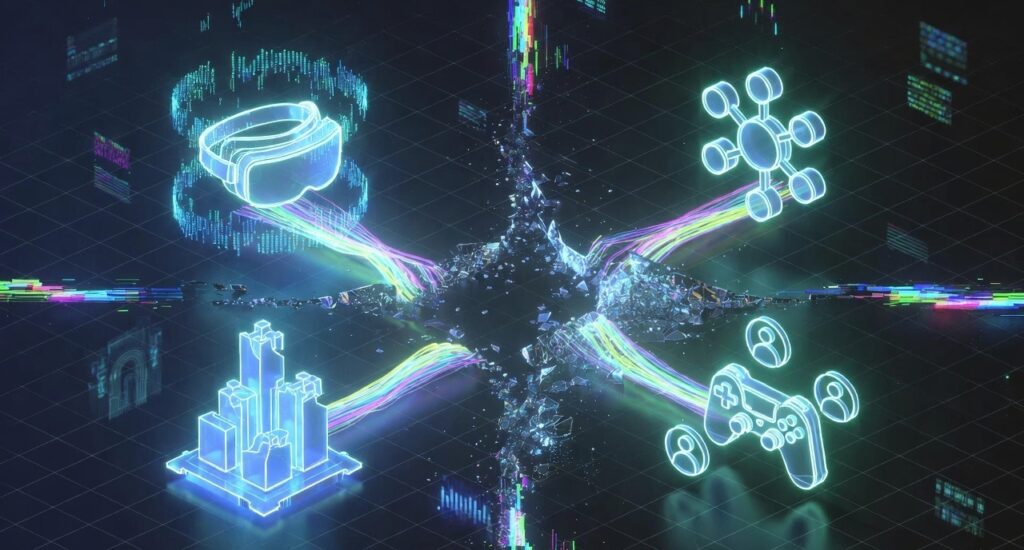
One of the biggest problems was conceptual, not technical.
Despite massive marketing, there was never a single definition of “the metaverse.”
For some companies it meant:
- VR social worlds (Meta Horizon Worlds)
- corporate digital twins (Microsoft + Accenture)
- NFT-based virtual land (Decentraland, Sandbox)
- gaming platforms (Roblox, Fortnite Creative)
- “Web3 identity” systems (crypto start-ups)
The result?
Everyone was building something different while calling it the same thing.
Consumers didn’t understand it.
Businesses didn’t understand it.
Even engineers working on these projects didn’t fully align.
This identity crisis alone was enough to sink the trend.
🟦 2. Meta’s $46+ Billion Bet Became the Symbol of Failure
Meta’s Reality Labs posted over $46 billion in operating losses from 2022 to 2024 (confirmed by Meta’s quarterly reports).
No other tech company came close to this scale of investment.
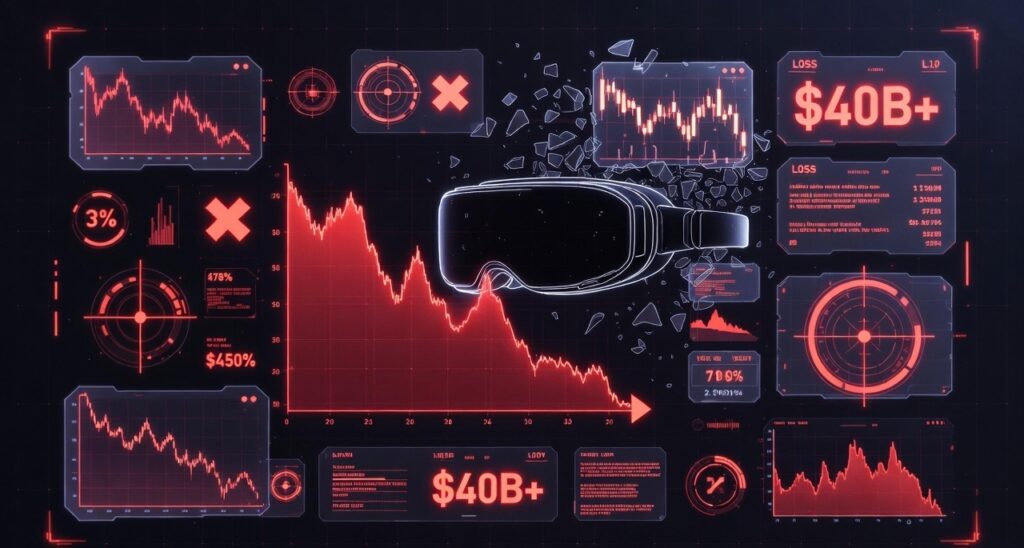
Yet:
- Horizon Worlds had extremely low retention
- user counts were far below expectations
- creators abandoned the platform
- the avatars and environments looked dated
- onboarding friction remained high
- Quest hardware adoption slowed after the initial hype
Reality Labs didn’t collapse — Meta can afford the losses — but the vision did.
Meta quietly shifted its messaging from “metaverse” to AI + mixed reality by 2024.
When the biggest investor stops using the word, the trend is over.
Best AI Tools for Students in 2026 That Professors Haven’t Banned Yet
Why Every Gadget Looks the Same in 2025 — and Why That’s a Problem
🟦 3. The Technology Wasn’t Ready: VR Headsets Limited Everything
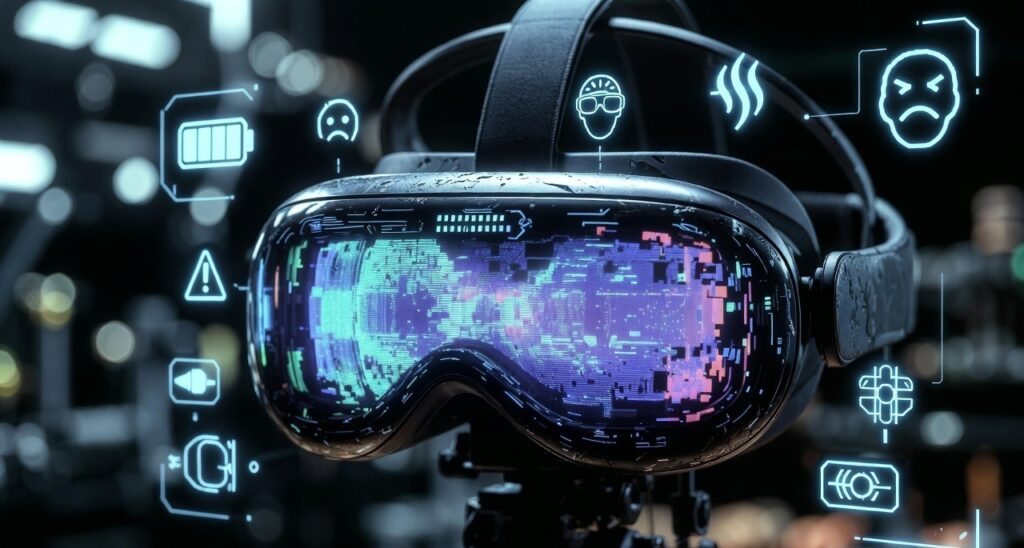
Even the most polished VR devices had limitations:
- heavy and uncomfortable
- short battery life
- nausea issues for some users
- limited FOV
- low-resolution passthrough
- poor ergonomics for long sessions
- graphics inferior to modern consoles
And perhaps the biggest issue:
VR is isolating.
The average user does not want to spend 2–3 hours in a headset after work.
The hardware wasn’t bad — it simply didn’t match the fantasy the industry was selling.
🟦 4. The “Virtual Land” Economy Collapsed Faster Than Any Prediction
During 2021–2022, companies were proudly buying virtual land for millions.
By 2023, trading volume in platforms like Decentraland and Sandbox dropped over 90%, according to DappRadar.

Why this economy died:
- no real utility
- no gameplay loops
- no foot traffic
- no reason for normal users to participate
- extremely overvalued assets
- crypto market collapse
- no network effects
- oversupply of land, undersupply of value
Brands entered for PR, not for users.
Users ignored it entirely.
The “Web3 metaverse” was the fastest to die.
🟦 5. Live-Service Fatigue Made Users Reject the Concept
The metaverse assumed people wanted:
- infinite digital worlds
- constant events
- daily engagement
- virtual meetings
- buying virtual clothes
- paying for microtransactions
- attending virtual concerts
But the 2020–2024 gaming market showed the opposite:
- massive fatigue from live-service games
- low retention
- oversaturation
- people spending less time in apps
- declining interest in virtual events
Gamers want finished games, not infinite digital chores.
The metaverse promised a lifestyle that users simply did not want.
🟦 6. Major Companies Quietly Exited the Space
Official shutdowns and restructurings:
- Disney closed its entire metaverse division (2023)
- Microsoft dissolved its industrial metaverse team (2023)
- Nike, Walmart, Gap, Starbucks reduced or ended Web3/virtual world projects
- Meta shifted focus from “metaverse” to “AI + mixed reality”
- Tencent reduced its VR ambitions after disappointing results
- HTC lowered investment into consumer VR
By late 2024, the metaverse hype cycle had fully collapsed.
🟦 7. What Actually Survived Into 2026? (Facts Only)
Despite the collapse, a few elements remain alive, but in a very different form.
✔ 1. VR as a gaming accessory, not a lifestyle
Quest 3 and PS VR2 continue to sell modestly.
VR gaming is healthy — but niche.
✔ 2. Enterprise digital twins
Industries like:
- automotive
- medicine
- manufacturing
- architecture
still use 3D simulation tools (Siemens, NVIDIA Omniverse), but they never called it a metaverse.
✔ 3. Spatial computing (new term)
Apple Vision Pro rebranded immersive tech into:
“spatial computing”, not «metaverse».
This is essentially:
- high-end AR/VR
- without the fantasy of a virtual society
- without crypto
- without virtual land
It solves real problems—not imaginary ones.
✔ 4. UGC platforms (Roblox, Fortnite Creative)
They thrived not because of the metaverse but because of:
- gameplay
- creation tools
- social presence
- fun
They succeeded despite the metaverse hype, not because of it.
🟦 8. Why 2026 Won’t Bring a Comeback — Only a Rebrand
The metaverse as defined in 2021 is dead.
But immersive tech continues to evolve—just without the hype.
2026 will likely reinforce:
- VR = niche gaming + fitness
- AR = productivity + navigation
- Spatial computing = new UI style
- 3D tools = enterprise use
- AI characters = virtual assistants
- virtual worlds = smaller communities, not global platforms
The lesson is simple:
The idea wasn’t wrong. The expectations were.
People want useful apps, not digital universes.
🟦 Final Thoughts
The metaverse hype cycle collapsed because it tried to jump ahead of technology, economics, and user behavior.
It was a vision without a path, a product without a need, and a market without demand.
By 2026, what remains is small, functional, and realistic:
- VR games
- enterprise 3D software
- spatial computing
- UGC platforms
- pockets of niche communities
Everything else — the virtual cities, the conferences, the NFT real estate, the multi-billion-dollar “future of everything” — is gone.
The metaverse didn’t die because of bad ideas.
It died because people wanted reality, not replacement.