
Why French Detective Cinema Hits Different: The Power of Province, Bloodlines, and Unfinished Family Secrets

When people think of French cinema, they usually picture charming rom-coms set against Parisian cafés, witty dialogues over red wine, or dreamy strolls along the Seine.
French detectives and provincial thrillers rarely get mentioned — especially compared to Hollywood crime shows packed with snipers, tactical vests, FBI task forces, forensic labs, and serial killers with a PhD in psychology.
But here’s the twist:
France has one of the most unique, gripping, emotionally heavy detective subgenres in the world — and almost nobody outside Europe talks about it.
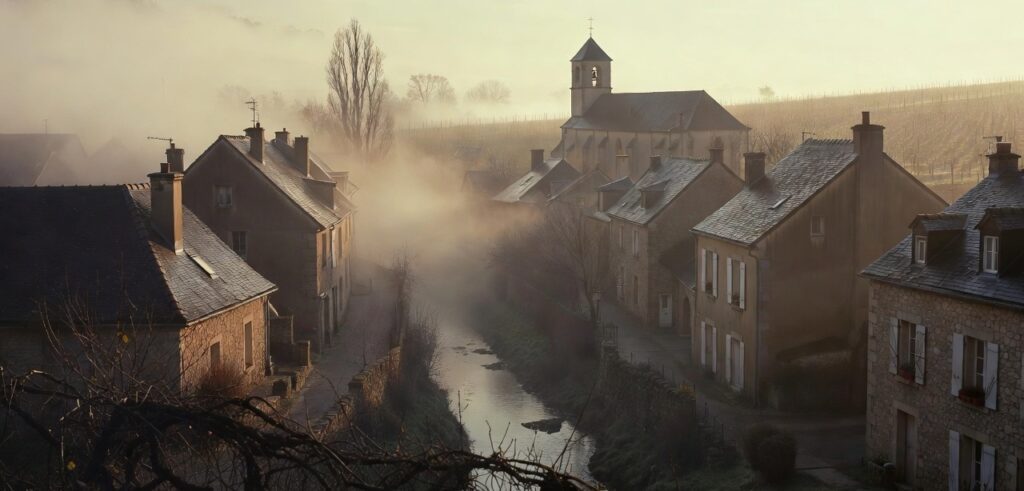
These stories are quiet, atmospheric, grounded in memory and soil, and built not around the question “Who killed?” but rather the much darker:
“Why did this crime become unavoidable — and who created its conditions decades earlier?”
Unlike American detective stories that revolve around procedure, forensics, and tactical pressure, French investigations are cultural excavations. They are not about crime — but about roots, heritage, silence, and generational debts.
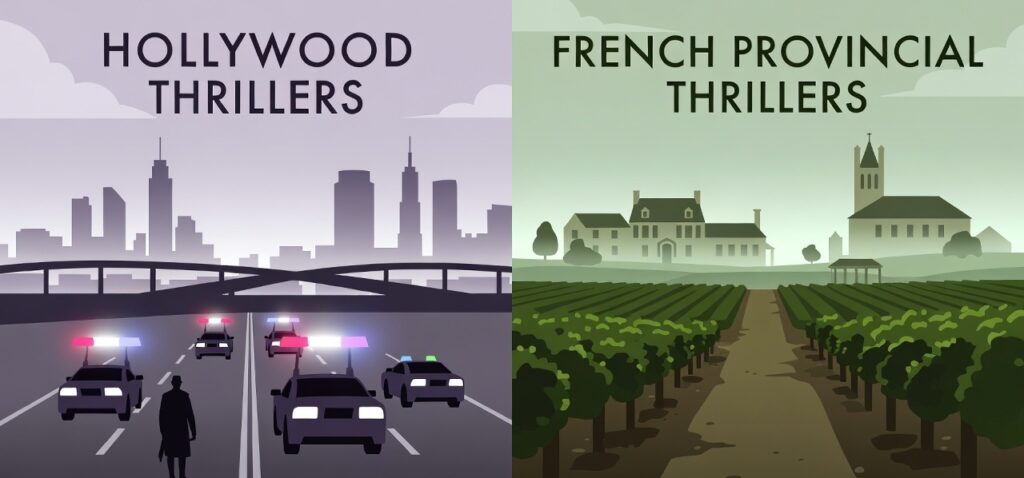
Hollywood vs. French Provincial Thrillers
A distilled comparison:
| Element | American Thrillers | French Provincial Thrillers |
|---|---|---|
| Central Question | Who did it & how to catch them? | Why did it happen & how deep are the wounds? |
| Setting | Mega-cities, highways, agencies | Provinces, villages, remote regions |
| Style | Action, procedure, evidence, chase | Atmosphere, folklore, silence, community |
| Motivation | Individual pathology or greed | Lineage, inheritance, land, unspoken history |
| Characters | Forensic experts, special agents | Locals, old families, outsiders with ties |
| Truth | Legal & factual | Emotional, historical, moral |
In France, crime is almost never random.
It is the final invoice of the past, and someone — a family, a village, a clan — owes payment.
Top 10 Underrated Movies of 2024–2025 You Probably Missed
Best Films of 2025 That You Probably Missed
The Soul of French Detective Cinema: Province Over Metropolis
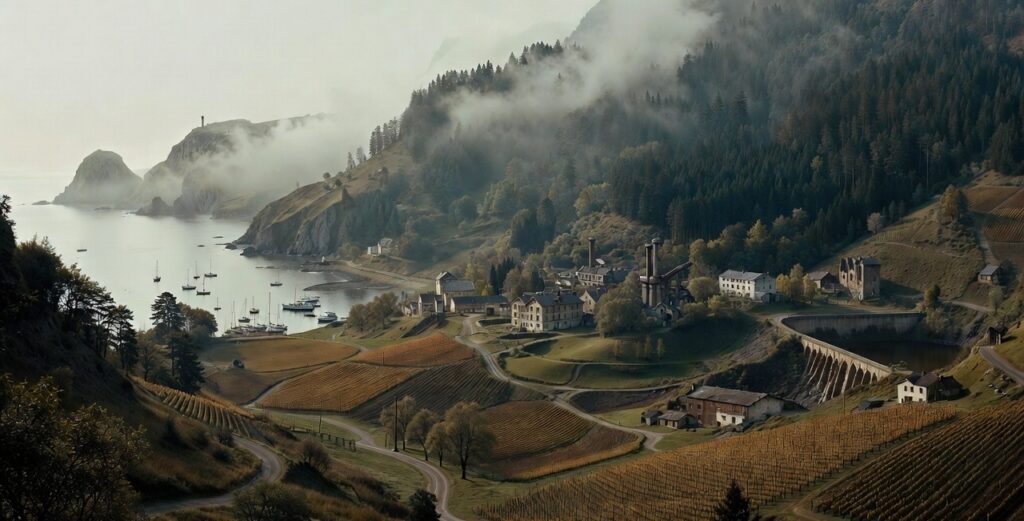
French thrillers rarely take place in Paris, Lyon, or Marseille.
Instead, the spotlight moves to:
- coastal villages
- mountain communes
- forests near the Alps
- industrial ghost-towns
- wine lands and farmlands
- regions shaped by a single resource
These isolated places form closed ecosystems where everyone knows everyone, grudges last a lifetime, and truth is a shared property that must be protected.
The land itself becomes a silent character — dam reservoirs, abandoned factories, ancient forests, closed mines, windy cliffs, or ports where economies rise and collapse with tides.
Family Before Crime — Bloodlines, Not Individual Motives
French provincial thrillers frequently involve:
- century-old inheritance conflicts
- battles for land, water rights, or industrial control
- dynastic rivalries across generations
- moral debts inherited by grandchildren
- the idea that tragedy is not created — it matures
The almost mythological rule of this genre:
A French murder is rarely personal — it is historical.
It is not committed by a killer, but by a lineage, a shared trauma, or a family myth that outlived its era.
Where Hollywood asks:
“What triggered the killer?”
France asks:
“What happened decades ago that doomed everyone involved?”
The Perfect Duo Formula: Outsider + Local
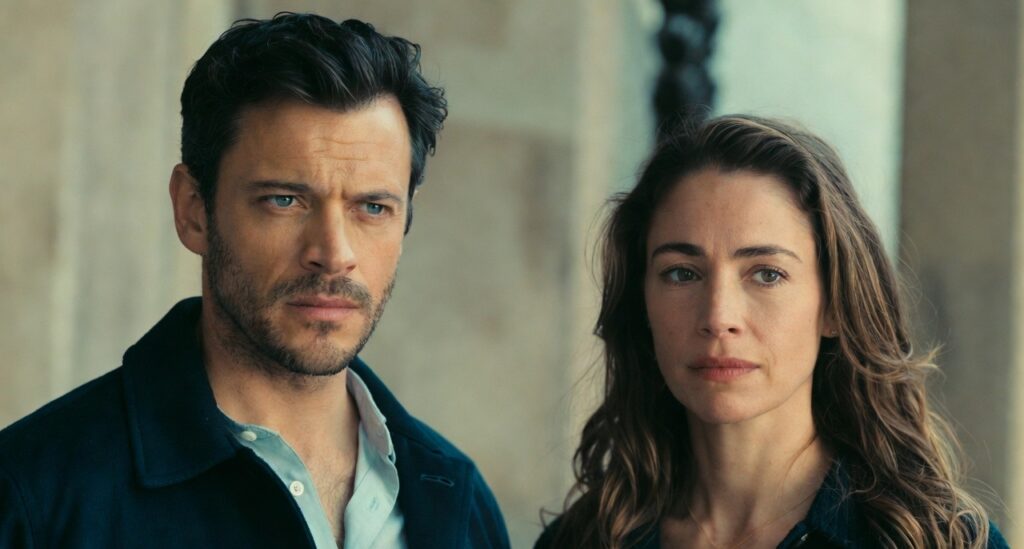
This recurring pairing is not accidental — it is structural.
| Outsider Detective | Local Detective |
|---|---|
| Rational, methodical, objective | Intuitive, emotional, culturally fluent |
| Doesn’t belong to the social web | Lives inside it |
| Asks “wrong” but necessary questions | Knows what cannot be said aloud |
| Represents modern reasoning | Represents inherited truth |
Together, they don’t hunt a criminal —
they unlock a sealed cultural vault.
This friction creates the emotional pressure that defines the genre:
One digs for truth, the other protects the village’s memory — even when it hurts them.
Themes That Give French Thrillers Their Unique Weight
1️⃣ Collective silence — entire communities guard secrets
2️⃣ Heritage as destiny — sins are inherited, not committed
3️⃣ Local identity vs. progress — dams, factories, land sales
4️⃣ Folklore & myth — legends woven into motives
5️⃣ Nature as witness — forests, lakes, mountains remember
These stories are slow-burn, atmospheric, poetic, symbolic — yet incredibly tense because they involve everyone, not just the suspect.
Perfect Film Examples Representing the Subgenre
1️⃣ Meurtres dans le Jura (2019)
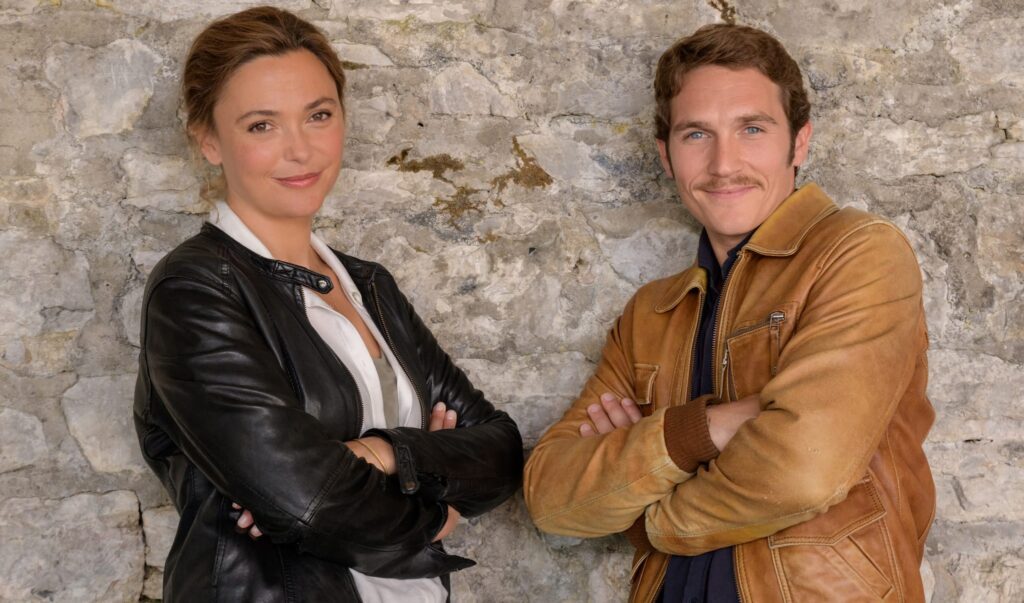
The film that perfectly reflects everything discussed.
Core elements:
- Murder of a local healer / herbal witch figure
- A village built near a dam-created lake that erased old territory
- A grandson returns and becomes part of the investigation
- Myths and folklore connect directly to crime
- Water, history, death, land — all merge into one narrative
This film illustrates the signature French belief that the past is a living organism, not a memory.
2️⃣ Amours à mort / Meurtres en Moselle (2020)
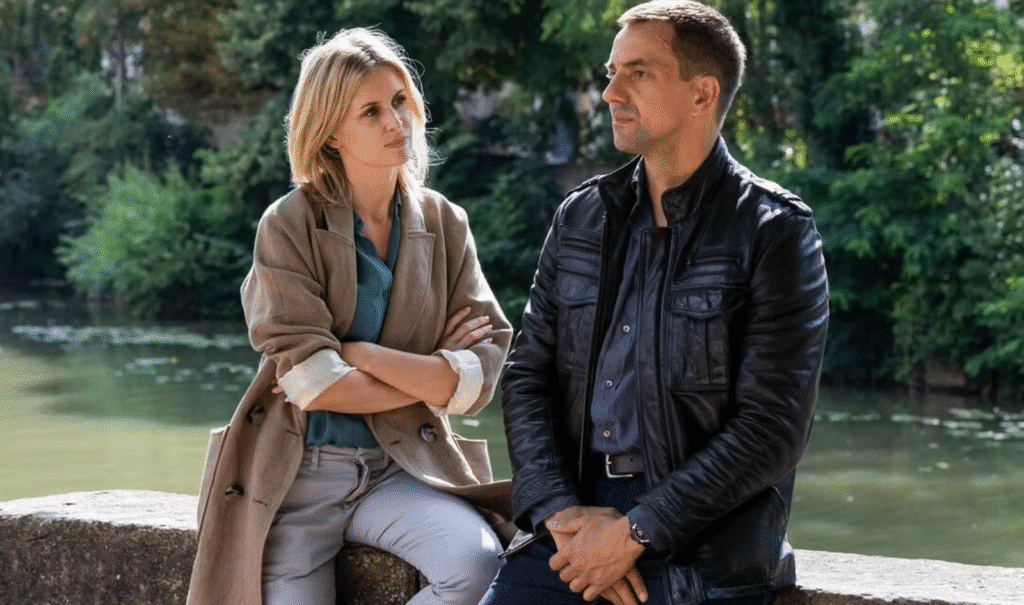
Set near an abandoned industrial metallurgic complex, the story ties murder with:
- multi-generation trauma
- economic collapse
- regional identity loss
- families never recovering from industrial decline
Instead of a single killer, the antagonist feels like entire history itself — the rust, the factory’s ghost, the broken dreams of workers, and the shame buried inside three generations.
3️⃣ The “Meurtres à…” Collection (Ongoing)
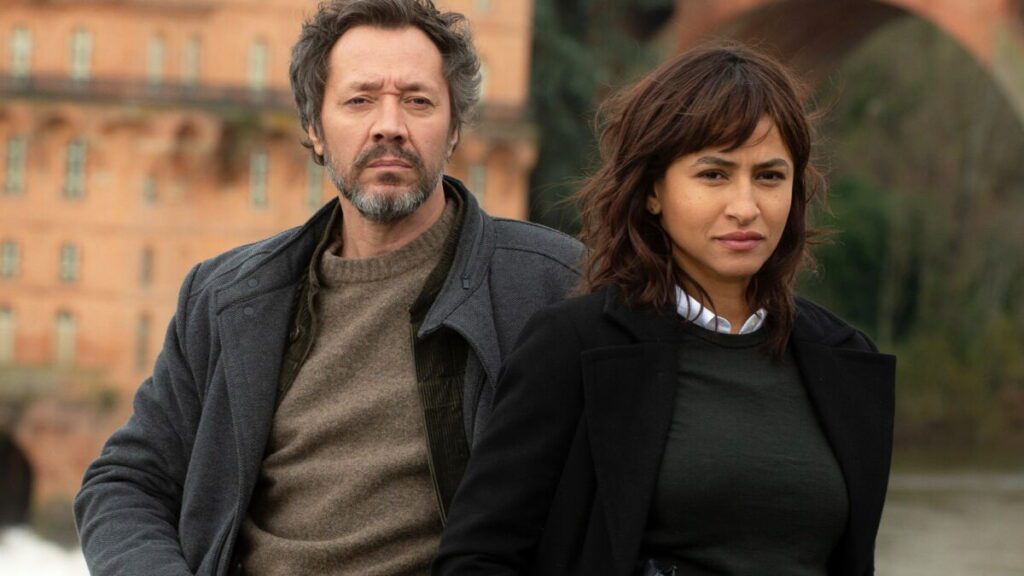
Perhaps the most important television anthology in modern French crime storytelling. Each film takes place in a new region and injects:
- a unique local tradition
- conflicting families or dynastic secrets
- cultural myths
- resource-based tension
- truth concealed by community
Instead of a franchise of characters, it is a franchise of geographical souls.
Narrative Mechanics Unique to French Detective Stories
🧩 1. Crime as Consequence, Not Plot Engine
The murder is never the beginning — it is the last domino.
🧩 2. Moral vs. Legal Truth
Solving the case does not bring peace — it exposes wounds.
🧩 3. Villains Aren’t Evil — They Are Product of Circumstances
No caricature, no “psychopath mastermind” tropes.
🧩 4. Poetic Geography
Weather, land, and regional texture replace CGI and gunfights.
🧩 5. Endings Often Bittersweet
Justice does not guarantee healing.
Why These Films Hit Hard Emotionally
- We subconsciously fear inherited destiny
- Everyone has family secrets — this genre weaponizes them
- The viewer becomes an investigator of culture, not crime
- Atmosphere > action = deeper engagement
- The setting feels real — because places like these exist
You don’t watch to find the killer —
you watch to understand what broke the world long before the first scene.
Cultural Message Behind the Genre
This cinema whispers an uncomfortable truth:
“A crime is a seed. It grows in silence, watered by history.”
In other words, tragedy is not shocking — it is predictable.
Every character was shaped and positioned by factors older than themselves.
The killer is only the executioner of destiny.
Why the World Should Pay Attention
In the streaming era, viewers are tired of:
- perfect FBI agents
- magic forensic tech
- overused serial killer tropes
- predictable plot twists
French provincial detective cinema offers something totally different:
- intimacy
- heritage
- regional immersion
- philosophical conflict
- slow-burn suspense
- cultural anthropology
It’s not popcorn content —
it’s cinematic archaeology.
Final Thoughts
French provincial detective cinema proves that crime stories can be intelligent, human, atmospheric, and historically grounded, without relying on explosions, chase scenes, or exaggerated villains. These films are slow but sharp, quiet but devastating, local but universal.
They remind us that the past is never buried, communities have memory like stone, and truth is not an event — it is sediment.
For viewers tired of formulaic Hollywood thrillers, French regional detective storytelling is not just refreshing — it is essential.
Watch it not to find out who killed, but to finally understand why the world around them made killing possible.