
Fallout Beginner Tips After Watching the Series

You watched the Fallout TV series — and now the Wasteland won’t let you go.
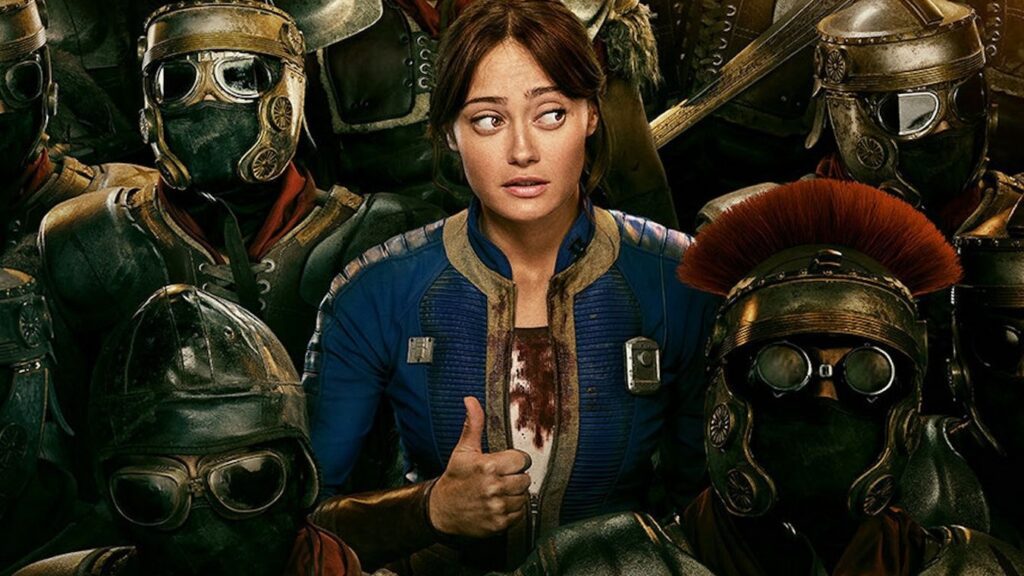
The world feels brutal, strange, sometimes funny, sometimes terrifying.
And at some point you probably thought:
“Should I try the Fallout games… or will I just get lost and die in 10 minutes?”
Good news: you’re not late, and you’re not alone.
Fallout was never meant only for hardcore gamers — it was built for curious survivors.
Here’s how to start without frustration, without deep RPG knowledge, and without ruining the experience.
Which Fallout Game Should You Start With?
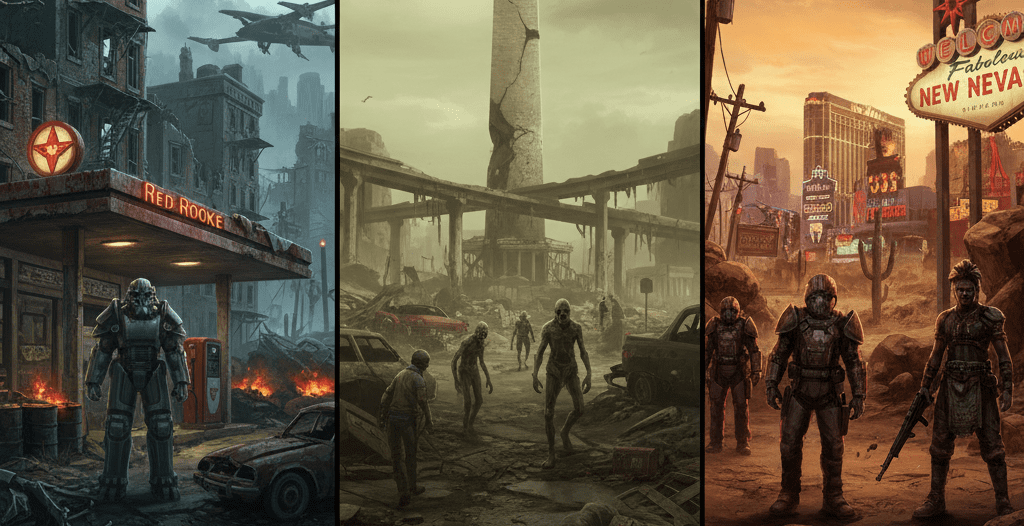
Let’s answer the biggest question right away.
If you came straight from the series and want the smoothest entry:
- Fallout 4
This is the best starting point after the show.
It feels modern, explains itself better, and gives you freedom without overwhelming you. If the series made you curious — this game welcomes you in. - Fallout: New Vegas
If what you loved most was moral ambiguity, politics, and tough choices — come here later. It’s deeper, harsher, and incredibly rewarding once you understand how Fallout works. - Fallout 3
If atmosphere mattered more than action in the series, this one feels closest in tone. Slower, darker, lonelier.
There’s no wrong choice — just different ways to step into the Wasteland.
“The $50 Rebellion”: What to Play While Waiting for Fable 2026 (And Why Gothic Remake is Killing the $70 Trend)
Top 10 Asian Games That Conquered the World
Fallout Isn’t About Shooting — It’s About Choices
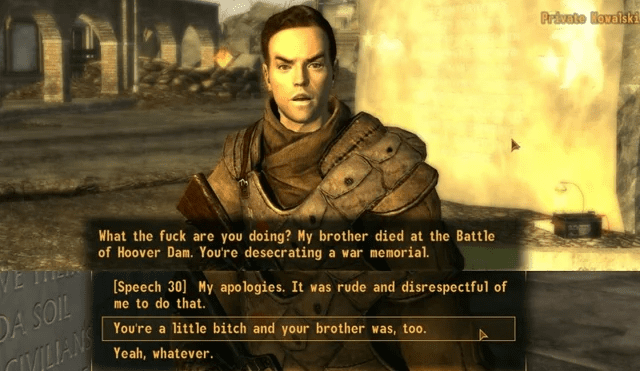
This is the first mental shift you need.
Fallout is not a fast shooter.
You’re not expected to win fights through reflexes or perfect aim.
You survive by:
- choosing when not to fight
- talking your way out of danger
- sneaking, observing, backing off
If something feels too dangerous early on, the game is quietly telling you:
“Come back later.”
Don’t Rush the Main Story
The main quest will wait for you.
The Wasteland absolutely will not.
Side quests exist to teach you:
- how the world reacts to your decisions
- how dangerous certain areas are
- how to survive without brute force
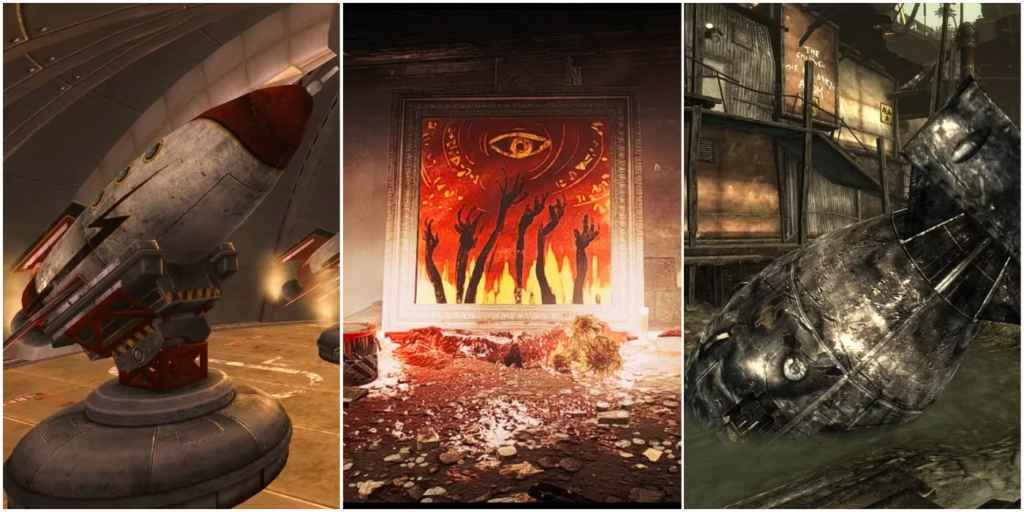
Rushing the story is the fastest way to feel punished.
Exploring is how Fallout teaches you its rules.
Save Constantly — This Is Not Cheating
If the series taught you anything, it’s this:
the Wasteland is unfair.

You will:
- open the wrong door
- trust the wrong person
- step on something that explodes
Quick-saving isn’t cheating — it’s common sense.
Fallout expects you to fail, reload, and learn.
Junk Isn’t Junk (Even If It Looks Like It)
After the series, this will feel familiar: everyone hoards trash.
That’s because in Fallout:
- junk becomes upgrades
- upgrades become survival
- survival becomes freedom
Duct tape, random metal, broken electronics — it all matters later.
Don’t overthink it early, just know this: nothing is truly useless.
Use Companions — You Don’t Have to Be Alone

Going solo sounds cool.
Dying alone is less cool.
Companions:
- help in fights
- warn you about danger
- comment on the world
- make mistakes less punishing
Think of them as training wheels.
You can always walk alone once you feel confident.
V.A.T.S. Is Your Best Friend
That slow-motion targeting system you noticed in the series?
Use it.
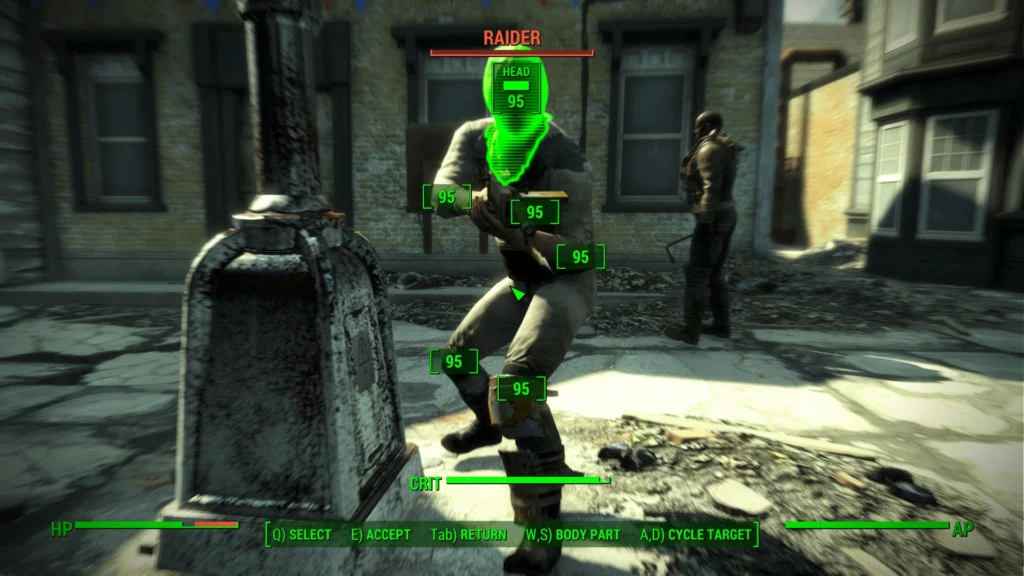
V.A.T.S.:
- slows everything down
- helps you aim
- gives you control when panic hits
If Fallout feels clumsy at first, it’s usually because you’re ignoring V.A.T.S.
Once you use it, the game clicks.
It’s Okay If the Game Feels “Weird” at First
Movement can feel stiff.
Combat can feel awkward.
The interface might look old-fashioned.
That’s normal.
Fallout isn’t about smooth mechanics — it’s about tension, atmosphere, and consequences.
Give it a few hours, and the world will pull you in.
Final Thoughts
Fallout isn’t about winning.
It’s about surviving your own way — making bad choices, learning from them, and embracing the chaos.
The series showed you the world.
The games let you live in it.
If the show sparked your curiosity, trust it.
The Wasteland rewards patience.