
Morning Routines People Quit After One Week

Scroll through social media long enough and you’ll notice a pattern.
Almost every “perfect” morning routine looks the same: early alarm, cold shower, meditation, workout, journaling, healthy breakfast — all before 7 a.m.
They look inspiring.
They feel motivating at night.
And they quietly fall apart somewhere around day five.
Most people don’t quit morning routines because they’re lazy or undisciplined.
They quit because these routines are designed for an ideal version of life — not for how mornings actually feel.
Let’s break down the most common morning routines people abandon after just one week — and why it happens so consistently.
Waking Up at 5 AM (Even When You Hate It)

Waking up early is often presented as a shortcut to productivity and success.
“If you wake up before everyone else, you’re already winning,” the internet says.
In reality, early wake-ups don’t automatically create energy — they just shift tiredness to another part of the day.
Why people quit:
- Chronic sleep deprivation builds up fast
- Evenings become shorter and more stressful
- One late night ruins the entire routine
Early mornings work for some people, but forcing yourself into a schedule your body resists turns discipline into exhaustion.
The Digital Hallucination: How Social Media Algorithms Decide What You Believe Is Normal in 2026
“The Weekend Trap”: Why You Can’t Actually Catch Up on Sleep (And What to Do Instead)
Morning Meditation Before Your Brain Is Awake
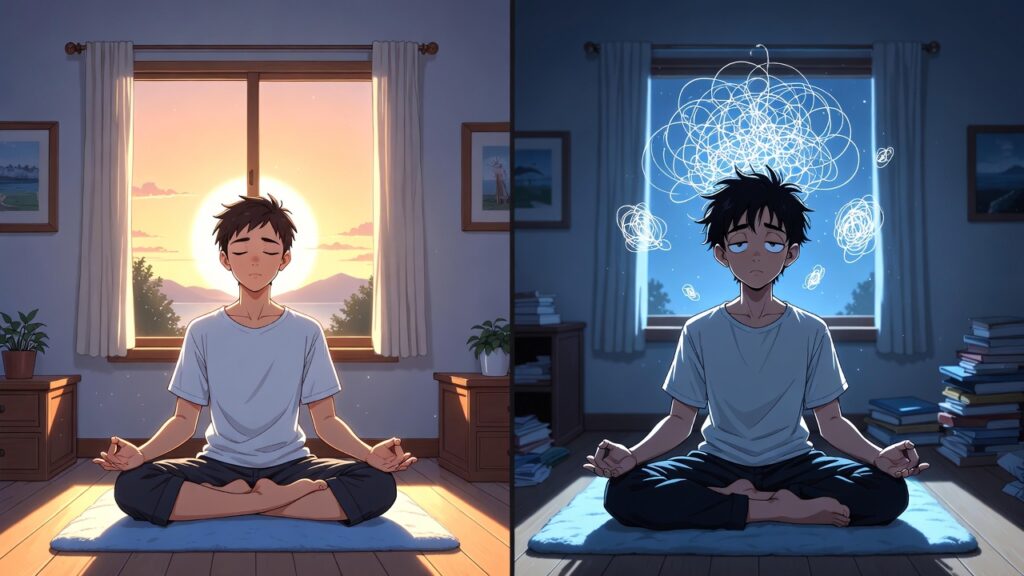
Meditation is supposed to calm your mind and set a positive tone for the day.
But early mornings are often the worst time for it.
Right after waking up, the brain is foggy, restless, and overloaded with thoughts about the day ahead. Instead of calm, many people experience irritation or anxiety.
Why people quit:
- No immediate positive feedback
- Racing thoughts feel worse, not better
- The habit feels forced rather than helpful
Meditation isn’t ineffective — but timing matters more than motivation.
Working Out Every Single Morning

Morning workouts look powerful on paper: consistency, discipline, momentum.
In practice, the body often disagrees.
Muscles are stiff, energy is low, and motivation depends entirely on willpower. Missing one workout quickly turns into guilt, and guilt kills consistency.
Why people quit:
- Physical fatigue builds quickly
- Missed days feel like failure
- The routine leaves no flexibility
Exercise works best when it fits life, not when it controls it.
Journaling and Gratitude Lists at Sunrise

Journaling promises mental clarity and emotional balance.
But mornings are not always reflective — they’re chaotic.
Many people sit in front of a blank page feeling pressured to write something meaningful before their coffee even kicks in.
Why people quit:
- Nothing feels worth writing early in the day
- The habit becomes another task
- “Doing it wrong” creates frustration
Writing can help, but forcing introspection before your mind wakes up rarely feels natural.
Cold Showers as a Daily Discipline Test

Cold showers are often marketed as a mental reset: dopamine boost, discipline, resilience.
What’s rarely mentioned is how unpleasant they feel — especially in colder seasons.
Why people quit:
- Stress replaces motivation
- No clear long-term reward
- Comfort disappears from the morning
Discomfort alone doesn’t build habits. It usually builds resistance.
No Phone for the First Hour

The idea sounds healthy: protect your attention, avoid dopamine overload, start the day intentionally.
Reality is messier.
Phones are alarms, communication tools, navigation, calendars, and work devices. Ignoring them creates mental tension rather than freedom.
Why people quit:
- Anxiety about missed messages
- Work and real-life responsibilities intrude
- Constant urge to check anyway
Avoiding technology completely often creates more stress than balance.
Perfect Healthy Breakfasts Every Morning

Smoothies, protein bowls, avocado toast — visually perfect breakfasts dominate lifestyle content.
They also require time, preparation, and appetite that many people simply don’t have in the morning.
Why people quit:
- Morning appetite is low
- Preparation feels exhausting
- Busy days make consistency impossible
Eating “perfectly” turns into another daily performance.
Why Most Morning Routines Fail After One Week
The problem isn’t effort — it’s design.
Most popular morning routines fail because they:
- Change too many habits at once
- Rely entirely on motivation
- Leave no room for bad days
- Are copied instead of customized
When mornings become rigid systems instead of supportive rituals, people naturally rebel against them.
What Actually Works Better Than a “Perfect” Routine
Sustainable routines rarely look impressive online.
They’re quiet, flexible, and sometimes boring.
What tends to work:
- One small habit instead of five
- Flexible timing instead of strict rules
- Comfort over optimization
- Consistency over intensity
A routine that works three times a week is more powerful than one that looks perfect and collapses.
Final Thoughts
The best morning routine isn’t the most productive, disciplined, or aesthetic one.
It’s the one you don’t need motivation to follow.
The one that doesn’t make you feel guilty when life gets messy.
And the one that fits who you actually are — not who the internet tells you to be.
Mornings don’t need to be optimized.
They just need to be survivable.