
The “Lazy Money” Methods That Are Actually Working in 2026

Let’s be honest about what “lazy money” actually means.
It’s not zero work. Nothing is zero work. Anyone claiming otherwise is selling something.
What it is: front-loading the effort so that income keeps coming in without constant babysitting. You set it up. It runs. You occasionally check on it.
Here are the methods that are genuinely working in 2026 — ranked from laziest to “you’ll need to do some work upfront.”
No MLM pitches. No drop-shipping courses. Just real options with real numbers.
Tier 1: Almost Zero Effort
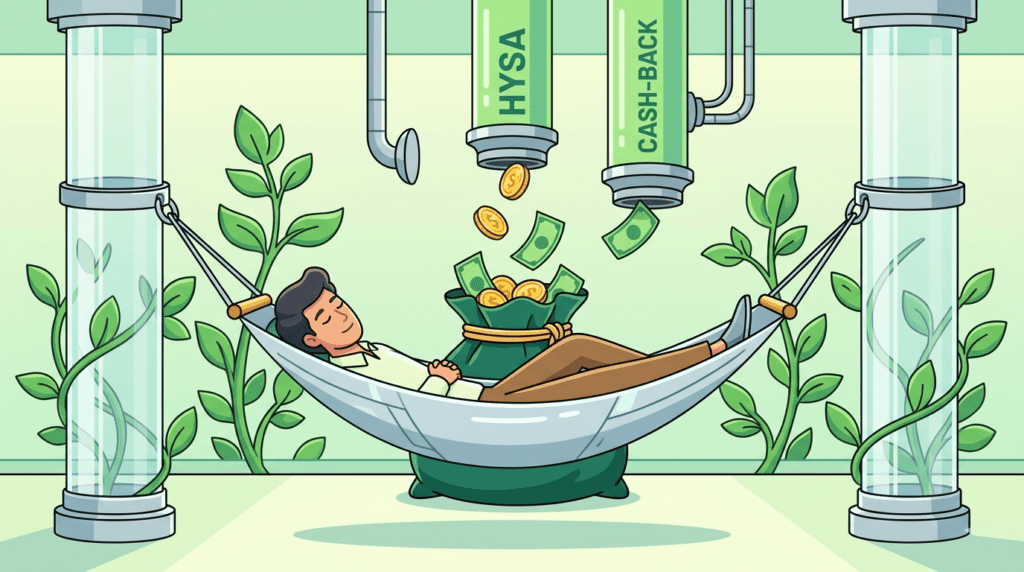
High-Yield Savings Account
Real APY right now: 4.0–5.0% (Varo, Axos, Wealthfront — Fortune/Curinos data, April 2026)
The national average savings rate is 0.39%. Top HYSAs pay 10x that.
On $10,000: you earn $400–$500/year doing absolutely nothing except moving your money from a bad account to a good one. That takes 20 minutes.
Not exciting. Completely real. FDIC-insured, zero risk.
Honest caveat: Fed has been cutting rates since late 2025. These rates may drop in 2026. Lock in while they’re high.
Why Some People Make $100/Month Online and Others Make $10,000 — The Real Differences
What Awaits Dropshipping in 2026 — Trends, Truths, and the Future of E-Commerce
Cash-Back Credit Cards
Annual earnings from a 2% cash-back card on $50,000/year in spending: ~$1,000/year.
Stack a few category-specific cards (groceries, gas, dining) and sign-up bonuses, and $1,500–$2,000/year is realistic without changing your spending habits.
The only effort: picking the right card and actually paying it off monthly.
Tier 2: Set Up Once, Earn Ongoing
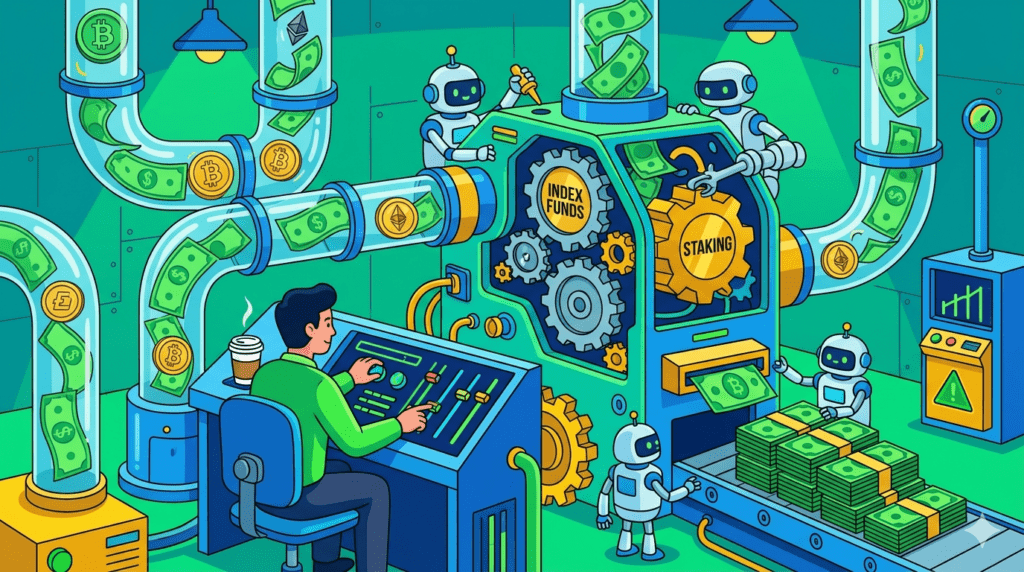
Index Fund Auto-Investing (VTI/VOO)
Historical average: 8–10% annually.
Set up auto-invest on $500/month. Over 30 years that becomes $1.1 million at average market returns. This is the single highest-return, lowest-effort strategy available to ordinary people.
Daily effort required after setup: zero.
Honest caveat: 2025 was rough — S&P 500 up 17% but with extreme volatility. Markets can drop 30%+ in bad years. This is long-term, not “money next month.”
Dividend ETFs (SCHD, VYM)
Current yield: 3.5–4% annually.
A $100,000 investment at 3.5% yield = $3,500/year (~$290/month) in cash dividends, deposited quarterly. You can reinvest them to compound, or spend them.
No property to manage. No clients. No deliverables. Just own the stocks.
Crypto Staking (if you already hold crypto)
Current yields on major assets:
| Asset | APY |
|---|---|
| Ethereum (ETH) | 3–4% |
| Solana (SOL) | 6–7% |
| Polkadot (DOT) | 10–14% |
If you already hold these long-term, staking them earns yield on what you’d have sitting idle anyway.
Honest caveat: Yields are paid in the same crypto. If the price drops 40%, your “6% yield” doesn’t save you. This is for people who’d hold regardless — not a reason to buy new crypto.
Tier 3: Front-Loaded Work, Then Passive
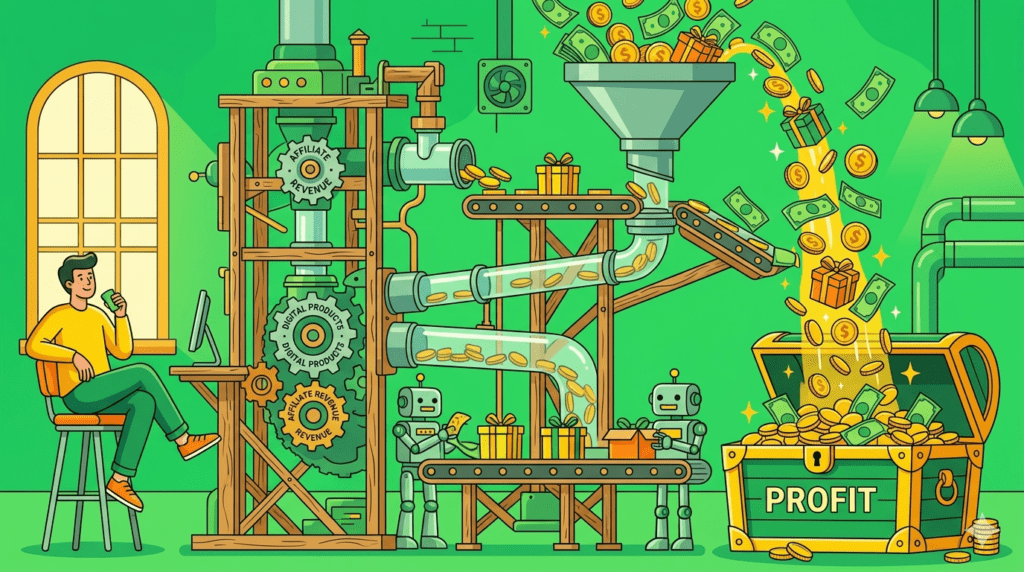
Digital Products (Templates, Ebooks, Presets)
Build once, sell indefinitely on Gumroad, Etsy, or your own site.
Etsy reports rising demand for digital planners and templates. A teacher selling lesson plan templates on Teachers Pay Teachers can earn $1,000+/month with consistent uploads.
The work: creating the product (days to weeks). The passive part: automated delivery, forever.
Honest caveat: The market is crowded. Specific and unglamorous beats ambitious. “Budget spreadsheet for freelancers” beats “Ultimate Life Planner.” People buy solutions to annoying specific problems.
Affiliate Content (YouTube, Blog, Newsletter)
Write or film once, earn commissions ongoing.
A blog with 20,000 monthly visitors can earn $1,500/month from ads and affiliate links. A faceless YouTube channel answering specific questions (“is X worth it?”) can compound search views for years after posting.
The work: creating the content (weeks to months of consistency before results).
Honest caveat: This takes 6–12 months before meaningful income appears. Most people quit before the compounding kicks in. Only works if you’re genuinely useful — not if you’re just repeating what everyone else already said.
What Doesn’t Work (Honest List)
- Cloud mining — fees eat the returns and you’re betting on crypto prices
- Bandwidth sharing apps (Honeygain, Pawns) — $1–5/month per device. Real, but not meaningful
- Print-on-demand without marketing — the store alone won’t drive traffic in 2026
- “Passive income courses” — ironic business model
- REITs as truly passive — real income (4% yield) but you’re still in a market that can drop
Honest Summary Table
| Method | Effort Level | Realistic Monthly Earnings |
|---|---|---|
| HYSA | 20 min setup | $33–$42/mo on $10K |
| Cash-back cards | 1 hour setup | $83–$167/mo |
| Index funds | 30 min setup | Long-term only |
| Dividend ETFs | Research + buy | $290/mo per $100K invested |
| Crypto staking | Moderate (if you hold anyway) | 3–14% APY on holdings |
| Digital products | Days–weeks | $0–$5,000+/mo |
| Affiliate content | Months | $0–$5,000+/mo |
Final Thoughts
Real lazy money exists. It just requires honest expectations.
The truly passive stuff (savings accounts, dividend stocks, staking) requires capital to matter. You need money to make money — that’s always been true.
The build-once earn-ongoing stuff (digital products, affiliate content) requires actual work upfront, and a lot of patience before it pays.
The biggest lie in the “passive income” space is that the front-loaded work is small and the rewards are quick. Usually the opposite is true.
Pick the method that matches your starting position. Have savings? Park them somewhere with 4–5% APY while you figure out the rest. Have time and knowledge? Build something that answers a specific question people are already searching for.
That’s the actual playbook in 2026.
Nothing in this article is financial advice. All investment methods carry risk. Do your own research.