
Denuvo 2025 — When the Lock Finally Works (and Still Breaks Everything Else)


The Wall That Finally Worked
In 2025, the wall finally stood tall. Denuvo — the once-mocked DRM that pirates laughed at — is now unbreakable again.
After years of quick cracks and easy bypasses, the new wave of games has stayed locked down for good. Black Myth: Wukong, Stellar Blade, Like a Dragon: Infinite Wealth, and even the 2023 remake of Dead Space have all remained untouched. The pirate scene has quietly surrendered.
Technically, it’s a victory. Philosophically, it’s a disaster.
Because protection that denies access doesn’t defend art — it imprisons it.
Each new “secured” title feels less like a purchase and more like a lease. Players who pay full price are still treated like suspects — forced to authenticate, verify, and check in constantly just to play what they already own.
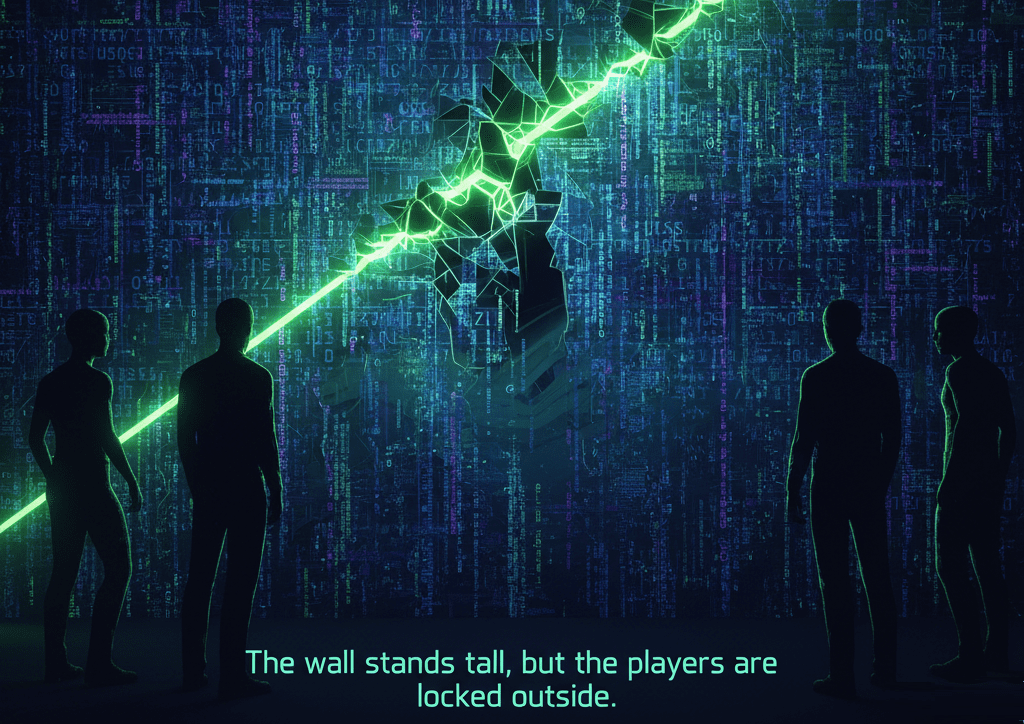
Denuvo was supposed to protect creativity.
Instead, it became the digital version of a locked museum: everything inside is real, but nobody truly experiences it freely.
“The wall stands tall, but the players are locked outside.”
Best Games for Couples to Play Together in 2026: Co-op From Easy to Competitive
Why Every Gadget Looks the Same in 2025 — and Why That’s a Problem
Lag, Stutter, Rage — The Price of “Protection”
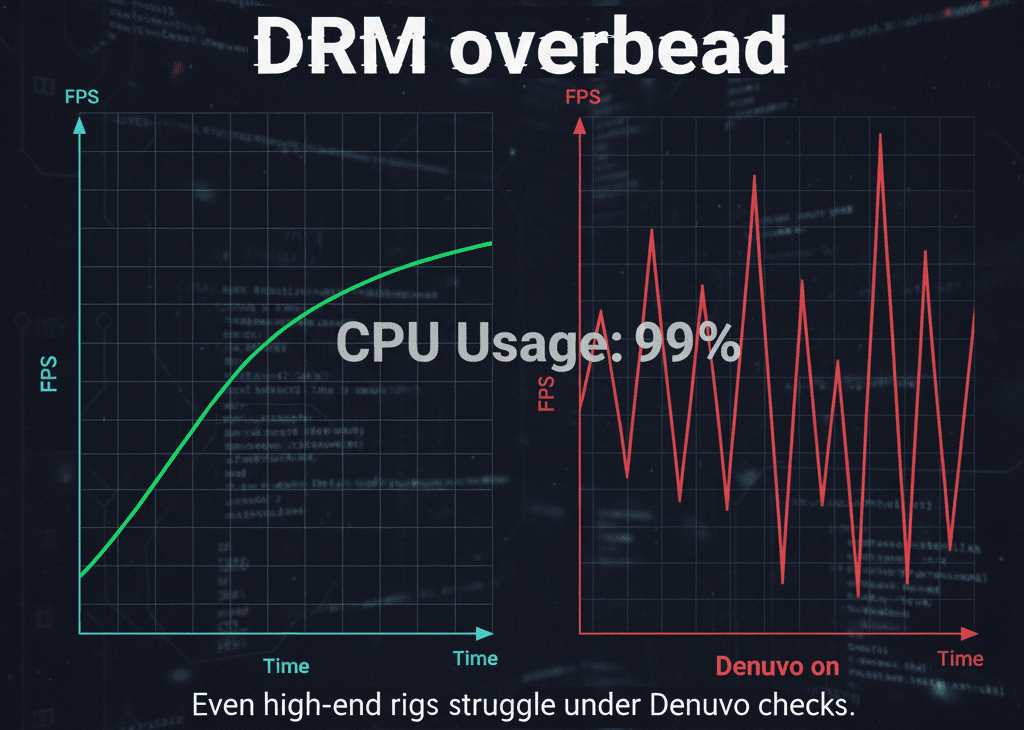
Denuvo sits deep in a game’s code, performing dozens of encryption and license checks every minute. The result is visible even to the naked eye: dropped frames, longer load times, and relentless micro-stutters that ruin even the smoothest systems.
Community benchmarks and side-by-side tests show the same pattern again and again — once Denuvo is removed, games run dramatically better.
Below are confirmed results reported by players and tech analysts:
| 🎮 Game | 🚀 Change After Removing Denuvo | 🔍 Source / Tests |
|---|---|---|
| Resident Evil Village | +15–20 FPS, smoother cut-scene loading | Digital Foundry / Reddit |
| Tekken 8 | reduced input delay, stable 120 FPS | PCGamingWiki / Steam users |
| Assassin’s Creed Mirage | +10–12 FPS, 25 % faster loading | Community benchmarks |
| Ghostwire: Tokyo | no more micro-stutters while roaming | Steam forum data |
| Deathloop | improved frame pacing after official DRM removal | Arkane patch notes |
| Dragon’s Dogma 2 (2024) | severe CPU spikes, unoptimized mess even on RTX 4090 | Capcom forums / DF tests |
Even Capcom admitted that Dragon’s Dogma 2’s poor performance was tied to DRM overhead — yet refused to patch it out.
Because in this industry, control matters more than optimization.
“The game’s biggest enemy wasn’t pirates — it was its own DRM.”
The Sales Myth — DRM Doesn’t Sell Games
Publishers love to repeat the same excuse: Denuvo saves sales in the first few weeks.
But numbers from 2025 tell a different story — games without DRM are outselling those locked behind it.
| 🎮 Game | 🔒 DRM Status | 💰 First-Month Sales | 💬 Player Reception |
|---|---|---|---|
| Clair Obscur: Expedition 33 | ❌ No Denuvo | 3.3 million copies | 95 % positive — praised for performance and freedom from DRM |
| Hollow Knight: Silksong | ❌ No Denuvo | ~3 million copies | Over 96 % positive — clean launch, stable optimization |
| Assassin’s Creed Shadows | ✅ Uses Denuvo | ≈ 2 million total | Mixed (≈ 50 %) — poor optimization, DRM-related issues |
| Dragon’s Dogma 2 | ✅ Uses Denuvo | 2.5 million copies | Mostly negative — heavy CPU spikes and optimization failures |
The trend is clear: DRM doesn’t motivate purchase — it discourages it.
Players support studios that respect them. They avoid ones that treat customers like potential thieves.
Assassin’s Creed Shadows became a case study in backlash: broken optimization, constant spikes, negative Steam reviews, and a brutal sales crash. Meanwhile, Clair Obscur and Silksong thrived purely on goodwill and reputation.
People don’t pirate respect.
Fear Over Trust — The Corporate Addiction
If Denuvo doesn’t fix performance or sell more copies, why do publishers keep paying for it?
Because it’s not a technology — it’s a security placebo.
Executives don’t buy Denuvo to protect games; they buy it to calm investors.
It’s an expensive ritual of fear — proof they’re “doing something” against piracy.
Licenses can cost tens of thousands of euros per year, plus integration time, QA, and ongoing updates.
That money could fund bug-fixing or extra localization — things players actually value.
Developers admit privately that Denuvo complicates builds, slows testing, and sometimes breaks compilers.
Yet marketing departments keep demanding it.
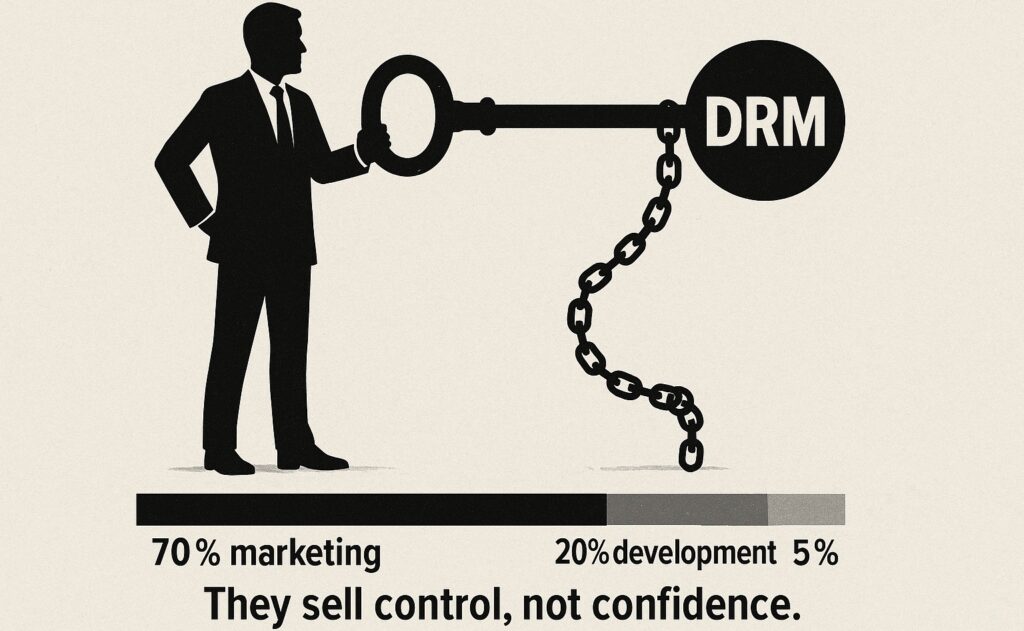
“They sell control, not confidence.”
| 💸 Expense Type | 💰 % of AAA Budget | 💬 Comment |
|---|---|---|
| Marketing | 70 % | Hype over quality |
| Development | 20 % | Actual production |
| DRM / Denuvo | 5 % | Investor placebo |
| Other Costs | 5 % | QA, localization |
The Countertrend — Freedom Wins
Amid all this corporate paranoia, a quiet rebellion is growing.
Gamers are flocking to platforms and studios that trust them — not police them.
GOG.com continues to thrive with its DRM-free policy, proving that accessibility and respect can coexist.
Indie developers openly market their games with “No DRM” badges, turning it into a selling point.
Even on Steam, players filter search results by DRM-status before buying.
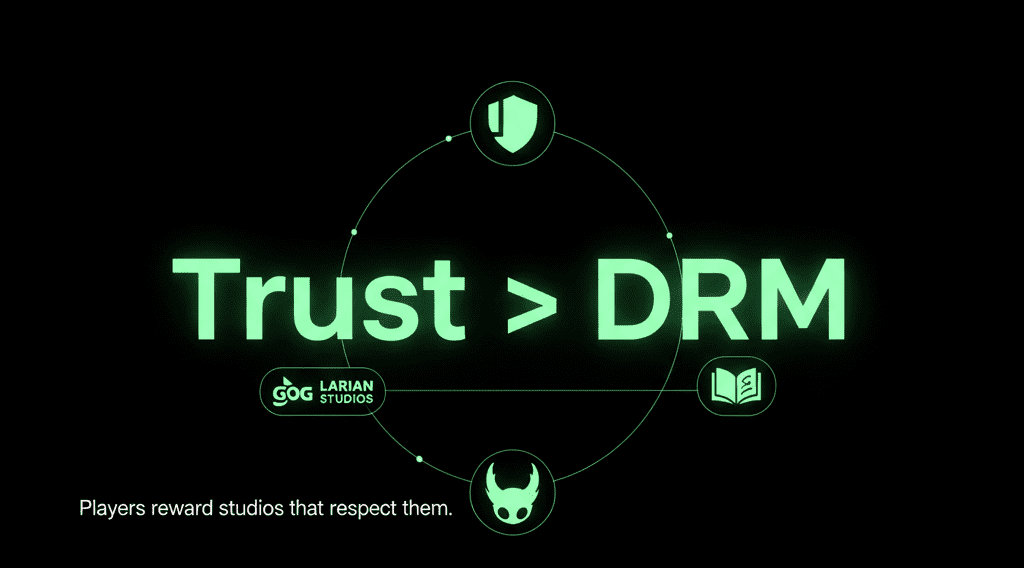
Freedom sells.
When studios stop locking players out, they get loyalty in return.
The best marketing today isn’t fear — it’s transparency.
| 🏷️ Platform / Studio | 🚫 DRM Policy | 🌟 Reputation 2025 |
|---|---|---|
| GOG / CD Projekt | No DRM | High trust score 9.5/10 |
| Larian Studios | No DRM | Fan-favorite dev of 2024 |
| Team Cherry | No DRM | Community icon |
| Ubisoft | Always Online + DRM | Trust score 3/10 |
Trust > DRM.
Final Thoughts
Denuvo in 2025 finally does what it was built to do — stop piracy.
But in the process, it destroyed something far more valuable: trust, performance, and goodwill.
Players didn’t start stealing again — they just stopped caring.
When protection hurts more than piracy, it’s not protection anymore.
The quiet revolution continues.
In a world where everything has become a subscription or a license, torrents and DRM-free games remind us — some things are meant to be shared, not rented.
Freedom isn’t nostalgia — it’s the immune system of the Internet.
Also read:
- Torrent Is Not the Past — It’s the Immune System of the Internet — how peer-to-peer keeps the web alive against corporate walls.