
Why Every Gadget Looks the Same in 2025 — and Why That’s a Problem

The Era When Tech Had Personality (2000s Nostalgia)
There was a time when every gadget had character.
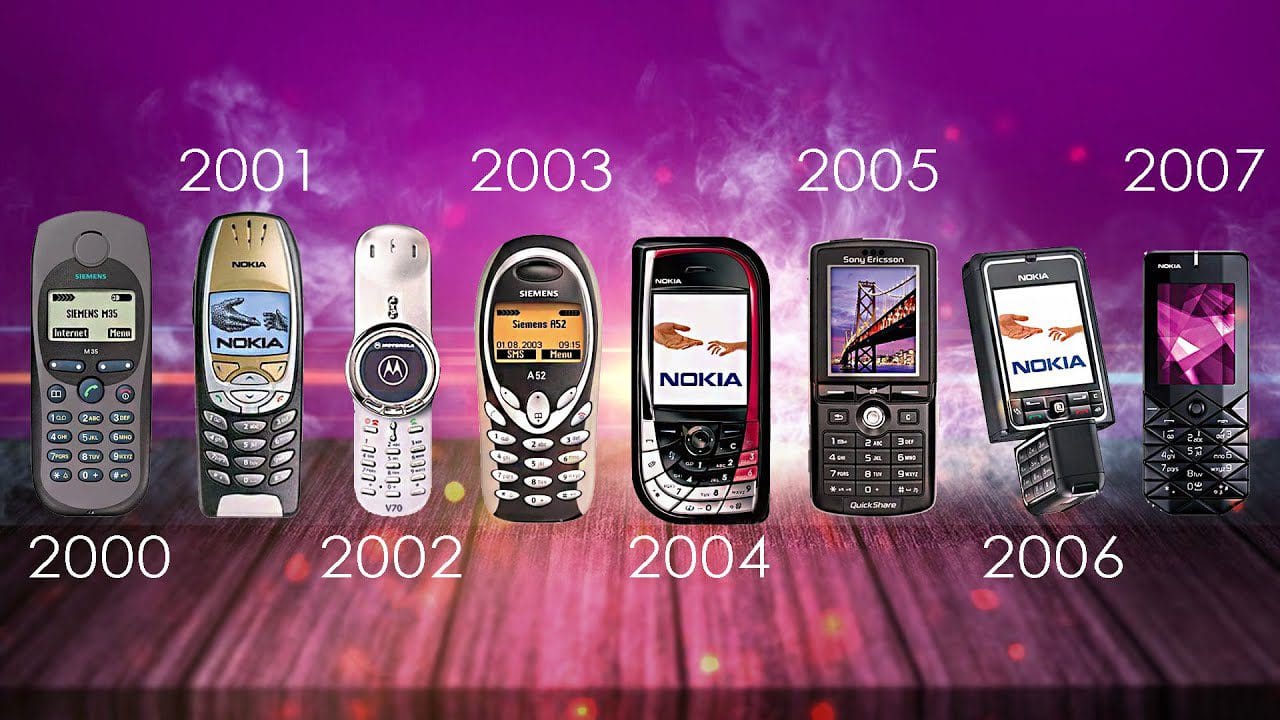
Before our pockets were filled with identical glass slabs, the early 2000s felt like a wild west of design — a colorful, experimental, slightly chaotic age where technology still had a soul. Phones didn’t just connect you to the world; they expressed who you were. Owning a device wasn’t about specs or benchmarks — it was about identity.
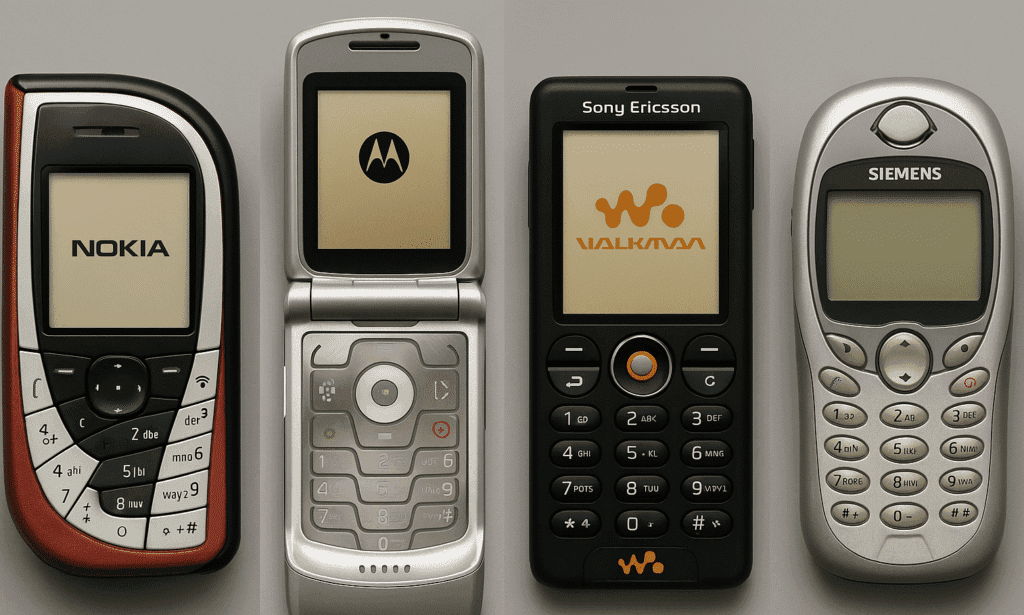
Back then, Nokia was untouchable — a design powerhouse that treated every model as a statement. You could spot a Nokia 7610 from across the room: its asymmetrical “banana” shape, red or silver curves, and tribal keyboard made it instantly recognizable. It didn’t look like anything else — and that was the point. The Nokia 3310 was practically a cultural icon, remembered not only for its indestructibility but for its personality — a device that felt alive, not manufactured by committee.
Sony Ericsson brought music and motion to the table. Their Walkman phones turned the idea of a “music player” into a lifestyle — orange accents, tactile buttons, glossy black shells. You could flip it open and instantly feel like you were holding something cool. It wasn’t minimal or sterile; it was loud, youthful, and full of personality. Even the ringtones and startup sounds carried identity — a small jingle that made your phone yours.
Then came Motorola, the rebel. The Razr V3 wasn’t just a phone; it was a fashion accessory. Razor-thin, metallic, futuristic — when you flipped it open, it felt like unlocking the future. The satisfying clack of its hinge was a sensory experience. You didn’t need to tell people you had the new Razr — they could hear it.
Meanwhile, Samsung and LG were still experimenting — sliders, twists, dual screens, mirror finishes. Each release felt like a gamble, and that made it exciting. The PSP (PlayStation Portable) turned gaming into something you could flex with — a pocket console that looked like it belonged in a sci-fi movie. Even MP3 players, from the iPod Mini to Creative Zen, had distinct personalities. Some were elegant, others eccentric, but none were boring.
It wasn’t just about function; it was about flavor. Phones came in metallic blue, candy red, lime green, white pearl. You could swap covers, hang charms, add stickers — the device reflected the owner. Everyone’s phone looked different because everyone was different.
Looking back, it’s clear: those early gadgets were messy, ambitious, sometimes impractical — but they were alive. Each brand had its own DNA. Nokia stood for toughness and creativity, Sony Ericsson for lifestyle and sound, Motorola for sleek rebellion. Even the packaging, fonts, and startup animations felt curated, not standardized.
Today, it’s easy to mock that era as “primitive tech,” but in many ways, it was the golden age of personality. Technology back then wasn’t trying to be invisible — it wanted to be noticed, to stand out. It wanted to say something about you.
And that’s the biggest difference between then and now.
In the 2000s, our gadgets spoke for us. In 2025 — they all say the same thing.
Canva AI vs Adobe Express vs Figma: Best Design Tool for Non-Designers in 2026?
The Future of Artificial Intelligence in 2026 — Smarter, Faster, Everywhere
The Great Flattening — How Design Became Sterile
Somewhere around 2015, something strange happened in the world of tech design — everything started to look the same. The once-diverse landscape of shapes, textures, and materials collapsed into a dull uniformity. The quirky experimentation of the 2000s gave way to a clinical sameness that still defines our devices today. Every phone, laptop, and tablet became a glossy rectangle — smooth, sleek, efficient, and utterly forgettable.
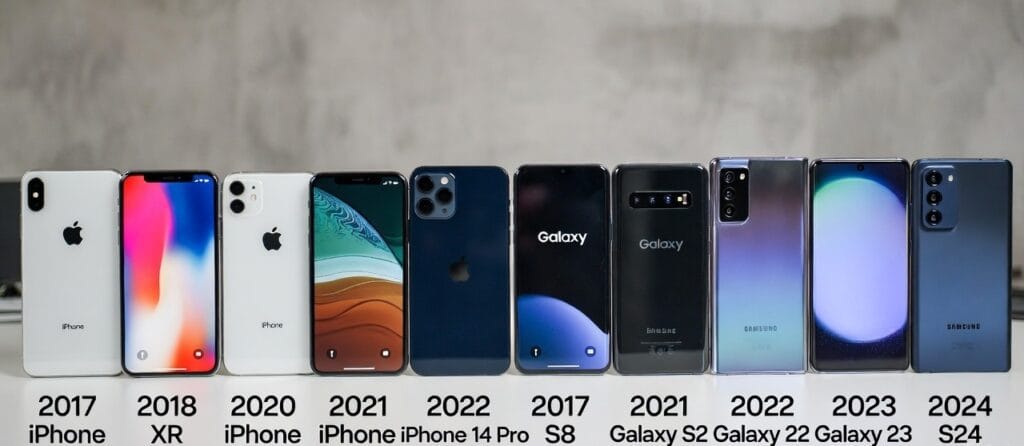
It began, as most modern trends do, with Apple. When the iPhone 6 launched in 2014, its aluminum unibody and edge-to-edge glass were seen as the peak of minimalism. It was beautiful, yes — but dangerously influential. Apple had perfected a formula, and the industry followed obediently. Within two years, every major manufacturer had adopted the same look: glass front, metal back, rounded corners, and a camera bump in the same spot. What had started as a design revolution turned into a visual monopoly.
Samsung, once known for bold, sometimes eccentric models, quickly adapted. The Galaxy S series began to lose its experimentation with textures, curves, and playful colors, morphing into an Apple-like silhouette. Huawei, Xiaomi, OnePlus — everyone chased the same aesthetic ideal: clean, minimalist, premium. And somewhere along the way, the word premium lost its meaning.
By 2017, you could line up six iPhones and six Samsungs, and the differences would feel microscopic. Sure, the screens stretched a little further, the bezels got thinner, the glass became glossier — but the essence was unchanged. It was iteration, not innovation. The once-vibrant market became a hall of mirrors.
“Every phone today looks like a sequel nobody asked for.” That line could summarize the entire smartphone industry of the past decade. Each year brings a new model that looks nearly identical to the last. The excitement of discovery has been replaced by a collective shrug. You can almost hear the keynote scripts repeating: “Brighter screen, longer battery, improved camera.” And yet, if you swapped the brand logos, few people would even notice.
This visual stagnation didn’t stop at phones. Laptops, smartwatches, and tablets followed suit — all sleek, gray, anonymous. The same cold aluminum, the same symmetry, the same lifeless perfection. Designers call it “timeless minimalism.” But maybe that’s just a polite way of saying boring.
The tragedy isn’t that minimalism exists — it’s that it conquered everything else. There’s no rebellion, no risk, no imperfection left. It’s as if the industry collectively decided that creativity was too expensive and difference too dangerous. Consumers, trained by marketing to equate simplicity with quality, accepted it without protest.
In chasing “purity,” tech lost its humanity. Those rough edges, vibrant colors, and playful shapes that once made devices memorable were replaced by sterile efficiency. A phone isn’t a reflection of personality anymore; it’s a status symbol — a piece of hardware that blends seamlessly into the crowd.
The Great Flattening didn’t just simplify design — it flattened emotion.
Today, our gadgets are perfect rectangles built for a world that forgot how to be curious.
Innovation Died the Moment Design Was Standardized
There was a time when every new gadget announcement felt like a glimpse into the future. The mid-2000s were full of surprises — slide phones that twisted in impossible ways, touchscreens that felt like magic, and portable devices that redefined what “mobile” could mean. Then came the touchscreen revolution between 2007 and 2013, and everything changed. For a few years, it was electric: Apple’s first iPhone broke conventions, Android evolved at light speed, and every brand tried to outdo the other with something bold — curved displays, styluses, modular parts, even 3D screens. Innovation was visible. You could feel it.
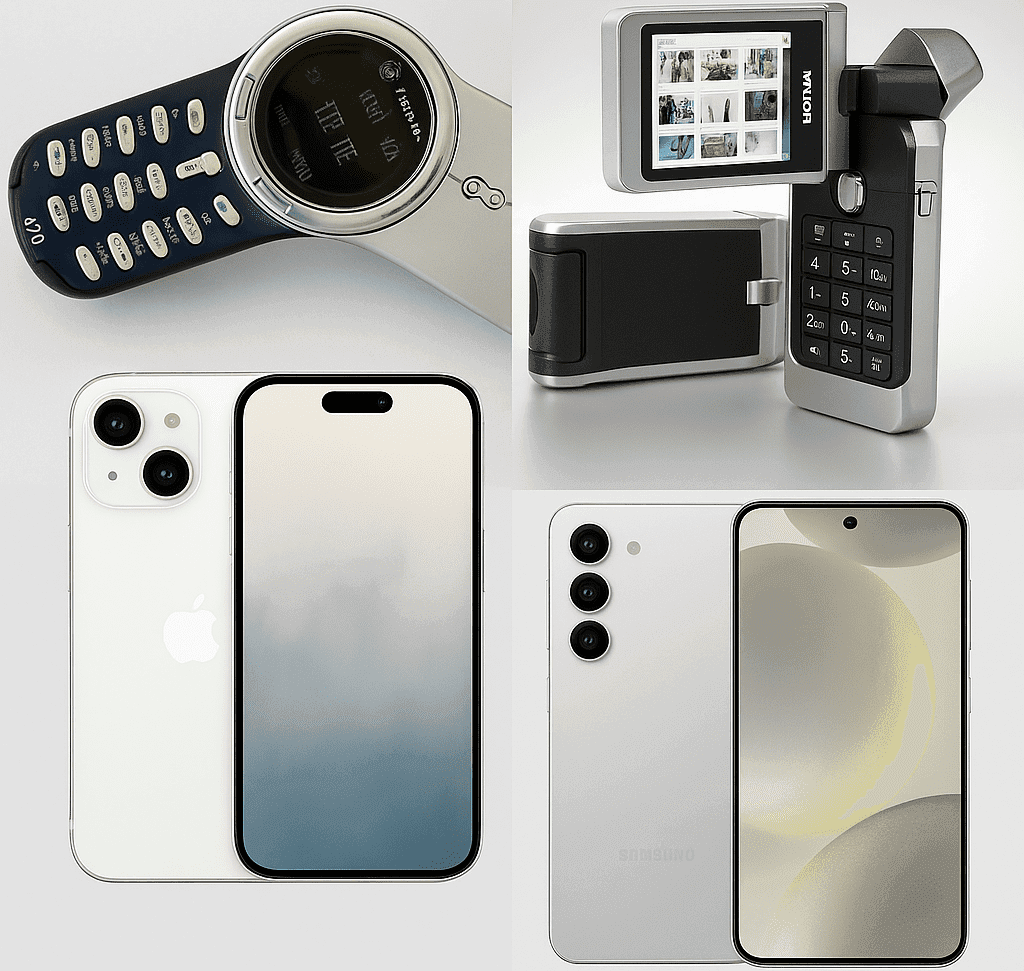
But after that boom, something happened — the air went out of the room. Once the industry agreed on one “correct” design language — a glass rectangle with a touch display — true innovation slowed to a crawl. The rules were set, and no one dared to break them. From that point on, progress became incremental: slightly better cameras, slightly brighter screens, slightly thinner frames. The excitement turned into maintenance.
Every year now feels like déjà vu. A new phone drops, the headlines scream about “the most advanced camera ever,” and within hours, it already feels outdated. It’s not that the tech is bad — it’s that it’s predictable. Every model looks and behaves almost exactly like its predecessor, just with an extra sensor, one more megapixel, and a price bump of $200. The magic of discovery has been replaced by spreadsheets of specs.
“People stopped caring.” That sentence, once unthinkable for the tech world, became a quiet truth. Even hardcore enthusiasts — the same people who once camped outside Apple Stores or live-tweeted every Samsung event — now treat launches like weather reports. They already know what’s coming: new chip, better zoom, more AI buzzwords, and another marketing slogan about “redefining innovation.” The irony is painful — we’re told about innovation every year, but we haven’t actually seen it in a decade.
The death of design diversity killed experimentation. When every phone must fit into a pocket and look “modern,” daring ideas simply don’t get green-lit. Concepts that once would have shocked the world — holographic displays, modular builds, tactile keyboards, dual-hinge designs — now live only in tech archives and YouTube retrospectives. The industry has traded curiosity for comfort.
And so, the product cycle became a loop. Companies build anticipation not through originality, but through scarcity: preorders, exclusive colors, limited editions. We buy not because something new exists, but because we’re conditioned to upgrade. The chase for novelty turned into an annual ritual — one that’s more about marketing than imagination.
It’s not that humans lost the ability to innovate — it’s that corporations stopped needing to. The form factor became sacred, the risks too costly, and the profits too reliable to challenge the system. And in that stillness, technology lost its thrill.
The moment design was standardized, progress became sterile. We entered an era where “new” no longer means different — it just means next.
Monopolies Killed Creativity
Once upon a time, the tech world felt like a noisy bazaar. Every brand was shouting for your attention — Nokia, Siemens, Motorola, LG, Ericsson, HTC, BlackBerry, Alcatel, Panasonic, Sharp, and a dozen others. Each one had a different idea of what the future of mobile should look like. Some failed spectacularly, others redefined the market, but together they created a landscape full of personality and competition. You could walk into an electronics store in 2006 and be overwhelmed — sliders, flips, candy bars, keyboards, clamshells, transparent shells, glowing edges. No two devices felt alike.
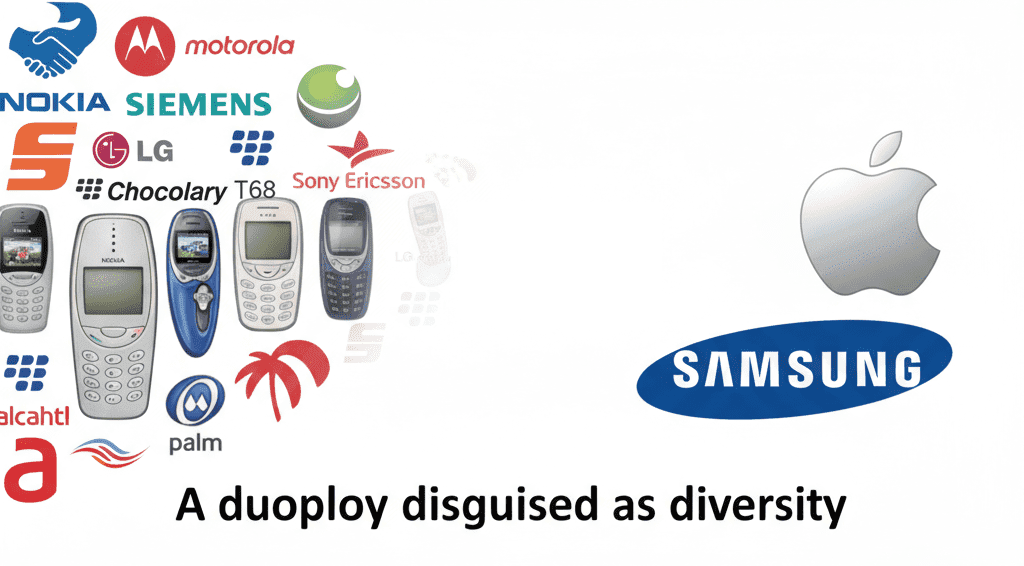
That chaos was beautiful. It was risky, experimental, human. It pushed boundaries because no single company dictated what a “phone” should be. Nokia’s obsession with durability led to tanks like the 3310 and elegant oddities like the 7610. Motorola made phones that looked like jewelry. LG toyed with touchscreens before Apple ever did. HTC pioneered mobile operating systems that would later inspire Android. Siemens made wild, artsy designs that seemed more fashion than function. Every player had a different vision — and that diversity drove progress.
Then the consolidation wave hit. As smartphones took over, the market stopped rewarding weirdness. The race for processing power, camera megapixels, and screen resolution became so brutal that only the richest survived. Smaller brands couldn’t keep up with the relentless upgrade cycles, marketing budgets, and global logistics. Bit by bit, they vanished.
By the mid-2010s, the mobile world had turned into a duopoly. Apple on one side, Samsung on the other. Everything else — a revolving door of Chinese brands trying to carve out scraps of market share. Huawei, Xiaomi, Oppo, Vivo — all competent, but all following the same blueprint. The innovation once born out of diversity was replaced with imitation.
What’s worse, the two remaining giants stopped truly competing in vision. Apple perfected the “luxury minimalism” narrative, while Samsung settled comfortably into the role of the Android alternative. Both now play it safe — refining, optimizing, polishing — but rarely reinventing. Their power has become so absolute that entire industries orbit around their design choices. When Apple removes a headphone jack, the rest follow. When Samsung adds curved glass, everyone copies it. The conversation about creativity has turned into one about compliance.
This monopolization doesn’t just affect aesthetics; it shapes imagination itself. Designers entering the industry today don’t think, “What could a phone be?” They think, “What would Apple do?” Consumers don’t ask for surprises anymore — they expect familiarity. And so, year after year, we get the same rectangles in new shades of gray, packaged as progress.
The irony couldn’t be sharper. We dreamed of smarter phones — devices that would free us, connect us, and express us. But as the market shrank to a handful of corporate monoliths, our options grew dumber.
Now, choice is an illusion. You can have the same design with iOS or Android, in glossy black or matte black. The brands changed, the slogans evolved, but the experience is identical.
We wanted smarter phones — we got dumber variety.
The Lost Joy of Discovery
There’s a quiet rebellion happening right now — and it’s not about the newest iPhone or the next foldable screen. It’s about people rediscovering the joy of old tech. While brands race to make everything thinner, faster, and smarter, a growing crowd is going backward — intentionally. They’re buying iPods, PSPs, Tamagotchis, and Polaroid cameras, not because they’re practical, but because they feel something that modern gadgets can’t give.
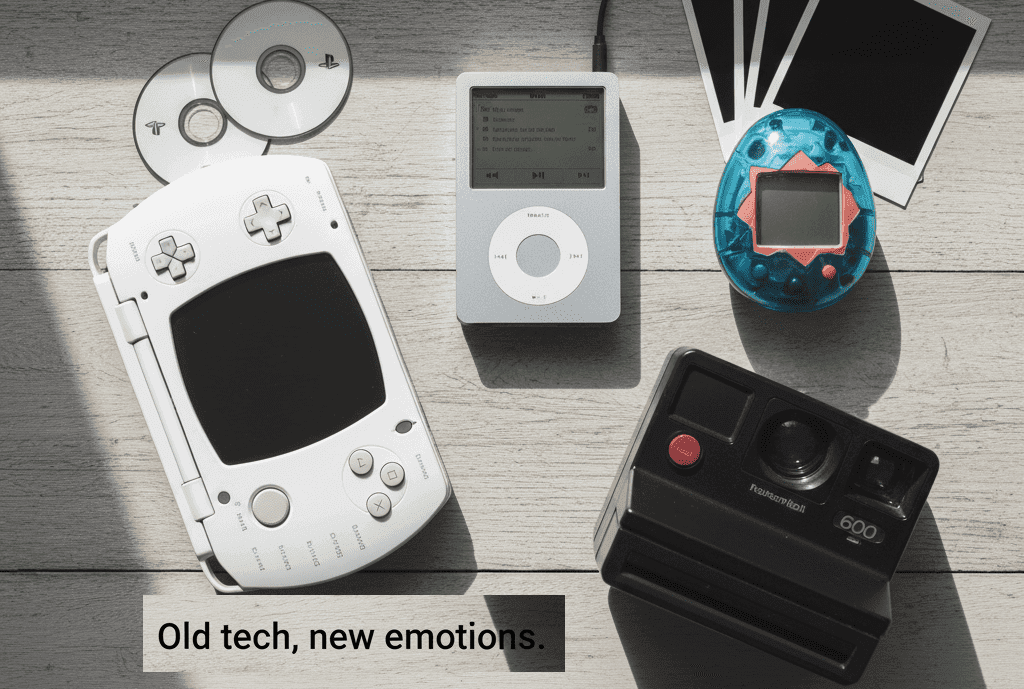
An iPod Classic with its spinning wheel has a kind of charm that no streaming app will ever match. It’s tactile. It’s simple. It doesn’t ask for Wi-Fi, notifications, or subscriptions — it just plays your music. The PSP, once a futuristic dream, now feels like a time capsule of fun — bright startup sound, glossy buttons, physical games. It’s not optimized; it’s alive. The Tamagotchi, that tiny pixelated pet from the late ’90s, reminds us of a time when technology was cute, imperfect, and oddly emotional. And Polaroid cameras — those chunky, noisy machines that spit out photos you can hold — bring back something digital photography erased: the magic of the moment being real.
People are tired of perfection. They want friction, texture, surprise — things that algorithms and glass rectangles can’t deliver. Nostalgia plays a part, sure, but it’s deeper than that. These devices represent an era when technology served us, not the other way around. When holding a gadget could make you smile, not drain your attention.
The fact that Gen Z — a generation raised on smartphones — is buying old tech on eBay says everything. They’re not rejecting technology; they’re rejecting boredom.
Maybe that’s the real sign of how far we’ve drifted. In chasing innovation, we lost the thrill of discovery — and the joy of just pressing “play.”
What Could Bring the Magic Back
All isn’t lost — not yet. The tech world may have flattened into sameness, but beneath that glossy surface, a quiet resistance is forming. Designers and small startups are beginning to ask a simple but powerful question: What if technology could be exciting again?
The rise of retro-inspired design is the first spark. Look at the sudden nostalgia boom: vinyl players with Bluetooth, flip phones making a comeback, and chunky keyboards returning as statement pieces. It’s not just aesthetic — it’s emotional. People are craving devices that feel human again, with physical buttons, quirky lights, and tactile feedback. That’s why brands like Nothing are standing out. The Nothing Phone (2), with its transparent back and glowing glyphs, doesn’t reinvent the smartphone, but it dares to make it playful. It acknowledges that technology doesn’t have to disappear into minimalism; it can still have a face, a heartbeat.
Then there are the concept gadgets that challenge the rules altogether. The Humane AI Pin, love it or hate it, is at least trying to imagine a post-smartphone future — a device that lives on your shirt, not in your hand. The Light Phone goes in the opposite direction, stripping everything down to essentials: no apps, no noise, just presence. These ideas may be imperfect, even impractical, but they carry something the giants have lost — courage.
Meanwhile, innovation in form is starting to resurface. Foldable and rollable screens, 3D displays, and modular accessories are pushing against the rectangle. Sure, some are gimmicks, but others hint at a deeper shift — a desire to make technology feel new again, not just look new.
If the last decade was about optimization, maybe the next one will be about rediscovery. The future of design won’t belong to the companies that make the fastest phone — but to those that make people care again.
Because magic in tech was never about power or specs — it was about wonder. And that’s something even glass rectangles can’t kill forever.
Final Thought
Tech used to make us dream. Now it just makes us upgrade.
Somewhere along the way, the spark faded — that sense of awe we once felt unboxing a new device, discovering a hidden feature, or hearing a startup sound that felt like the future. Today’s gadgets are smarter, faster, sleeker — but emptier. They work flawlessly, yet rarely move us.
And still, hope lingers. Every glowing glyph, every retro revival, every brave experiment reminds us that design can inspire again. The magic isn’t gone; it’s just waiting for someone to care enough to bring it back. Maybe the next great invention won’t be another rectangle — but something that makes us feel again.
Because the real future of technology isn’t in our pockets. It’s in our imagination.