
The Broken Internet: How Algorithms Killed Discovery Everywhere

The Silent Collapse of the Open Web
The modern internet is broken — not by accident, but by design.
The web didn’t collapse overnight. It was quietly suffocated — line by line, update by update — until freedom became a glitch in the feed.
For two decades, the internet promised a democratic space where creativity, curiosity, and persistence could push anyone to the surface. That era is gone.
In 2025, the entire ecosystem of discovery has collapsed into a handful of corporate algorithms whose only loyalty is to ad revenue and engagement time.
You can post for weeks, craft the most original work of your life — and still sit at zero views.
Google hides you. YouTube buries you. Instagram pretends you don’t exist. Pinterest tests you in a silent sandbox. TikTok throttles you behind invisible filters. X rewards no one except those who already pay to be seen.
Google: The Gatekeeper Turned Executioner
No company symbolizes this decay more than Google. Once the world’s gateway to information, it has become an exclusive club for brands with money, authority, and a decade of backlinks.
The 2024–2025 “Helpful Content” and “EEAT” updates promised to improve search results. In reality, they erased small and independent websites. Google now ranks “trust signals” above everything else — and only corporations can earn them.
A new site can publish twenty high-quality articles and remain invisible for months, locked in a sandbox where nothing indexes.
Then came the Search Generative Experience (SGE). Google now steals the answer from your page and shows it as its own AI summary. You do the work, Google takes the credit.
Google didn’t lose control of the internet — it centralized it.
Facebook and Instagram: The Ad Factories
Mark Zuckerberg’s empire perfected the art of slow suffocation.
Facebook, once a community hub, is now a marketplace of recycled content and sponsored spam. Organic reach is dead. Pages that once reached thousands now struggle to reach even 1 %.
Instagram became a glittering graveyard of fake engagement. Every new account is dropped into a trust cage where posts are shown to a handful of users. If they don’t react instantly, your content dies before it lives. The shadowban is no longer a myth — it’s standard procedure.
Creators exist to feed ads: pay to reach, pay to grow, pay to stay. Meta built the most efficient extraction machine in digital history.
The feed isn’t social anymore; it’s a simulation designed to exhaust creators and please investors.
Best Supplements for Focus in 2026: What Science Actually Supports
The Digital Hallucination: How Social Media Algorithms Decide What You Believe Is Normal in 2026
X (Twitter): Monetizing Visibility
When Elon Musk bought Twitter, he promised freedom of speech.
What we got was freedom to vanish.
The algorithm prioritizes paying users (Premium / Blue) and controversy over substance. If you don’t pay, you’re buried. If you’re not viral within an hour, you’re gone.
Twitter is now a monetized slot machine where every scroll is a gamble and every post a potential loss.
The community that once drove conversation — journalists, artists, thinkers — has scattered. What remains is rage optimized for revenue.
The heartbeat of discovery is now a pay-to-play billboard disguised as a conversation.
YouTube: The Repetition Machine
YouTube still looks alive — but only on the surface.
Its algorithm is a loop feeding users the same twenty channels over and over. Watch one tech review, and YouTube serves you a hundred more of the same.
For new creators, the odds are brutal. If your first three videos don’t hit perfect retention and CTR, you’re labeled irrelevant. Even mid-sized channels report 70–90 % drops in impressions.
Shorts were supposed to help, but visibility still depends on historical engagement.
And now Google plans to insert AI summaries into YouTube search too — turning creators into content fuel for its machine.
YouTube doesn’t reward creativity — it rewards conformity.
The home page is a corporate rerun schedule masquerading as recommendation.
TikTok: The Illusion of Reach
TikTok was the last hope for organic growth — until it perfected the sandbox.
New accounts start in hidden testing pools; if early videos don’t achieve flawless metrics, you’re permanently throttled. One 10 K-view clip, then nothing but 20 views forever.
The algorithm now filters for advertiser-friendly patterns. Political or experimental content is flagged “low value.” You don’t choose what to see — the system does.
The For You page isn’t for you. It’s for them — advertisers and behavioral engineers.
Pinterest: The Quiet Sandbox
Pinterest looks peaceful and creative, but its AI filters pre-score every image before showing it to anyone. New accounts can post for weeks and get zero impressions.
Only aged accounts and verified domains see traction. It’s no longer a search engine — it’s a catalog of recycled perfection.
Reddit: The Last Bastion or the Next to Fall
Reddit was once the last free corner of the internet — a chaotic democracy of users, memes, and arguments. After the 2023 API shutdown, it turned into a data silo.
Independent apps died; moderators left; corporate subreddits rose. Now the front page is dominated by sponsored posts and recycled memes.
The promise of community became a performance of community. Even Reddit’s “hot” algorithm prioritizes retention over freshness.
LinkedIn: The Corporate Theater
LinkedIn reinvented itself as the corporate influencer network. What used to be a tool for hiring and idea sharing is now a stage for self-promotion.
The algorithm pushes manufactured inspiration and “success stories” over substance. Every comment reads like networking in disguise. It’s Facebook in a suit — toxic positivity as a growth strategy.
Threads: The Clone Without a Soul
Threads was supposed to be the antidote to Musk’s chaos. Instead, it became Instagram with text — sanitized, shallow, and soulless. Discovery is non-existent; search barely works. Millions of users were auto-imported from Instagram, creating a ghost audience that never engages.
It’s the perfect example of how Meta copies the form of community but never its soul.
The Myth of Data-Driven Fairness
Tech giants justify their algorithms as “objective” and “fair.” They claim data eliminates bias — but data itself is biased toward the past.
Systems trained on yesterday’s winners will always favor yesterday’s winners. “Fairness” becomes a statistical illusion that preserves hierarchy.
The result is algorithmic nepotism: a web where visibility is earned not by quality or truth, but by historical momentum.
The Death of Discovery
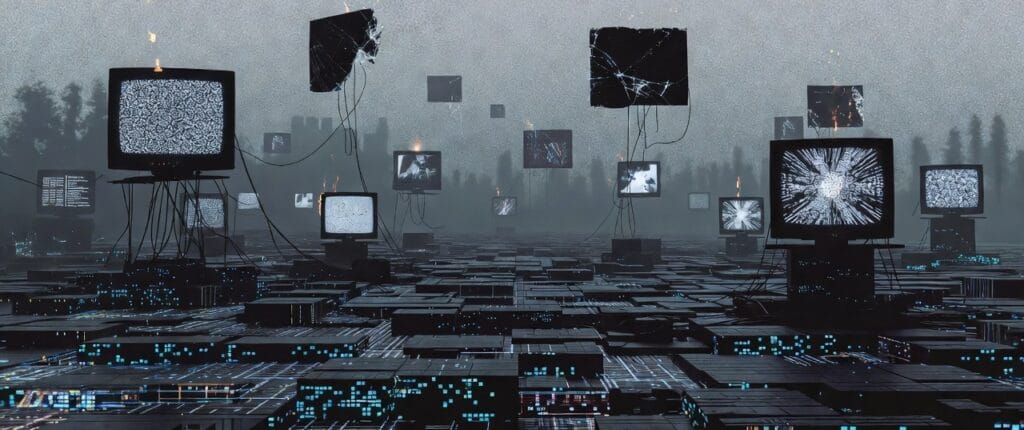
Discovery isn’t just dead — it’s been erased, rewritten, and sold back to us as a product.
The internet’s greatest gift was randomness — the ability to stumble onto something brilliant by accident. That randomness is gone.
In the early 2010s, algorithms explored for us. They tested, experimented, and surfaced new voices.
Now they recycle what’s safe. They don’t ask, “What might you like?” — they decide, “You’ll like this again.”
Every feed is a cage of prediction.
YouTube shows the same thumbnails.
TikTok loops the same dances.
Google answers before you ask.
Instagram curates your personality for profit.
The irony is brutal: the more data platforms collect about us, the less they actually show us.
Personalization became sterilization.
The algorithm doesn’t serve your curiosity — it serves your compliance.
Discovery didn’t fade naturally. It was assassinated in daylight, executed by retention graphs and machine-learning models designed not to inform, but to addict.
The culture stopped expanding — it started looping.
The digital universe, once infinite, has become a single, self-replicating feed.
The Corporate Web
The internet is no longer a public square but a shopping mall.
Google’s results are ads disguised as answers. Instagram’s posts are ads disguised as memories. TikTok’s trends are ads disguised as authenticity. YouTube’s recommendations are ads disguised as community.
It needs you to scroll, not explore; to watch, not think. The thrill of stumbling upon something new has been replaced by algorithmic déjà vu.
How to Take the Internet Back
The fight isn’t over. There is a web beyond algorithmic walls — but it requires intention.
- Build your own space. Websites and newsletters are digital sovereignty.
- Support independent media. Bookmark, share, don’t just scroll.
- Use platforms strategically, not emotionally. They’re tools, not homes.
- Talk to people again. Forums and comments still create real discovery loops.
- Stop chasing algorithmic validation. Obscurity is the new starting line, not a failure.
[INSERT IMAGE: Person breaking free from tangled wires labeled “engagement,” “ads,” “SEO,” “algorithm”]
The New Resistance
The broken internet isn’t the end — it’s the beginning of a new rebellion.
There’s a quiet army forming: writers, coders, artists, journalists — people who’ve stopped begging the algorithm for permission to exist.
They build their own websites. They send newsletters. They post directly. They trade virality for authenticity.
It’s not glamorous. There are no instant hits, no fake metrics, no dopamine spikes — just slow, real growth.
But that’s the point. The new web isn’t about reach. It’s about meaning.
Every small blog that still updates, every artist who uploads instead of optimizing, every reader who clicks a real link — they’re fragments of the old spirit returning.
The next revolution won’t trend. It’ll happen quietly — in comments, in newsletters, in forgotten corners of the web.
You won’t see it on the front page. You’ll feel it when you realize you’ve been scrolling less and thinking more.
When you share something because you believe in it, not because it performs well.
This is the counterculture of the 2020s — a slow web revival.
It’s made of frustration and hope, code and conscience.
And it starts with one simple act: choosing to connect, not to consume.
The corporations broke the internet.
Now it’s on us — the misfits, the makers, the stubborn few —
to rebuild it not for algorithms, but for people.