
Why Restaurant Food Always Tastes Better (The Science Explained)

You’ve made the same pasta at home. You followed the recipe. You used good ingredients.
It still didn’t taste like it does at that place on the corner.
This isn’t in your head — and it’s not just about skill. There are real, specific reasons why restaurant food hits differently. Some are about chemistry. Some are about your brain. Some will genuinely change how you cook at home.
Here’s the actual science.
1. Your Nose Is Already Done With the Meal
This is the biggest one that nobody talks about.
When you cook, you smell everything — for 30, 40, 60 minutes. By the time the food is on your plate, your olfactory system has already processed those aromas hundreds of times.
The effect: Your brain habituates. The smell stops registering as exciting. The appetite signal weakens.
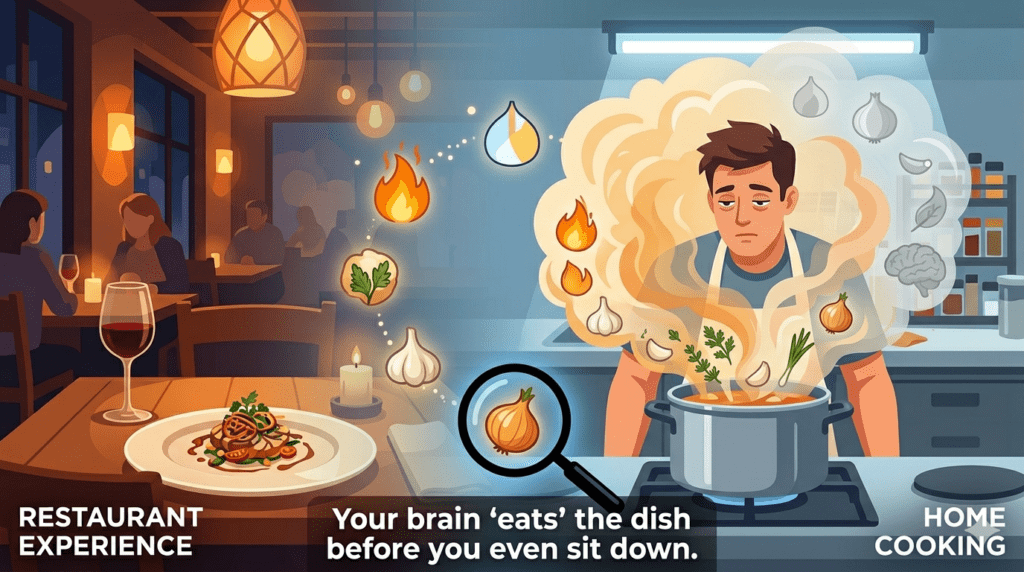
This is called sensory-specific satiety — and it’s documented in food science research. Repeated exposure to a smell before eating actually reduces how much pleasure you get from the first bite.
At a restaurant? You walk in, smell something vague and delicious, and the food arrives already cooked. Your senses are fresh. Everything hits harder.
“The Viral Kitchen”: How a 15-Second TikTok Video Changes What You Eat for Dinner in 2026
Top 10 Desserts You Must Try Before You Die
2. Fat and Heat — More of Both
The honest version nobody on cooking blogs wants to say clearly:
Restaurants use significantly more butter, oil, and fat than you do at home. Not a little more. Often 3–4× more.
Butter goes in the pan before, during, and after cooking. Vegetables get finished with it. Sauces get mounted with it. Your steak rests in it.
Fat carries flavor molecules. More fat = more flavor delivery.
The other part: heat. Restaurant ovens run at 500°F+. Commercial burners put out 30,000–150,000 BTU. Home burners: around 7,000–12,000.
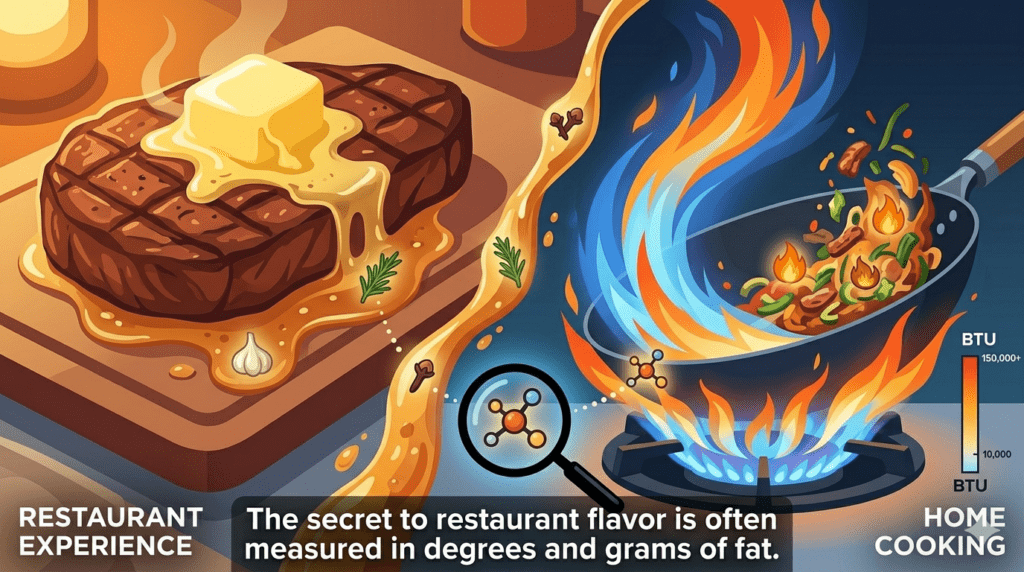
Higher heat means:
- Maillard reaction happens faster and more intensely (the browning that creates complex flavor)
- Caramelization at the surface
- Wok hei in stir-fries — that slightly charred, smoky quality that’s impossible to replicate on a home stove
3. Salt at Every Stage
Home cooks add salt at the end, or not at all.
Restaurant cooks season every component, at every step of cooking. The pasta water. The blanching water. The protein before searing. The sauce as it reduces. The final plate.
Salt doesn’t just make food salty — it suppresses bitterness, amplifies sweetness, and makes ingredients taste more like themselves. Applied correctly at multiple stages, it builds flavor that’s impossible to add back at the table.
4. Umami Is Being Deployed Against You
Most people have heard of umami — the fifth taste, the savory depth that makes food feel satisfying.
Restaurant kitchens stack umami deliberately:
| Ingredient | Umami source |
|---|---|
| House-made stocks | Glutamates from long-simmered bones |
| Aged parmesan | Free glutamates |
| Miso, soy sauce | Fermented glutamates |
| Mushrooms | Glutamates + nucleotides |
| Anchovies | Inosinate |
These ingredients often aren’t visible in the final dish. They’re building blocks in sauces, braises, and stocks. You taste the result — depth, complexity, richness — without knowing why.
5. Your Brain Is Doing the Rest
Here’s the part that’s genuinely strange:
A 2014 Cornell University study found that people who paid $8 for an Italian buffet rated their meal significantly better than people who paid $4 for the same food. Nothing changed except the price tag.
Oxford’s Crossmodal Research Lab has shown that background music alters taste perception — high-pitched notes enhance perceived sweetness; low, bass-heavy tones amplify bitterness and umami.
Warm, dim lighting increases relaxation, which reduces stress hormones, which directly affects how flavors register.
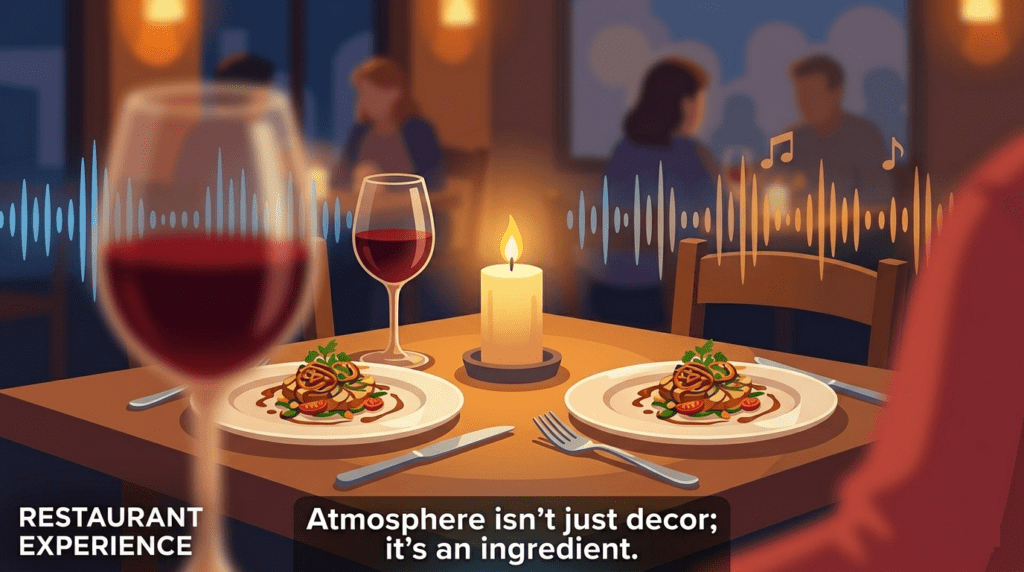
Restaurants engineer all of this. The plates, the lighting, the music, the anticipation of waiting for food you didn’t cook — all of it primes your brain to experience the meal more intensely than the same food eaten standing in your kitchen.
Being served also matters. Research shows food eaten in social contexts, with someone caring for you, genuinely tastes better. The emotional context of a meal changes the chemical experience of eating it.
What You Can Actually Take from This
You can’t replicate the full restaurant experience at home. But you can close most of the gap:
- Stop smelling your food while cooking — minimize tasting and hovering over the pot
- Use more fat than feels comfortable — especially finishing butter
- Season at every stage, not just at the end
- Use higher heat — get your pan genuinely hot before anything goes in
- Add one umami ingredient per dish — a parmesan rind in soup, a splash of fish sauce in a braise, miso in a marinade
Final Thoughts
Restaurant food tastes better for a combination of reasons that are partly chemical, partly psychological, and partly environmental.
The Maillard reaction and the fat content are real. The sensory adaptation from cooking your own food is real. The effect of lighting, music, presentation, and price on perceived taste is also genuinely real — and documented.
The gap between restaurant and home isn’t mostly about skill. It’s about conditions. Restaurants are engineered, from the kitchen equipment to the dining room atmosphere, to make food taste as good as possible.
Understanding that doesn’t ruin the magic. It makes the magic more interesting.