
AI for Small Businesses — How to Compete with Giants

1 Intro — AI Makes the Game Fair for Small Businesses
For decades, the business battlefield was uneven. Large enterprises—the corporate giants—wielded superior weapons: massive R&D budgets, sophisticated logistics, and personalized marketing campaigns fueled by mountains of capital. Small businesses (SMBs) were often left competing on passion, local expertise, and sheer grit.

Today, this landscape has changed. The emergence of affordable, accessible Artificial Intelligence (AI) tools has heralded a new era: the Democratization of Scale. AI is not just a productivity booster; it is a competitive leveler. It grants the independent bookstore the same sophisticated inventory management as Amazon, and gives the local consultancy the personalized lead-scoring capabilities of a Fortune 500 firm.
Historically, AI adoption was heavily skewed toward large corporations. However, recent trends show a decisive shift. While enterprise adoption remains high, SMBs are rapidly closing the gap, attracted by lower barriers to entry and clearer, faster Return on Investment (ROI) potential. AI transforms operational expenses into strategic assets, allowing small teams to manage complex tasks previously requiring large departments. This shift allows the agile SMB to punch far above its weight, turning their innate flexibility into a decisive competitive advantage.
This article explores how small businesses can move beyond simple AI experimentation and strategically deploy these tools across their core functions—from marketing and finance to HR and product development—not just to survive, but to effectively compete with, and in many cases, outperform their larger rivals.
Canva AI vs Adobe Express vs Figma: Best Design Tool for Non-Designers in 2026?
Why Every Gadget Looks the Same in 2025 — and Why That’s a Problem
2 Why Small Businesses Have a Natural Advantage With AI
The common narrative suggests that AI success requires deep pockets and sprawling data centers. While giants certainly possess these resources, they are often burdened by structural inertia that makes rapid AI deployment agonizingly slow. This is where small businesses inherently shine. Their agility and lean structure provide a natural, decisive advantage in the age of AI.
1. Speed and Decisiveness (The “Agile” Advantage)
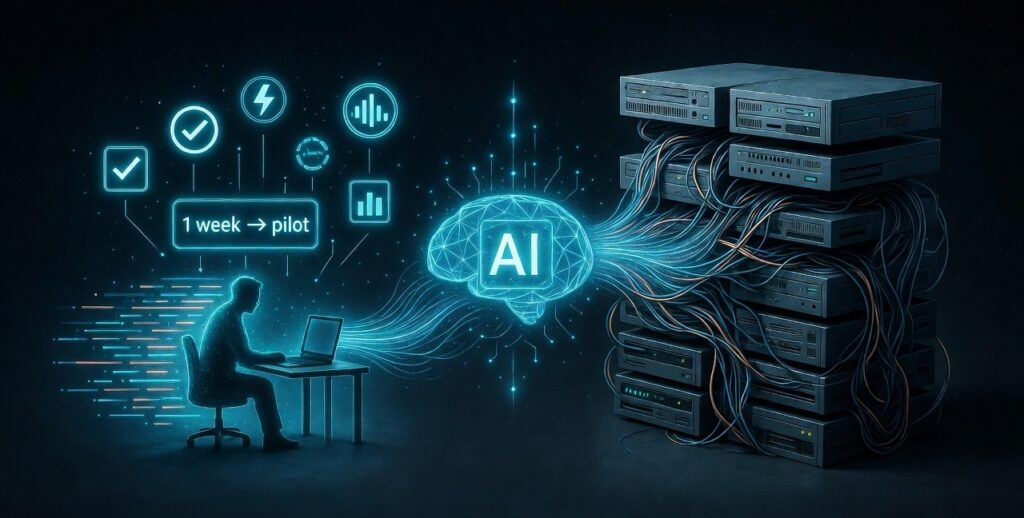
Large companies are often trapped by complex approval hierarchies, entrenched processes, and regulatory overhead. Implementing a new AI tool can take months or even years. Small businesses, conversely, can identify a need, select a tool, and launch a pilot program within a week. This speed allows them to iterate faster, fail quickly, and pivot their strategy based on real-time AI insights, minimizing wasted time and capital. They benefit from a tight feedback loop that bypasses the bureaucratic maze.
2. Freedom from Legacy Systems
A major obstacle for large firms is their dependence on expensive, decades-old, integrated software—the dreaded “legacy systems.” Integrating modern AI APIs into these outdated structures is often technically challenging and prohibitively costly. Small businesses, by contrast, are often operating on newer, cloud-native platforms that are designed for seamless integration with modern AI tools. They can build their technology stack from the ground up to be AI-native, granting superior efficiency and scalability from day one.
3. Closer Proximity to Data and Decisions
In a large corporation, the data scientist generating a customer insight is often several management layers removed from the sales manager who needs to act on it. This distance dilutes the value of the intelligence. SMBs operate with minimal hierarchy. The owner, the sales lead, and the data source are often the same person or sit side-by-side. This proximity ensures that AI-generated intelligence—be it a high-value sales lead or a critical inventory alert—is acted upon instantly and accurately. This allows them to create hyper-personalized customer experiences that giants struggle to replicate at scale.
In short, while giants move slowly, constrained by their own size and history, small businesses are lean, quick, and unburdened. AI acts as a force multiplier for these innate qualities, allowing SMBs to leverage computational power without the associated structural drag.
3 The 8 Core Areas Where AI Levels the Playing Field
The true power of AI for small businesses lies in its versatility. Instead of requiring a massive, centralized platform, AI can be implemented piece-by-piece across functional silos, optimizing processes instantly. This section details the eight core areas where AI delivers game-changing capability, allowing SMBs to perform with the sophistication of a major corporation.
3.A. AI Marketing: Hyper-Personalization at Scale

For large enterprises, personalized marketing is a costly logistical nightmare. For the small business, AI makes it routine. AI marketing tools allow SMBs to achieve hyper-personalization, turning small, focused audiences into highly motivated customers.
The Level-Up:
- Dynamic Content Generation: AI tools can instantly generate hundreds of variations of ad copy, social media posts, and email subject lines, testing them in real-time to find the optimal message for micro-segments of the audience. This replaces the slow, expensive process of human copywriters and A/B testing, ensuring that every message resonates deeply.
- Budget Optimization and Bidding: Small marketing teams can eliminate guesswork from ad spend. AI platforms analyze historical conversion data, external market signals, and customer journeys to dynamically reallocate budget across Google, Facebook, and other platforms. This guarantees that capital is spent only on the audiences most likely to convert, maximizing the ROI of a limited marketing budget.
- Predictive Lead Scoring: Instead of treating all inbound leads equally, AI models score leads based on their likelihood to purchase, their engagement history, and demographic fit. This allows a small sales team to focus its limited time and energy exclusively on the highest-potential prospects, increasing conversion rates without expanding headcount.
By deploying AI in marketing, a small business gains the ability to speak to thousands of customers individually, matching the personalization efforts of major brands but with superior speed and budgetary efficiency.
3.B. AI Customer Support & Sales: The 24/7 Virtual Team
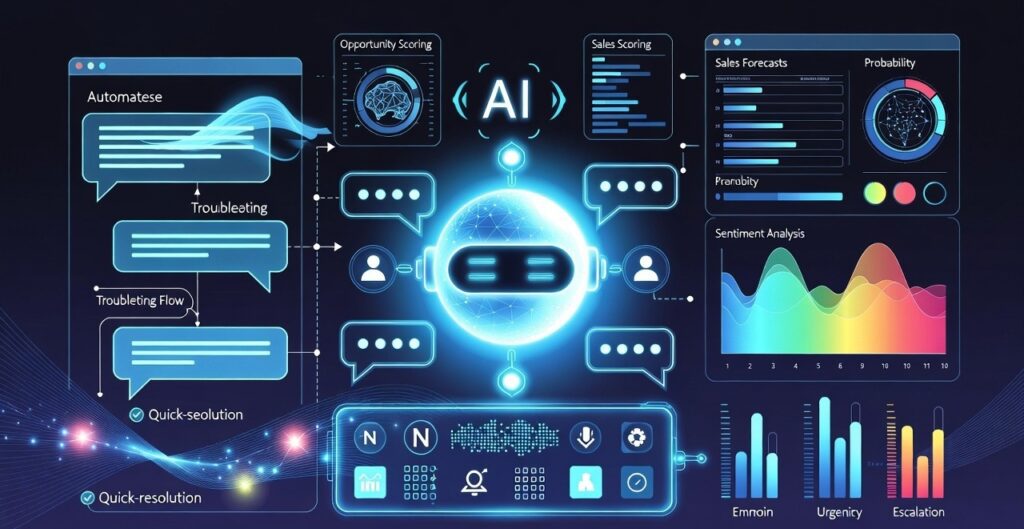
One of the oldest disadvantages for SMBs was the inability to offer 24/7 customer support. When the team went home, the customer experience suffered. AI has entirely eliminated this barrier, offering round-the-clock service and sophisticated sales assistance without hiring a single night-shift employee.
The Level-Up:
- Intelligent Chatbots and Virtual Agents: Modern AI chatbots do more than just answer FAQs. They use Natural Language Understanding (NLU) to grasp intent, handle complex troubleshooting, process returns, and even qualify sales leads. This dramatically reduces the burden on human agents, freeing them to handle only the most intricate and high-value customer interactions.
- Sentiment Analysis: AI monitors customer interactions (emails, chat logs, social media comments) and instantly identifies emotional cues, such as frustration or urgency. If a customer expresses anger, the system automatically escalates the case to a human agent, providing a transcript and a “frustration score.” This proactive intervention prevents churn and turns potential crises into loyalty-building moments.
- Sales Forecasts and Opportunity Prioritization: For sales teams, AI analyzes CRM data to forecast revenue more accurately than manual methods. Crucially, it highlights which existing opportunities are most likely to close in the current quarter, enabling the sales manager to prioritize coaching and resource allocation where it matters most.
By leveraging AI in customer support and sales, SMBs can guarantee an enterprise-level service experience while maintaining a lean, focused human team.
3.C. AI Operations & Automation: The Efficiency Engine

Operational efficiency is often the domain where giants gain their largest cost advantage. By utilizing AI, small businesses can achieve similar efficiencies without the massive capital expenditure required for large-scale logistics and infrastructure. AI focuses on optimizing small, repeatable tasks, unlocking significant cumulative savings.
The Level-Up:
- Robotic Process Automation (RPA): RPA tools—often fueled by AI—can automate highly repetitive, rule-based tasks such as data entry across systems, invoice processing, and report generation. This frees up administrative staff, not just to handle more complex work, but to focus on value-adding strategic activities. For a small business, automating just five hours of administrative work per employee per week can translate into tens of thousands in annual savings.
- Smart Supply Chain and Inventory Management: For SMBs in e-commerce or light manufacturing, AI predicts demand fluctuations with superior accuracy compared to traditional forecasting. It analyzes seasonality, public holidays, marketing campaigns, and even weather patterns to recommend optimal reorder points. This prevents costly overstocking (tying up capital) and devastating understocking (lost sales), giving the small operator inventory precision comparable to major retailers.
- Predictive Maintenance: Businesses relying on equipment (e.g., local manufacturers, service fleets) can use AI to monitor sensor data and predict equipment failure before it happens. This transition from reactive, emergency repairs to scheduled, preventative maintenance drastically reduces downtime and unexpected costs.
AI allows the small business to run its “back office” with maximum lean efficiency, turning overhead costs into a strategic competitive edge.
3.D. AI Product Design & Development: Rapid Innovation

Product development is traditionally an expensive, slow, and risky endeavor for small firms. AI transforms this process from a costly guessing game into a fast, data-driven cycle of innovation, enabling SMBs to launch better products faster than their larger competitors.
The Level-Up:
- Idea and Feature Prioritization: AI analyzes vast amounts of customer feedback—from support tickets, social media, and product reviews—to identify genuine pain points and feature requests. It quantifies the urgency and potential impact of each suggestion, allowing the small development team to prioritize the features that offer the maximum user value, minimizing wasted development time.
- Rapid Prototyping and Testing: Generative AI tools can instantly create mockups, wireframes, and even functional code snippets based on natural language prompts. This accelerates the design phase, allowing the team to test multiple iterations of a product or feature quickly. Furthermore, AI can run sophisticated simulated user testing scenarios, flagging potential usability issues before any human testing begins.
- Competitive Feature Gap Analysis: AI can continuously monitor competitor product changes and feature releases. It provides a real-time summary of where the SMB’s product stands relative to the market, highlighting competitive feature gaps or, conversely, unique advantages to be leveraged in marketing.
By embracing AI in design, SMBs can leapfrog the slow, costly R&D cycles of giants and maintain a razor-sharp focus on innovation that truly matters to their niche customer base.
3.E. AI Finance & Accounting: Precision and Protection
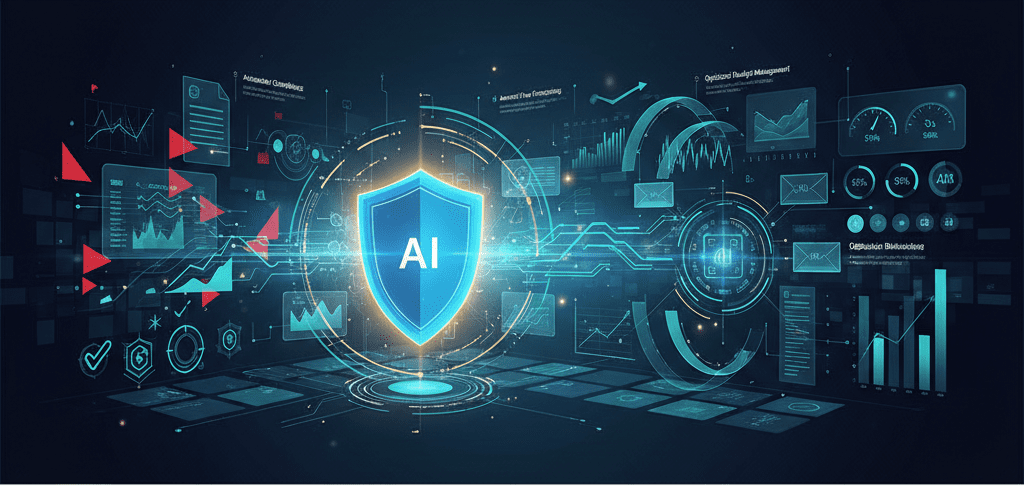
Finance and accounting are crucial areas where errors can be devastating to a small business. AI provides an affordable security blanket, offering both unprecedented accuracy and high-level analytical capabilities previously exclusive to CFOs in large corporations.
The Level-Up:
- Automated Compliance and Error Detection: AI systems review transactions and financial documents for compliance errors, anomalies, and potential fraud in real-time. This automated monitoring reduces the risk of penalties, costly audits, and internal theft, providing peace of mind for resource-strapped business owners.
- Advanced Cash Flow Forecasting: Beyond simple spreadsheets, AI models analyze historical data, seasonality, outstanding invoices, and economic indicators to generate highly accurate cash flow predictions. This allows the SMB owner to make proactive decisions on investments, hiring, or seeking financing, avoiding liquidity crises before they even materialize.
- Optimized Budget Management: AI can constantly track actual spending against budget projections and immediately alert managers to overspending in specific categories. For project-based businesses, AI ensures that every project stays profitable by tracking real-time costs versus contracted revenue.
AI transforms the finance function from a static record-keeping necessity into a dynamic, protective, and predictive tool.
3.F. AI in HR & Hiring: Securing Top Talent Affordably
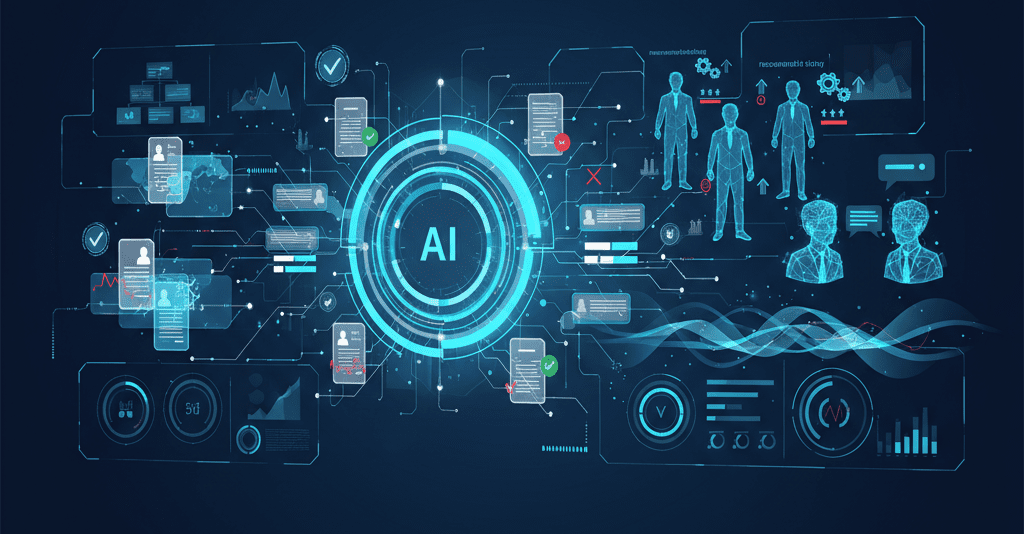
Recruitment and Human Resources (HR) management are disproportionately complex for small businesses. They must compete for talent against large firms with dedicated HR departments and complex benefit packages. AI allows SMBs to level the recruiting field by introducing speed, impartiality, and sophisticated workforce analysis.
The Level-Up:
- Bias-Reduced Resume Screening: Traditional resume screening is time-consuming and prone to unconscious human bias. AI tools quickly analyze hundreds of applications, focusing solely on skill alignment, experience depth, and language patterns relevant to the job requirements. This accelerates the process and helps the small business ensure a more diverse and merit-based shortlist.
- Skill Gap and Training Analysis: Using performance data, AI can identify emerging skill gaps within the existing small team. It recommends targeted, cost-effective training resources or identifies the specific skill set needed for the next crucial hire. This proactive approach ensures the team is always prepared for future challenges without expensive, generalized training programs.
- Enhanced Onboarding and Employee Engagement: AI chatbots can handle the high volume of procedural questions during employee onboarding (payroll, benefits, policy), freeing up HR staff (often the owner or a single manager) to focus on culture and personal integration. Furthermore, AI sentiment analysis can gauge employee morale through internal communication, providing early warnings about potential dissatisfaction or turnover risk.
AI allows small businesses to manage talent acquisition and retention with the same objectivity and efficiency as large corporations, securing a critical advantage in the war for talent.
3.G. AI for Local Retail & Service Businesses: Digitally Enhancing Physical Presence

The common perception is that AI is reserved for e-commerce or large tech firms. However, AI is an enormous asset for brick-and-mortar stores, local restaurants, and service providers, helping them optimize their physical operations and deeply personalize local customer interactions.
The Level-Up:
- Personalized Local Offers: Using location data, purchasing history, and loyalty program data, AI can trigger hyper-personalized coupons or messages the moment a loyal customer walks near the shop. This high-relevance marketing drives foot traffic and repeat business far more effectively than generic mass-market flyers.
- Optimized Staff Scheduling: For restaurants or service businesses (e.g., spas, salons), AI analyzes historical booking patterns, weather forecasts, and local events to predict staffing needs minute-by-minute. This reduces labor costs during slow periods and prevents service degradation during unexpected rushes, ensuring the customer experience remains stellar.
- Micro-Inventory Management: Local retailers can use AI-powered cameras or sensors to track inventory on shelves in real-time. The system alerts staff not only when an item is low, but when it is placed incorrectly or when a high-demand item is not visible, maximizing sales opportunities within the physical space.
AI integrates the digital and physical worlds, allowing local businesses to leverage sophisticated data analysis to create a personalized, optimized, and profitable physical shopping experience.
3.H. AI Creative Tools (Branding, Video, Design): Brand Power on a Budget
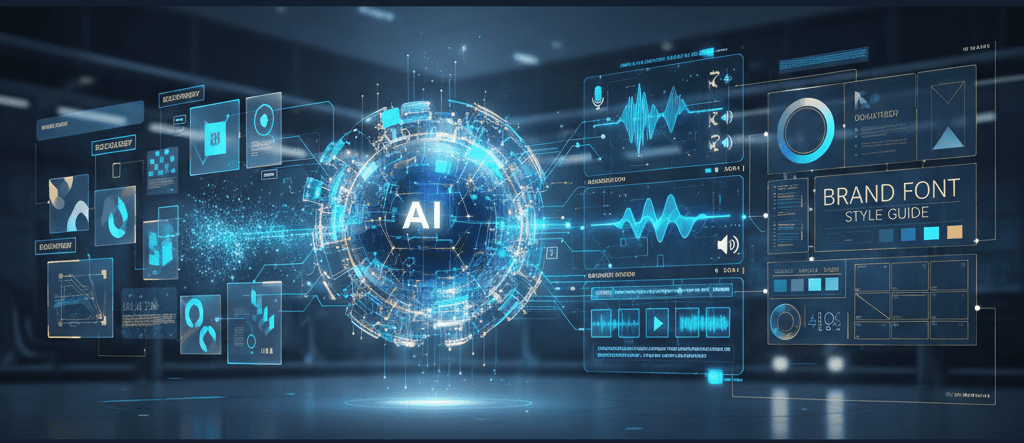
Creating professional, consistent, and engaging visual content—video, design, and branding—was historically one of the most significant cost barriers for SMBs. Hiring agencies or in-house creative teams was simply out of reach. Generative AI has democratized high-quality creative output.
The Level-Up:
- Instant Visual Assets: Generative AI tools allow small teams to create professional-grade marketing imagery, social media graphics, and website illustrations within minutes, simply by typing a descriptive prompt. This eliminates the need for expensive stock photo licenses or outsourcing graphic design for routine tasks.
- Video and Audio Production: AI can handle tasks like voice narration, background music generation, video subtitling, and even basic video editing (cutting raw footage based on scene analysis). This makes producing high-impact video content for social media and advertising feasible for any SMB, regardless of their technical or budgetary constraints.
- Brand Consistency and Style Guides: AI can be trained on a company’s existing visual identity (colors, fonts, tone) and then ensure that all generated content—from ad copy to product images—adheres strictly to the brand guidelines. This consistency builds trust and recognition, a critical component of professional branding.
By harnessing AI creative tools, small businesses can project a brand image and level of professionalism that directly rivals the aesthetic quality of corporate giants, but at a fraction of the cost.
4 Real-World Case Studies: Small Businesses Beating Giants With AI
The theoretical advantages of AI translate directly into tangible market successes. The following examples illustrate how small, focused businesses leverage AI to exploit gaps in the market and compete directly with entrenched industry leaders.

Case Study 1: The E-commerce Niche Disruptor (Using AI Marketing)
A small, independent coffee roaster specializing in rare, single-origin beans decided to challenge the market dominance of large, generalist coffee chains. They could not compete on price or volume, but they could compete on precision and passion.
The AI Strategy: Instead of broad social media campaigns, the roaster used AI to analyze highly specific customer data—purchase history, stated preferences (e.g., preference for high altitude or natural processing), and engagement with specific blog posts. The AI then created hundreds of micro-targeted ad variations and email sequences, delivering messaging that felt incredibly personal (“Try this Ethiopian Yirgacheffe, similar to the Kenyan you loved last month”).
The Result: The small roaster achieved a 75% higher click-through rate and a 40% lower Cost Per Acquisition (CPA) compared to industry averages. By dominating hyper-personalized niche marketing, they built a highly loyal, high-value customer base that the giants, focused on mass appeal, could not touch.
Case Study 2: The Hyper-Efficient Service Firm (Using AI Operations)
A boutique commercial real estate firm, staffed by only three agents, needed to compete against major national brokerages with large research teams. Their key competitive edge became the speed and accuracy of their market intelligence.
The AI Strategy: The firm integrated an AI tool to automatically ingest, categorize, and summarize data from thousands of unstructured public and private sources (zoning changes, local economic reports, sale histories, and building permits). The AI flagged relevant opportunities and risks in real-time, providing deep due diligence summaries on any property in minutes.
The Result: The three-person team could conduct market research and due diligence faster than the 20-person teams at national firms. This agility allowed them to present opportunities to clients first, secure exclusivity, and close deals rapidly, making their small size an asset rather than a limitation.
5 The Biggest Mistakes Small Businesses Make Using AI
While AI offers immense opportunity, success is not guaranteed. Many small businesses stumble in the early stages, often due to strategic missteps rather than technological limitations. Recognizing these common pitfalls is vital for a smooth and profitable AI journey.

1. The “Tool-Hopping” Mistake (Lack of Strategy)
The market is flooded with thousands of exciting AI tools. The biggest mistake is adopting too many tools without a clear, defined business problem to solve. Businesses end up with a fragmented, expensive tech stack where tools don’t talk to each other, creating more complexity than they solve.
Correction: Start with the Pain Point. Identify the single most time-consuming or expensive bottleneck in your business (e.g., customer support ticket response time, lead qualification process). Select one AI tool to solve that one problem, measure the ROI, and only then expand.
2. Ignoring Data Quality (Garbage In, Garbage Out)
AI is only as smart as the data it is trained on. If a small business has inconsistent, messy, or incomplete customer data (e.g., duplicate entries, missing contact details), the AI will generate flawed forecasts, poor recommendations, or inaccurate personalization.
Correction: Data Clean-Up is Step Zero. Before investing in advanced AI, invest time in cleaning, centralizing, and standardizing your existing data (CRM, inventory, finance). A structured data foundation is essential for maximizing AI accuracy.
3. Trying to Automate Broken Processes
AI should optimize efficiency, not institutionalize dysfunction. Attempting to apply automation to a process that is already ill-defined, chaotic, or fundamentally flawed will simply result in the faster, more efficient creation of bad results.
Correction: Simplify First, Then Automate. Before implementing RPA or process-based AI, map out the existing workflow. Streamline and simplify the steps manually. Once the process is clean and efficient, then apply AI to automate it.
4. Failure to Invest in Training and Culture
Many owners assume AI tools are “plug-and-play.” While the setup might be simple, the successful adoption of AI requires the existing team to understand the new workflow and trust the output. Failure to train staff adequately leads to workarounds, resistance, and the eventual abandonment of the tool.
Correction: Treat AI as a Teammate. Invest in continuous, hands-on training for the staff who will interact with the AI. Ensure they understand why the AI made a certain recommendation (e.g., why a lead was scored high).
6 How to Build an AI-Powered Small Business in 90 Days
The transition to an AI-powered business doesn’t require a five-year strategy; it requires a disciplined, focused 90-day sprint. This roadmap ensures that AI integration is strategic, measured, and delivers immediate ROI.
Phase 1: Assessment and Prioritization (Days 1–30)
- Identify the Core Bottleneck: Conduct a thorough audit of daily tasks. Identify the single most time-consuming, expensive, or error-prone process. Example: “Customer support takes up 50% of our lead agent’s time.” This is your target.
- Define Success Metrics: Before buying a tool, define exactly what success looks like. Example: If the bottleneck is support time, the goal is “Reduce lead agent time spent on basic queries by 30%.”
- Tool Selection and Sandbox Testing: Research and select 2–3 low-cost, AI-native tools that specifically address your bottleneck (e.g., a customer support chatbot). Test them using small, non-critical data sets to ensure technical compatibility and user-friendliness.
Phase 2: Pilot and Implementation (Days 31–60)
- Launch the Pilot Project: Implement the chosen AI tool in a limited, controlled environment. If it’s a chatbot, launch it on your website’s FAQ page only, not on the main sales channel.
- Train the Human Team: Crucially, train the relevant staff (e.g., the support agent) not just on how to use the tool, but on how to work alongside the AI—how to review its output, escalate complex issues, and train it with new information.
- Measure and Adjust: Monitor the defined success metrics daily. If the 30% reduction target isn’t being met, adjust the AI’s parameters, refine the process, or switch to the secondary tool tested in Phase 1.
Phase 3: Scaling and Expansion (Days 61–90)
- Scale the Successful Pilot: Once the metric is met and the team is comfortable, fully integrate the AI solution into the production environment (e.g., launch the chatbot across all channels).
- Documentation and Standardization: Document the successful process and train the entire organization on the new workflow. This prevents tribal knowledge and ensures consistency.
- Identify the Next Bottleneck: With the first AI solution running smoothly, return to the assessment stage and identify the next priority bottleneck (e.g., lead scoring, ad spend optimization). The cycle begins again, with the confidence and knowledge gained from the first 90 days.
7 The Future — Why AI Will Empower Small Businesses Even More

The current AI landscape, dominated by large, generalist models (like those for generating text or images), is only the beginning. The future promises an even deeper and more profound empowerment for small businesses through increased specialization and accessibility.
- The Rise of Niche AI: The trend is shifting toward highly specialized, smaller AI models trained on niche, industry-specific data (e.g., AI specifically for local bakery inventory, or a specialized model for regulatory compliance in boutique law firms). These Niche AI tools will be even more accurate and relevant to SMBs than current generalist tools, offering solutions that giants cannot deploy economically at scale.
- Hyper-Personalized Customer Experience: Future AI will move beyond segmentation to true personalization, where every product offering, every communication, and every pricing strategy is dynamically tailored to the individual customer based on their real-time behavior. This level of intimacy will forge deeper customer loyalty, a natural advantage for local and specialized SMBs.
- Autonomous Operations: Eventually, routine operational tasks—from automated invoicing and tax filing to dynamic staffing based on predictive foot traffic—will become fully autonomous, managed by integrated AI systems. This will free the small business owner to focus almost entirely on strategy, vision, and high-touch customer relationships.
In the future, the scale advantage of giants will continue to erode as technology allows smaller, more focused, and more agile organizations to operate with zero operational drag.
8 Final Thoughts
The competitive gap between corporate giants and agile small businesses is narrowing every day, and Artificial Intelligence is the bridge. AI is no longer a luxury for the privileged few; it is a fundamental utility that provides unprecedented operational efficiency, precision marketing, and enhanced talent management to anyone who embraces it.
The biggest danger for any small business today is not that they will fail to compete with AI, but that they will fail to start. The 90-day roadmap proves that transformation can be rapid and low-risk.
Start small, start now. Identify that single bottleneck, apply the appropriate AI tool, and measure the results. By doing so, you don’t just survive in the shadow of the giants—you equip yourself to challenge and defeat them on your own terms.