
The Science of Taste — Why You Crave Certain Foods

Why Your Cravings Aren’t “Lack of Willpower”
Most people believe cravings come from “bad habits,” “weak discipline,” or “just liking food.”
But the truth is far deeper — and far more scientific.
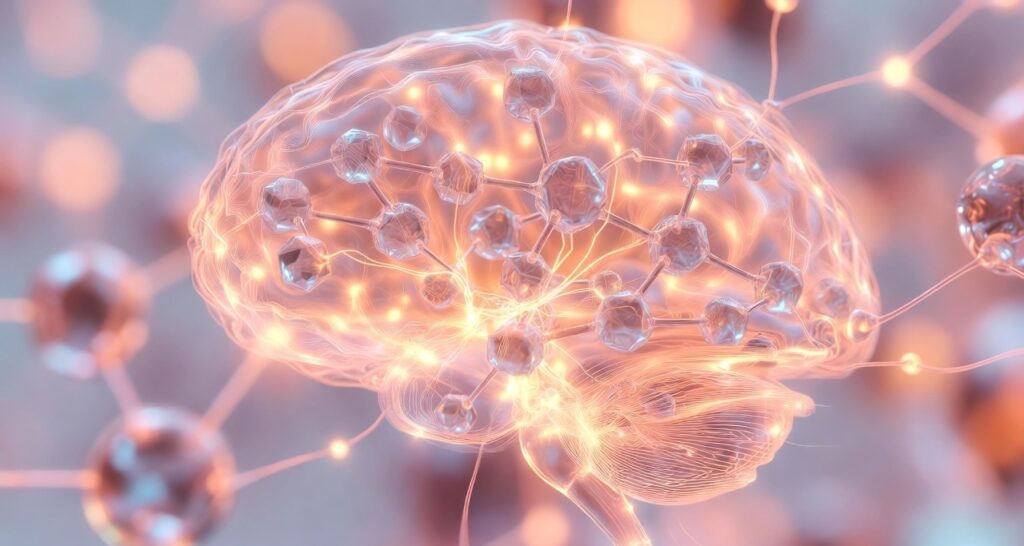
Your desire for chocolate, salty snacks, crunchy chips, or creamy foods is a mix of five forces:
- Evolution (your brain is built to seek certain nutrients)
- Physiology (your hormones, blood sugar, electrolytes, metabolism)
- Psychology (comfort, stress, memories)
- Environment (scents, textures, marketing cues)
- Modern food design (engineered to be addictive)
In other words: craving sweet, salty, or fatty foods is not a personal flaw — it’s your biology doing exactly what biology was designed to do.
This article breaks down the real science behind taste:
Why you crave what you crave. Why it feels uncontrollable. Why your brain rewards some foods more. And how companies use this against you.
Let’s dive in.
“The Invisible Thief”: Why Restaurant Portions Are Shrinking While Prices Skyrocket in 2026
Top 10 Desserts You Must Try Before You Die
PART I: WHY YOU CRAVE SWEET FOODS

1. Evolutionary Roots: Sweet Means “Safe and High Energy”
Humans evolved in environments where sweet foods were rare but valuable:
— ripe fruits
— honey
— some roots
To ancient humans, sweetness meant energy, safety, and no toxins (most poisonous plants are bitter, not sweet).
So your brain developed a very simple rule:
Sweet = energy = survive.
This instinct didn’t disappear. It simply transferred onto modern foods.
2. Sugar and the Brain’s Reward System (Dopamine)
When you eat sugar, your brain releases dopamine in the nucleus accumbens — the “reward center.”
This is the same pathway activated by:
— winning something
— social validation
— enjoyable experiences
This dopamine pulse teaches the brain:
“This thing is good. Do it again.”
This is not an addiction in the clinical sense, but it is reinforcement learning.
The more sugar you eat, the more your brain associates it with reward.
3. Sugar, Mood, and Serotonin
Carbohydrates (especially simple sugars) increase serotonin levels temporarily.
Serotonin regulates:
— mood
— calmness
— emotional stability
So when you’re stressed, sad, or emotionally drained, you’re more likely to crave:
— chocolate
— ice cream
— pastries
— sweet drinks
This isn’t emotional weakness.
It’s a biological attempt to self-regulate.
4. Blood Sugar Cycles and Cravings
Large amounts of sugar cause spikes, followed by rapid drops (reactive hypoglycemia).
When blood sugar falls quickly:
— you feel tired
— you feel hungry
— you want more sugar
This creates the classic cycle:
Sugar → spike → crash → craving → repeat.
Modern sugary foods exaggerate this loop more strongly than natural sources.
5. Sleep and Sugar Cravings
Studies consistently show:
Lack of sleep → increased ghrelin (hunger hormone) → increased desire for sweet, high-calorie foods.
That’s why after a night of poor sleep you want sweets, pastries, or energy drinks.
Your body isn’t being dramatic — it’s trying to compensate.
PART II: WHY YOU CRAVE SALTY FOODS
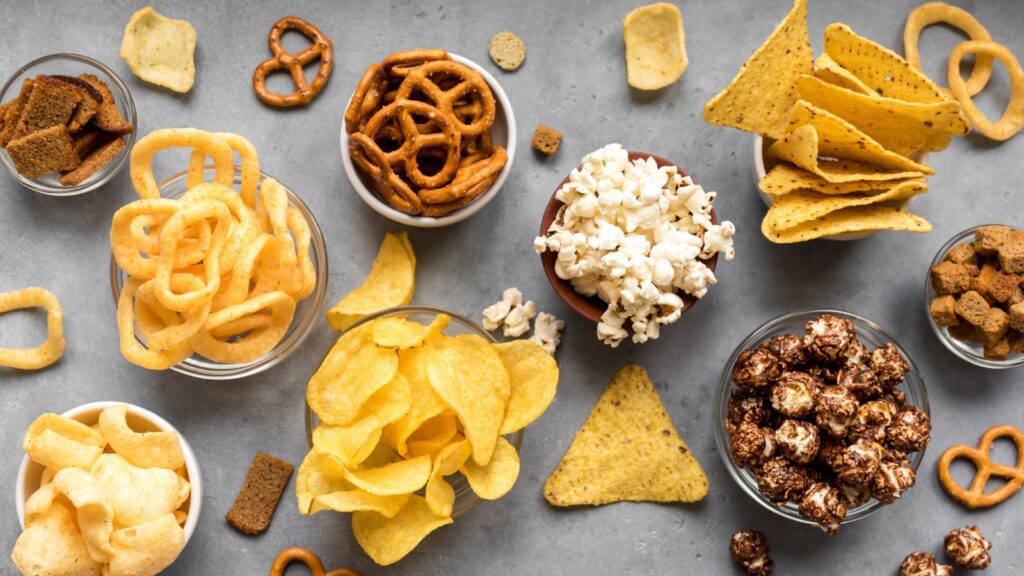
1. Salt = Essential Electrolytes
Salt isn’t just taste — it’s physiology.
Sodium is required for:
— fluid balance
— nerve impulses
— muscle contraction
— blood pressure regulation
When your sodium levels dip, even slightly, your body triggers:
“Eat something salty now.”
2. Dehydration or Electrolyte Loss
Salt cravings often appear when the body is losing electrolytes due to:
— sweating
— heat
— physical activity
— diarrhea
— vomiting
— fasting
— long periods without water
This is the body’s way of preventing dehydration.
3. Stress and the HPA Axis
Stress increases cortisol.
Cortisol alters how kidneys retain sodium — you lose more sodium in urine.
The brain compensates by creating a craving for salty foods.
This is why:
— stress
— burnout
— anxiety
— emotional fatigue
often pair with cravings for chips, crackers, or salty snacks.
4. The Pleasure of Salt + Crunch + Fat
Salt on its own tastes good.
But when you combine it with:
— crunch
— fat
— aroma
the pleasure amplifies dramatically.
This combination strongly stimulates dopamine pathways.
That’s why chips, fries, popcorn, and pretzels are extremely satisfying — not because they’re “junk,” but because they hit multiple sensory systems at once.
PART III: WHY YOU CRAVE FATTY FOODS
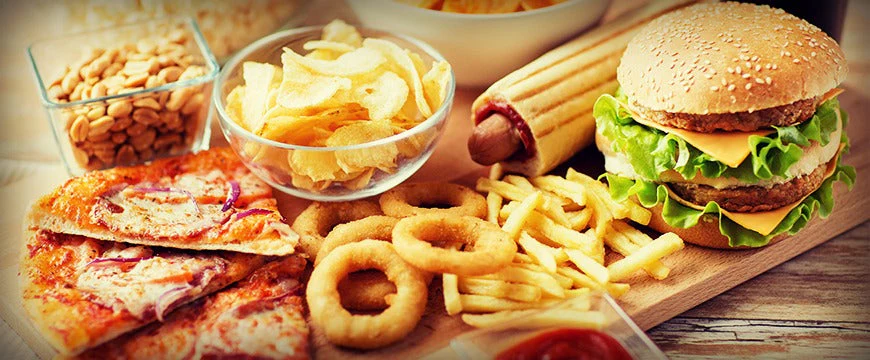
1. Evolutionary Purpose of Fat
Fat is the most energy-dense macronutrient:
9 kcal per gram — more than twice the energy of carbs or protein.
For early humans, fatty foods were:
— rare
— calorie-rich
— lifesaving in winter
— necessary for brain function
So your brain evolved to treat fat as a high-value prize.
2. Fat and Hormonal Stability
Fat helps regulate:
— hormone production
— absorption of fat-soluble vitamins
— long-term energy
When the body is stressed or energy-depleted, it craves fat because fat provides long, slow-burning fuel.
3. Fat and the Brain: Endorphins + Dopamine
Fatty foods trigger:
— dopamine (reward)
— endorphins (comfort/relaxation)
This is why greasy or creamy foods feel soothing after a hard day.
4. Cravings for “Creamy” Foods and Emotional State
Creamy foods (ice cream, cheese, sauces, pastries) also have a textural comfort effect.
The creamy mouthfeel activates sensory pleasure receptors — even without high sugar content.
PART IV: THE “PERFECT STORM” — WHEN SWEET, SALTY, AND FATTY COMBINE
Foods like:
— donuts
— pizza
— chocolate
— ice cream
— burgers
— fries
— pastries
combine 2 or 3 craving pathways at once.
This leads to hyperpalatable foods — foods engineered to be irresistible.
They hit the brain with:
✔ dopamine
✔ serotonin
✔ sensory pleasure
✔ calorie density
✔ aroma
✔ crunch
Researchers call this “the bliss point” — the exact ratio of sugar, salt, and fat that maximizes pleasure.
This is not a conspiracy; it’s an established industry strategy used by big food companies.
PART V: PSYCHOLOGY OF TASTE — WHY WE EAT WITH EMOTIONS, NOT LOGIC
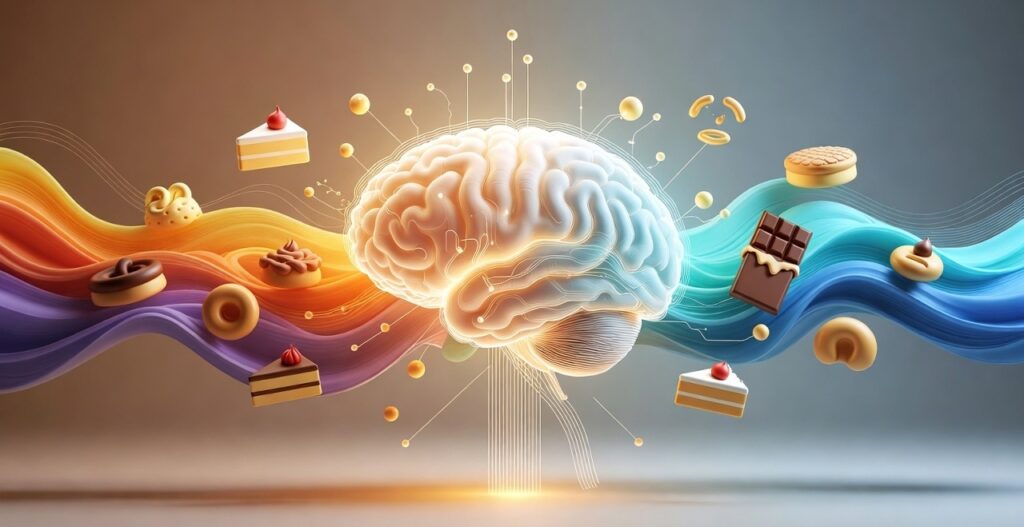
1. Comfort Eating as Stress Relief
Emotional eating is a documented psychological behavior.
People eat not to fill their stomach — but to regulate emotional states.
Stress increases cortisol.
Cortisol increases cravings for calorie-dense foods.
These foods reduce stress temporarily, creating reinforcement loops.
2. Childhood Associations and Food Memory
Taste and smell connect directly to the brain’s emotional centers (amygdala + hippocampus).
This is why:
— sweets remind people of childhood
— soups remind people of home
— certain foods act like “emotional anchors”
You don’t crave the food — you crave the feeling attached to it.
3. The Psychology of Texture
Crunch = excitement
Creamy = comfort
Chewy = satisfaction
Texture plays a bigger role in cravings than taste itself.
This is well-documented in sensory science.
4. The Reward Prediction Error (RPE)
If a food tastes better than expected, the brain releases even more dopamine than usual.
This is why trying a new dessert or new snack can feel extra rewarding.
PART VI: HORMONES THAT CONTROL YOUR CRAVINGS
1. Ghrelin — the hunger hormone
Rises before eating → increases desire for high-calorie foods.
2. Leptin — the satiety hormone
Normally reduces hunger.
But overeating, poor sleep, and ultra-processed foods can blunt leptin sensitivity.
3. Cortisol — the stress hormone
Increases cravings for sugar and fat.
4. Insulin
Controls blood sugar.
Rapid spikes → rapid drops → strong cravings.
5. Serotonin
Low serotonin increases cravings for carbs.
6. Dopamine
Primary driver of reward-seeking behavior in food.
This is not guesswork — all these mechanisms are well-established in human physiology research.
PART VII: HOW FOOD COMPANIES MANIPULATE YOUR BRAIN
Food engineers know precisely how humans respond to:
— sweetness
— crispiness
— aroma
— temperature
— salt-to-fat ratio
They create foods that maximize:
✔ reward
✔ repeat purchasing
✔ craving cycles
Methods include:
1. Bliss Point Engineering
Perfect balance of sugar, salt, fat for maximal pleasure.
2. Texture Optimization
Crunch + melt = double reward (chips, chocolate).
3. Flavor Enhancers
Not MSG specifically — but hundreds of approved compounds that strengthen flavor impact.
4. Aroma Amplifiers
Smell triggers taste even before eating.
5. Visual cues (color psychology)
Bright reds, yellows = “eat now” triggers.
This is why ultra-processed foods override normal satiety signals.
PART VIII: WHY YOUR CRAVINGS FEEL STRONGER NOW THAN 100 YEARS AGO
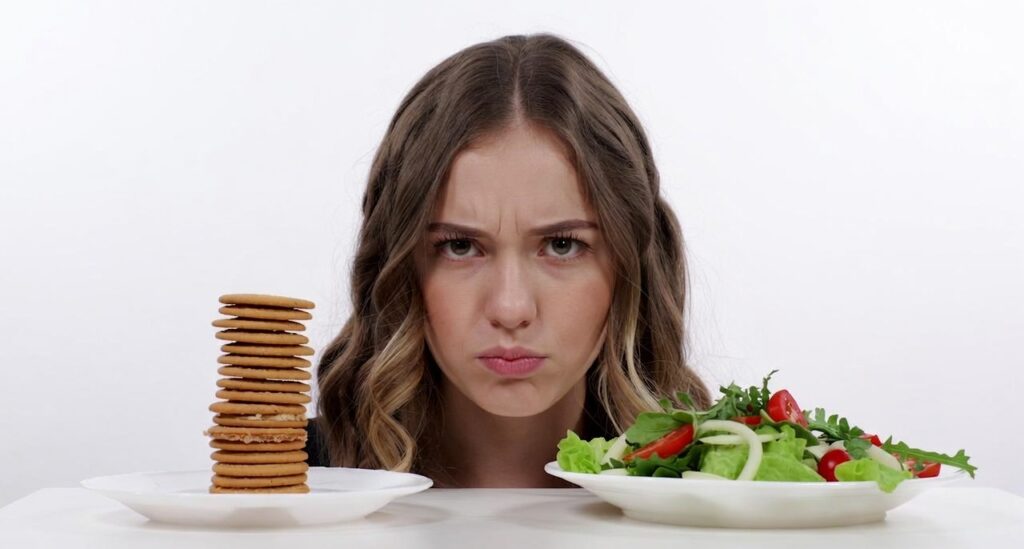
1. Food availability
Constant exposure = constant triggers.
2. Sleep deprivation epidemic
More stress → more cravings.
3. Ultra-processed foods
Engineered to be irresistible.
4. Screen-based eating
Mindless eating reduces satisfaction → more cravings.
5. Modern stress levels
Cortisol-driven cravings are higher than ever.
Your biology is old; your environment is new.
This mismatch intensifies cravings dramatically.
PART IX: HOW TO CONTROL CRAVINGS (BASED ON SCIENCE, NOT WILLPOWER)
1. Eat enough protein
Protein increases satiety and reduces sugar/fat cravings.
2. Sleep 7–8 hours
Normalizes ghrelin/leptin levels.
3. Hydration + electrolytes
Salt cravings often mean dehydration.
4. Balanced meals with fiber
Stabilizes blood sugar → fewer cravings.
5. Avoid long fasting windows if you tend to binge
Extreme hunger increases cravings tenfold.
6. Remove trigger foods from your environment
Environment > willpower.
7. Stress management
Breathing techniques, exercise, sunlight, routines.
8. Choose “healthy swaps”
— fruit instead of candy
— Greek yogurt instead of ice cream
— nuts instead of chips
— dark chocolate instead of milk chocolate
Science consistently shows that substitution is more effective than restriction.
PART X: WHEN CRAVINGS SIGNAL A MEDICAL ISSUE
Certain recurring cravings may signal underlying health conditions:
Excessive salt cravings →
— dehydration
— Addison’s disease (rare but real)
— electrolyte imbalance
Sugar cravings →
— poor sleep
— blood sugar dysregulation
— early insulin resistance
Ice cravings (pagophagia) →
— possible iron deficiency (clinically documented)
Cravings are usually psychological or hormonal, but persistent, intense cravings can sometimes be diagnostic clues.
FINAL THOUGHTS
Cravings are not random — they are the perfect intersection of biology, psychology, evolution, hormones, and modern food engineering.
You crave sweet because your brain evolved to value quick energy.
You crave salty because your body needs sodium balance.
You crave fatty foods because fat is the most efficient fuel source.
And you crave combinations of all three because they hit every reward pathway humans possess.
Understanding these mechanisms doesn’t eliminate cravings — but it gives you control.
You stop blaming yourself and start recognizing the patterns.
You can manage cravings not through willpower alone, but through awareness, sleep, nutrition, and environmental changes.
Cravings are a conversation between your brain and your body.
And now, you finally understand the language.