
“The Invisible Thief”: Why Restaurant Portions Are Shrinking While Prices Skyrocket in 2026

Why are restaurant portions getting smaller?
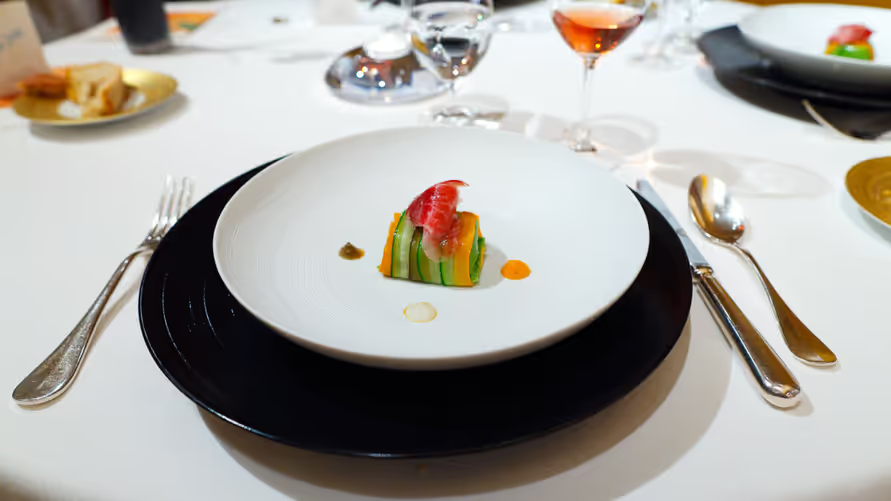
In 2026, restaurants are using a strategy called Shrinkflation to survive. Faced with a 40% increase in supply chain costs and rising energy bills, owners choose to reduce portion sizes rather than raise menu prices to a level that would scare away all customers. By serving 15–20% less food per plate, a business can maintain its profit margins without the “sticker shock” of a $30 salad.
The Anatomy of Restaurant Shrinkflation in 2026
It’s not just about smaller steaks. The methods have become sophisticated and psychological.
- The “Plate Illusion”: Many chains have switched to smaller diameter plates with wider rims. The food looks like it fills the space, but the actual volume is significantly lower.
- The Garnish Buffer: Restaurants are padding plates with cheaper “filler” ingredients like microgreens, decorative sauces, or extra starches to hide the shrinking protein portion.
- Component Removal: That side of slaw or the free bread basket? In 2026, those have either become paid add-ons or disappeared entirely to save on “invisible” costs.
“The $1 Gourmet”: 7 God-Tier Spices That Make Cheap Ingredients Taste Expensive in 2026
Top 10 Desserts You Must Try Before You Die
Portion vs. Price: The 2026 Reality Check
| Expense Category | 2024 Impact | 2026 “Deep Reset” Reality |
| Raw Ingredients | High Inflation | ✅ Extreme (Climate & Supply Chain) |
| Labor Costs | Rising | ✅ Record Highs (Staffing Shortages) |
| Delivery Fees | 15–20% | ✅ 25–30% (App Dominance) |
| Portion Strategy | Standard Sizes | ❌ Systemic Reduction (Shrinkflation) |
| Customer Reaction | Mild Annoyance | ✅ Massive Outrage / Home Cooking Shift |
3 Hidden Reasons Why Your Bill Is Higher
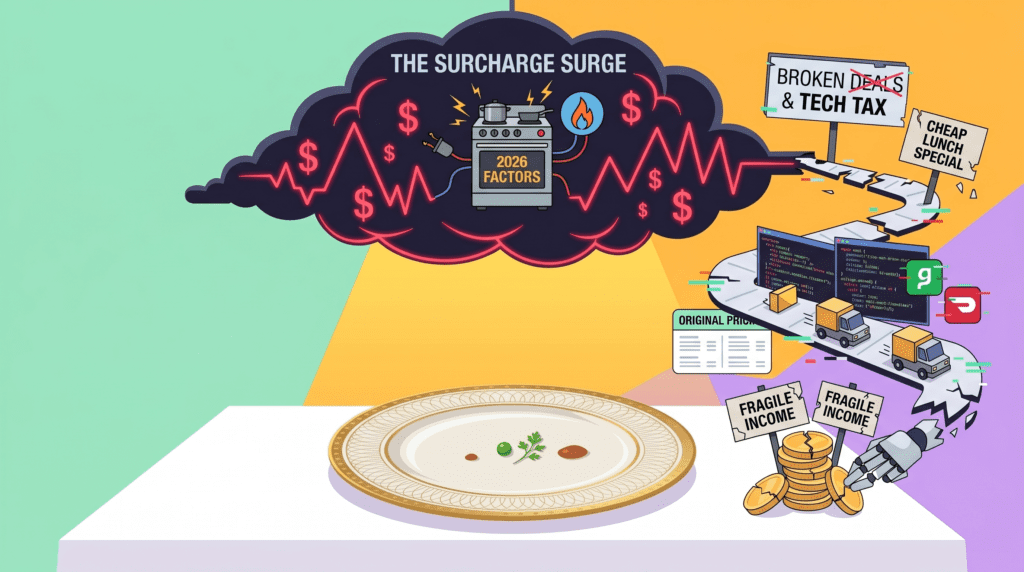
Beyond the cost of the food itself, several “2026 factors” are driving your check upward:
1. The “Energy Surcharge”
Commercial electricity and gas prices for industrial kitchens have doubled. Cooking a 12-hour braised short rib now costs the restaurant 3 times more in utility bills than it did two years ago. This cost is passed directly to the diner.
2. The Death of “Loss Leaders”
In the past, restaurants would lose money on a “cheap lunch special” to get you in the door. In 2026, with razor-thin margins, every single item on the menu must be profitable. There are no more “deals,” only varying levels of expensive.
3. Tech & Delivery Tax
If you are ordering via a 2026 AI-delivery bot or app, the restaurant is likely losing 30% of that sale to the platform. To compensate, “digital menus” often have higher prices and even smaller portions than the in-person experience.
How to Spot “Portion Skimping” Before You Order
To avoid being a victim of the invisible thief, look for these signs:
- Vague Weights: If a menu removes the “grams” or “ounces” for proteins, it’s a red flag.
- The “Shareable” Trap: “Small plates” or “tapas style” are often used to mask the fact that you need 4 dishes to feel full, costing you 50% more than a traditional entree.
- Heavy Bottom Bowls: Used for pastas and grains to make a small amount of food appear piled high.
Final Thoughts: The New Dining Economy
In 2026, dining out has officially shifted from a “casual habit” to a “luxury experience.” The era of cheap, oversized American-style portions is over, replaced by a lean, expensive, and highly calculated model. If you want value for your money, the “Deep Reset” solution is simple: cook at home. But if you do go out, don’t blame the waiter—blame the global supply chain that made your dinner shrink.