
Why Crypto Scams Spike During Christmas

🎄 Holiday Season Is a Golden Opportunity for Scammers
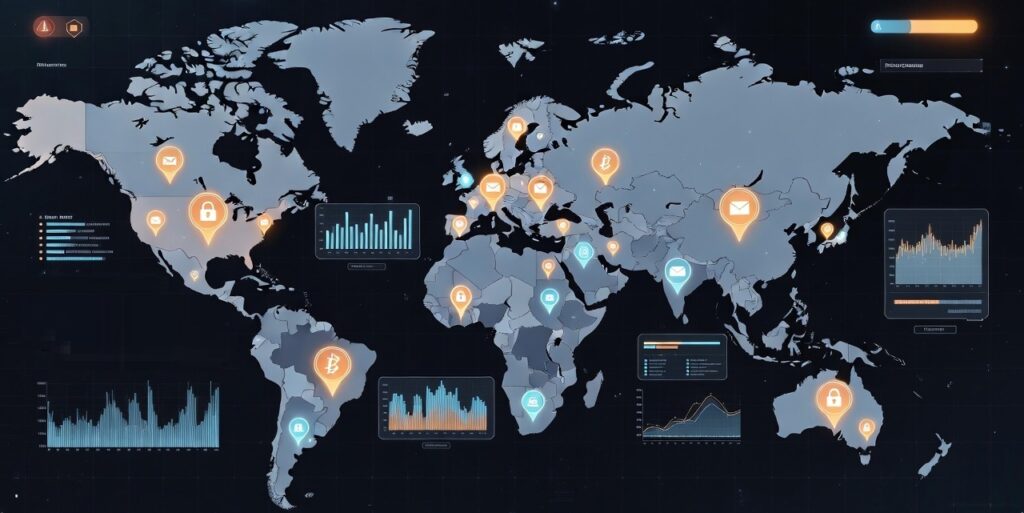
The holiday season — from late November through December and into the new year — is a time of increased online activity globally. People are shopping, sending gifts, sending money, and in many cases feeling more generous or impulsive. Scammers around the world exploit this environment, as they know: more traffic = more potential victims.
According to a 2025 alert by a blockchain‑forensics firm Lionsgate Network, crypto‑related scam attempts have surged more than 300% during the holiday period compared to the rest of the year.
Another cybersecurity firm, Bitdefender, found that nearly 2 in 5 unsolicited Christmas‑themed emails between mid‑November and mid‑December were flagged as scams — a roughly 33% increase from the previous year.
This uptick in scam-related traffic shows just how much scammers rely on the holiday bustle to lure victims.
Methods: How Holiday Crypto Scams Are Carried Out
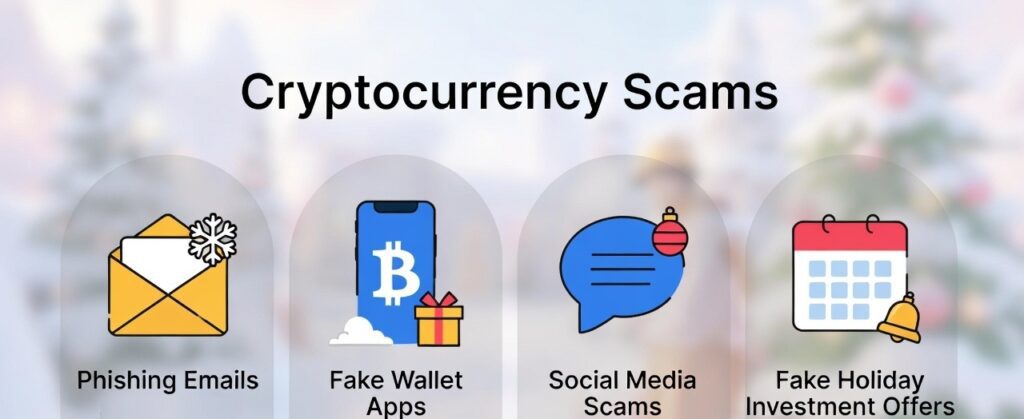
During Christmas season, crypto scammers adapt traditional fraud techniques to the holiday mood — plus they sometimes escalate with more advanced tools. Key methods include:
- Phishing emails and fake websites — scam messages pose as legitimate wallet providers, exchanges, “holiday deals,” or even charity / gift promotions asking users to “claim” crypto or convert holiday bonuses. Recipients who click links and enter sensitive info (password, private keys/seed phrases) may lose their assets immediately.
- Fake wallet apps or cloned exchanges, often advertised on social media, promising “year-end bonuses,” “Christmas gains,” or fast returns.
- Holiday‑themed investment pitches — “special December trading signals,” “guaranteed multipliers before New Year,” or “holiday‑only VIP service.” These often involve pump‑and‑dump schemes or high‑risk tokens.
- Social engineering & impersonation on social media — scammers pose as legitimate influencers, “crypto advisers,” or even friendly voices, especially effective when people are more trusting or excited about holiday deals.
In 2024, the security platform WhiteBIT reported that “social engineering” remained the main security threat in crypto, representing a large share of incidents.
Because many users let their guard down during festive periods — click links impulsively, skip due diligence — scammers find it easier than during “normal” times.
The Sovereign Holder’s Manifesto: Wallets, Tools, and the Biology of Crypto Success
“The Invisible Ledger”: How Blockchain is Quietly Running the World Outside of Finance in 2026
Bigger Context: Overall Growth of Crypto Scams
The spike during holidays is just part of a broader global trend: crypto‑related fraud and scams have been rising sharply overall. According to a report by Chainalysis, in 2024 scammers likely pulled in at least US$9.9 billion, possibly rising to US$12.4 billion — a record high.
The firm notes that scam methods like “pig butchering” (where scammers build trust over time before convincing victims to invest) and AI‑enabled schemes played a major role in this growth.
Thus, the holiday‑season surge amplifies an already growing problem — combining high transaction volume with elevated scam sophistication.
Why Christmas Season Is Especially Effective for Scammers (Psychology + Timing)

Here are psychological and situational factors that make Christmas season a prime time for crypto fraud:
- Emotional mindset — people are in “gift‑giving” or celebratory mood; generosity, hope, or desire to give themselves a “bonus” can cloud judgment.
- Increased online traffic & distractions — holiday planning, shopping, social media use, messaging; users may click links without scrutinizing them.
- Desire for quick gains or holiday bonuses — scammers exploit interest in “year‑end gains,” “holiday deals,” or “special seasonal offers.”
- Reduced scrutiny under time pressure — holiday time pressure (“get this deal now before New Year”) pushes users to act fast without due diligence.
- Volume over quality — scammers rely on hitting many potential victims: even a small success rate yields profit.
Because of these, even otherwise cautious users may slip up.
Global — Not Regional — Phenomenon
While many reports come from Western countries (US, EU, UK), the mechanisms are universal. Holiday periods (Christmas, New Year, winter holidays) entail global surges in online activity, cross‑border gift transfers, crypto giveaways, and social‑media‑driven promotions. Scammers often target users worldwide, not limited by geography, especially when using global platforms (wallet apps, exchanges, social media, email).
For instance, phishing campaigns, fake exchange clones, and social‑engineering scams are not tied to any particular country — they work wherever there’s internet access, global crypto adoption, or cross-border money flows. The 2025 retail‑holiday threats report by BforeAI showed bulk domain registrations for malicious crypto‑related scams well ahead of December, anticipating global holiday‑season activity.
Therefore, readers anywhere in the world — regardless of region — must remain vigilant when interacting with crypto offers during holidays.
How to Protect Yourself (Global Safety Tips)
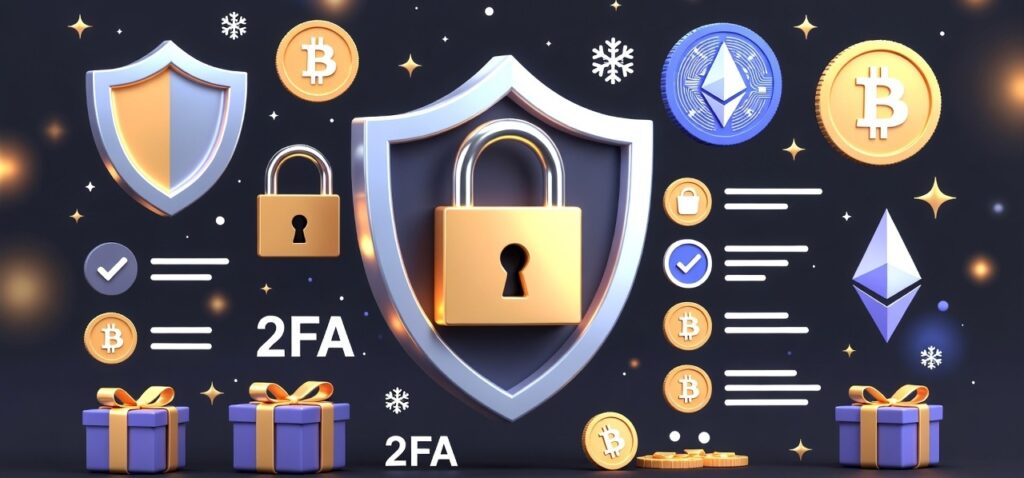
If you use or invest in crypto, especially during holiday season, consider the following precautions:
- Always double‑check URLs before entering credentials; ensure the site uses HTTPS and is the genuine domain.
- Never share your private key or seed phrase, even if prompted by seemingly “legitimate” messages or wallet‑recovery emails.
- Be skeptical of “too good to be true” offers — guaranteed returns, big holiday bonuses, or “special only–for‑you” deals.
- Use hardware wallets and enable two‑factor authentication (2FA), even when using exchanges or wallets.
- Avoid using public WiFi for signing transactions or accessing wallets — public networks are often insecure.
- Limit impulse decisions: if an offer feels urgent or pressure-driven (like “only today”), pause, research, and verify independently.
These precautions help mitigate not only holiday scams, but many forms of crypto fraud year‑round.
Final Thoughts
Holiday seasons like Christmas create a perfect storm for crypto scammers: heightened online activity, emotional decision‑making, and seasonal promotions give them fertile ground. Given the spike — 300% according to recent data — it’s not only holiday shopping that demands vigilance, but holiday crypto offers as well. As scams become more global, sophisticated, and opportunistic, users worldwide must stay alert and treat seasonal crypto “deals,” “gifts,” and “bonuses” with healthy skepticism.