
Crypto & Web3 2025 — Year in Review

1. Market Overview — A Year of Volatility and Structural Shifts
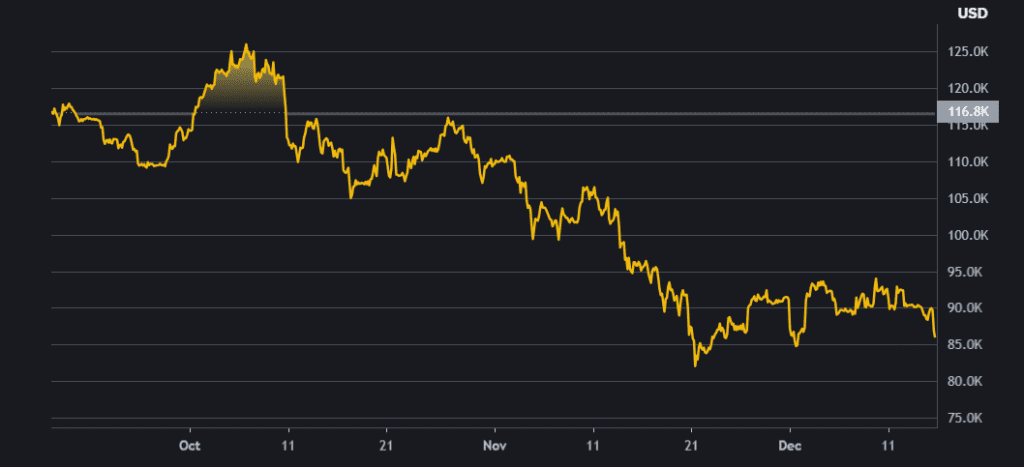
2025 was marked by significant market volatility and structural transitions rather than a simple bull run. Major cryptocurrencies experienced sharp price fluctuations throughout the year, influenced by macroeconomic conditions, regulatory actions, and institutional involvement.Bitcoin reached an all-time high near $126,000 in October amid strong ETF inflows and institutional optimism, but faced a late-year correction, dipping toward $90,000 levels by December, contributing to hundreds of millions in forced liquidations — a stark reminder of ongoing market volatility even at higher price levels.Despite volatility, key trends emerged:
- Institutional interest continued to expand, particularly in tokenized and regulated crypto products.
- Stablecoin regulation matured in major jurisdictions.
- Exchanges and financial institutions pivoted toward blockchain adoption.
- Real World Assets (RWA) tokenization boomed, with the market reaching approximately $30-38 billion, driven by tokenized treasuries and private credit.
These developments signaled that 2025 was not a simplistic bull market, but a year of maturation and structural evolution for digital asset markets, shifting from speculative mania to utility-driven growth.
2. Regulatory Landscape — Rules, Frameworks and Global Policy
United States — Strategic Crypto Reserve & Stablecoin Regulation
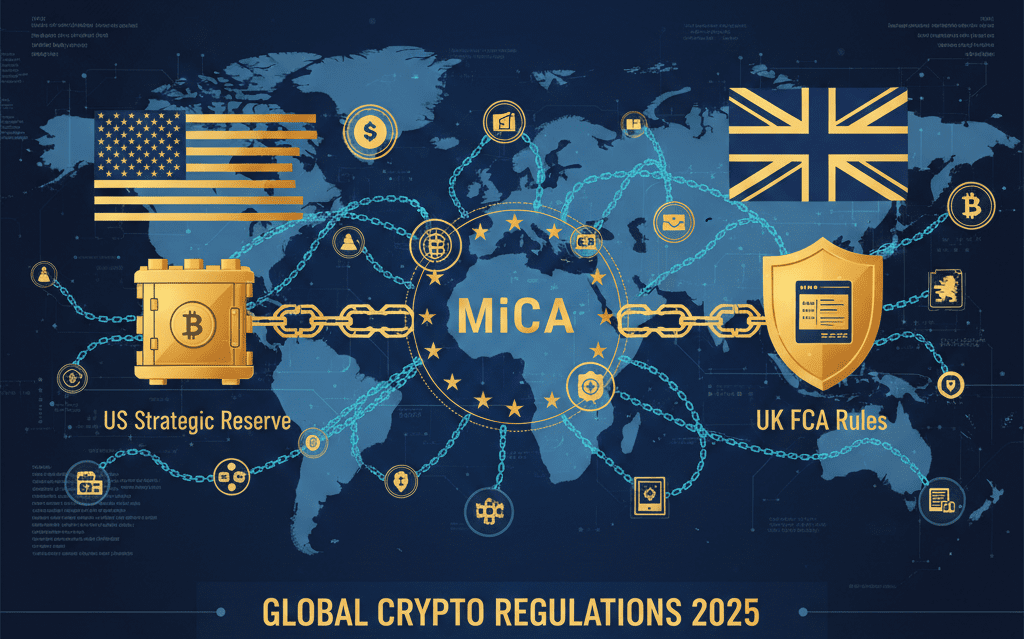
In early 2025, the U.S. government took bold steps into formal crypto policy. President Donald Trump signed an executive order to establish a federal strategic bitcoin reserve, allowing the government to retain and manage seized digital assets and potentially purchase more under certain conditions.Alongside this, the GENIUS Act, passed mid-year, created a comprehensive regulatory framework for stablecoins — a foundational asset class in Web3 globally. Stablecoin oversight provides clarity for markets and projects that depend on them for DeFi, payments, and institutional products.
United Kingdom — First Major Crypto Regulatory Proposal
In December, the UK’s Financial Conduct Authority (FCA) unveiled its first formal regulatory framework for the crypto industry, including rules on digital asset listings, protections against manipulation, capital and liquidity requirements, and safeguards for staking and lending services.This initiative aims to align crypto markets with traditional financial regulations while preserving innovation — and is scheduled for implementation in 2027. The proposal was opened for public consultation through early 2026.
European Union — Full Implementation of MiCA
The EU’s Markets in Crypto-Assets (MiCA) regulation became fully applicable in 2025, providing a harmonized framework across member states for crypto-asset service providers and issuers. This brought greater clarity and consumer protection, further encouraging institutional participation.
State-Level Crypto Reserves in the U.S.
In addition to federal actions, state governments moved forward with their own crypto policies. Texas passed legislation creating a Texas Strategic Bitcoin Reserve, allowing the state to accumulate Bitcoin as part of its treasury strategy — mirroring federal objectives around a strategic crypto stockpile.
The Sovereign Holder’s Manifesto: Wallets, Tools, and the Biology of Crypto Success
“The Invisible Ledger”: How Blockchain is Quietly Running the World Outside of Finance in 2026
3. Major Market Events and Trends

Institutional Products & Tokenization
2025 saw a significant pivot towards structured crypto products that appeal to institutional investors, with Real World Assets (RWA) emerging as one of the year’s dominant trends:
- JPMorgan launched the My OnChain Net Yield Fund (MONY), a tokenized money market fund on the Ethereum blockchain offering daily yield and redeemable in cash or USDC. This represents a major investment bank’s embrace of blockchain-based asset tokenization.
- BlackRock’s BUIDL and other tokenized funds grew substantially, pushing the overall RWA market to new highs.
- HashKey, a leading licensed exchange in Hong Kong, raised ~$206 million via an IPO and continued expanding its digital asset fund initiatives, including a $500 million digital treasury fund.
This trend points toward broader institutional validation of tokenized financial products, including treasuries, private credit, and equities, in 2025.
AI and Crypto Intersection
Bitcoin miners increasingly pivoted to AI and high-performance computing (HPC) workloads, repurposing infrastructure for steadier revenue amid post-halving pressures and market volatility.
Memecoins and Retail Speculation
The year featured continued memecoin mania, particularly on platforms like Pump.fun, but with signs of dilution and cooling in the second half as capital rotated toward more utility-focused assets.
ETF Flows
Spot Bitcoin and Ethereum ETFs saw massive inflows earlier in the year, but Q4 brought outflows amid broader market caution, highlighting the fragile balance between institutional optimism and risk aversion.
4. Security & Hack Incidents

Security remained a critical industry issue:In February 2025, one of the largest crypto heists in history occurred when hackers stole ~$1.5 billion worth of Ethereum from a major crypto exchange’s wallet system. This incident underscored persistent infrastructure risks and triggered industry-wide discussions on security best practices.
5. Crypto Price Dynamics & Market Sentiment

2025 price action was defined by volatile swings rather than a steady upward trajectory. While there were periodic rallies and Bitcoin flirted with the $126,000 level amid institutional inflows, late-year declines underscored the fragile equilibrium between optimism and market risk.Markets also saw mixed performance in altcoins; some tokens outperformed, while overall dominance shifts were modest compared with earlier altcoin seasons, with memecoin dilution contributing to Bitcoin dominance rebound.
6. Key Web3 and Blockchain Development Trends
Ethereum Network and Ecosystem
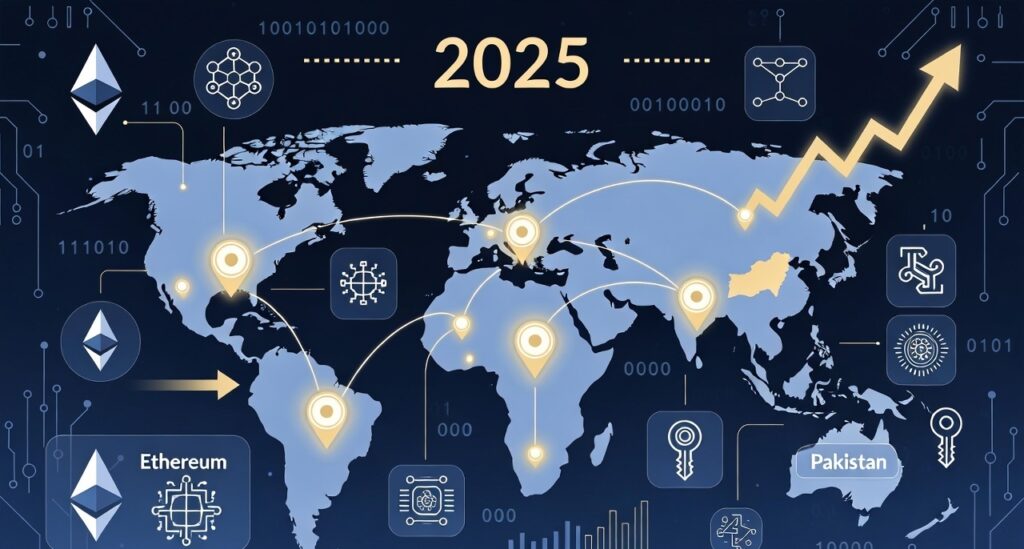
Although the big Ethereum layer-1 upgrades of prior years continued to influence activity in 2025, the year also saw ongoing ecosystem growth including innovations in tooling, blockchain infrastructure, and smart contract capabilities.
Web3 Adoption in Emerging Markets
Countries like Pakistan officially launched the Pakistan Crypto Council to guide blockchain adoption and integrate digital assets into national financial frameworks. Leadership included coordination with international figures and work toward regulatory frameworks.
7. Conferences & Industry Events — Gathering Momentum

Major crypto and Web3 conferences played a key role in shaping discourse and networking in 2025:
- ETHDenver 2025 — A major Ethereum-centric event uniting builders, developers, and enthusiasts focused on policy and technical innovation.
- TOKEN2049 — A global crypto summit in Singapore, bringing thought leaders and investors together.
Other Events Worldwide — Including ETHGlobal Taipei, Money20/20 Asia, GITEX Africa and more, emphasizing cross-regional collaboration and growth opportunities.These events helped drive global dialogue on adoption, regulation, and technology development in Web3.
8. Stablecoins & Financial Infrastructure

Stablecoins continued to play an outsized role in the evolving financial infrastructure of Web3. With regulatory frameworks like the GENIUS Act in place and MiCA in the EU, stablecoins became integral to institutional trading, DeFi applications, and cross-border liquidity solutions — further blurring lines between traditional finance and digital assets.
Remarkably, stablecoin transfer volumes in 2025 exceeded those of Visa and Mastercard combined, underscoring their growing dominance in global payments and programmable money.
Academic and industry research throughout 2025 emphasized the importance of stablecoins as the foundation for programmable digital money, bridging traditional and decentralized systems.
9. 2025 in Summary — Key Themes
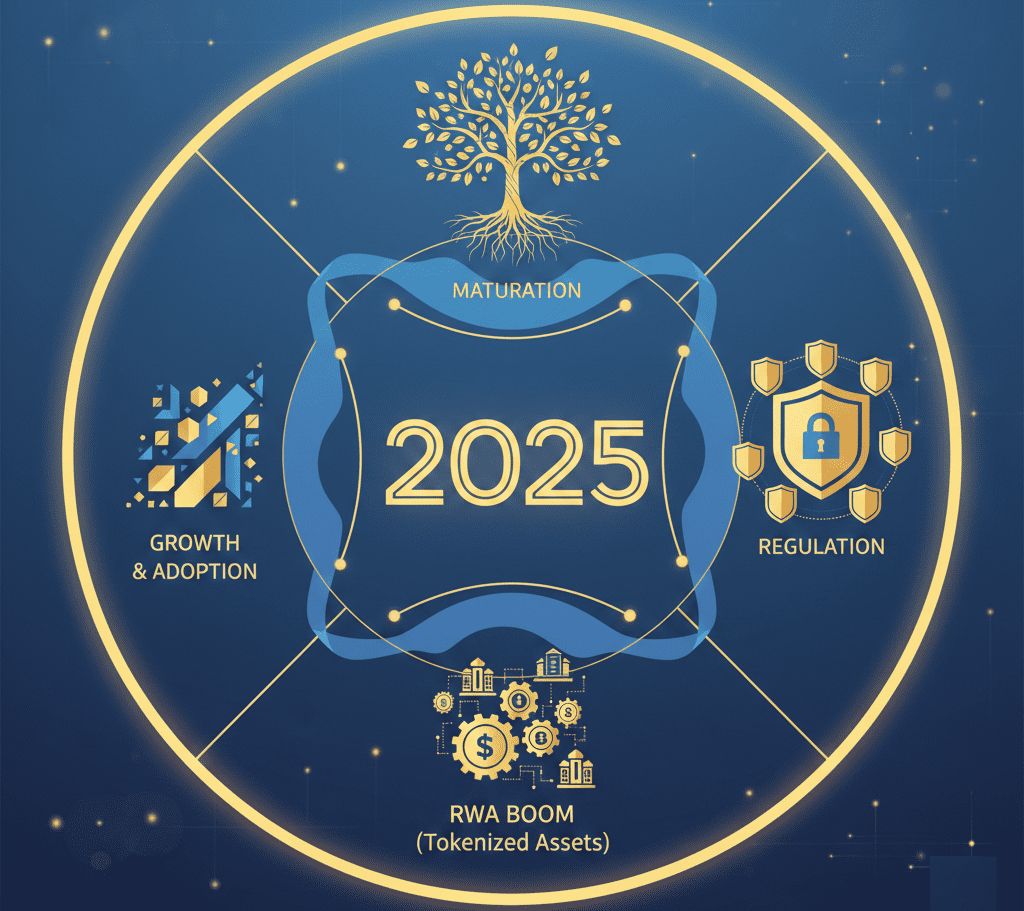
- Maturation over Mania: Unlike prior years driven by speculative price growth, 2025 was dominated by structural development, regulatory integration, and the scaling of institutional infrastructure.
- Institutional Tokenization and RWA Boom: Financial giants launched or expanded tokenized funds and products, with RWA markets surging to new records, signaling deeper integration with blockchain systems.
- Regulatory Frameworks: Governments and regulators in major markets (U.S. GENIUS Act, EU MiCA, UK proposals) pushed forward comprehensive frameworks that bring clarity and consumer protection to digital assets.
- Security Challenges: High-profile hacks reminded the industry that infrastructure resilience is still a top priority.
- Emerging Intersections: Miners pivoted to AI/HPC, while memecoin trends cooled amid capital rotation to utility assets.
- Global Collaboration: Conferences and councils helped foster international cooperation on policy, innovation, and adoption.
Final Thoughts
2025 was less about price records and more about building the foundation for sustainable growth in crypto and Web3. The industry navigated volatility while embedding itself deeper into financial and regulatory ecosystems — setting the stage for future innovation and broader adoption.