
Why Fallout’s “Broken” AI Is Actually Better Than Modern Graphics

I’ve spent hundreds of hours wandering through the Commonwealth, and at some point I started asking myself a strange question: why does a buggy, sometimes clunky Fallout world feel more alive than many modern AAA games with flawless graphics?
The answer isn’t nostalgia, and it’s definitely not performance. It’s the invisible logic behind the chaos — the systems people casually label as “broken AI.”
Ironically, the same AI that causes NPCs to stare into walls or take the long way around a door is also the reason the world feels unpredictable, reactive, and human.
Game AI Is Not Neural Networks
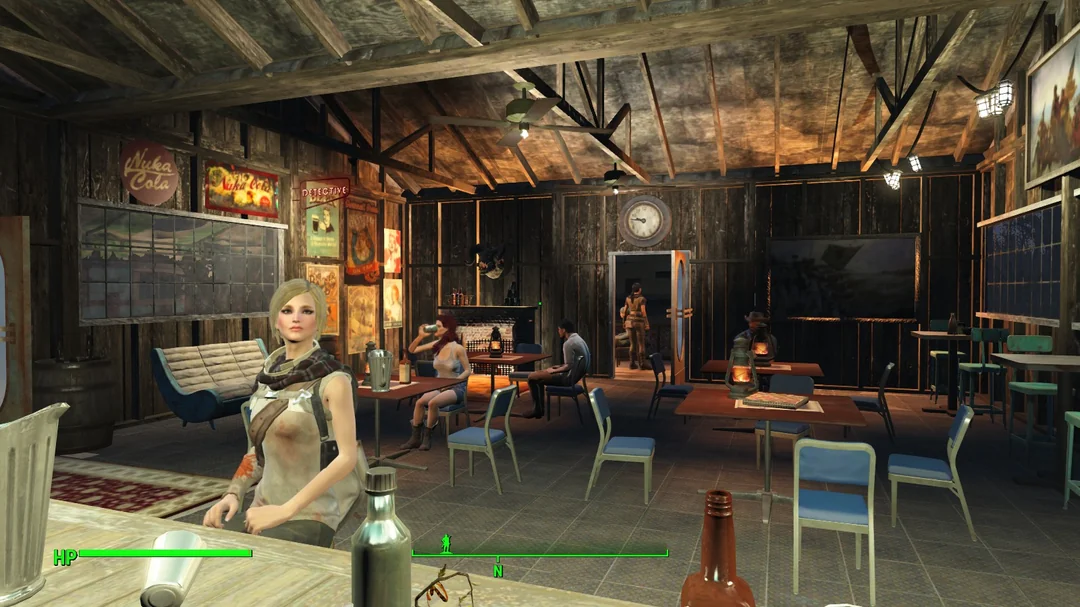
Before diving deeper, one important clarification is needed.
In video games, AI does not mean neural networks, machine learning, or large language models. Fallout does not run on generative AI, and NPCs are not “thinking” in real time. Instead, the game relies on classic systems such as:
- Behavior trees
- Finite state machines
- Rule-based decision logic
- Priority-based reactions
These systems are fully deterministic and handcrafted. NPCs don’t learn from experience — they execute logic written by designers.
And yes, sometimes that logic fails in spectacular ways. But those failures are a side effect of complexity, not laziness.
Canva AI vs Adobe Express vs Figma: Best Design Tool for Non-Designers in 2026?
Why Every Gadget Looks the Same in 2025 — and Why That’s a Problem
NPCs as Systems, Not Decorations
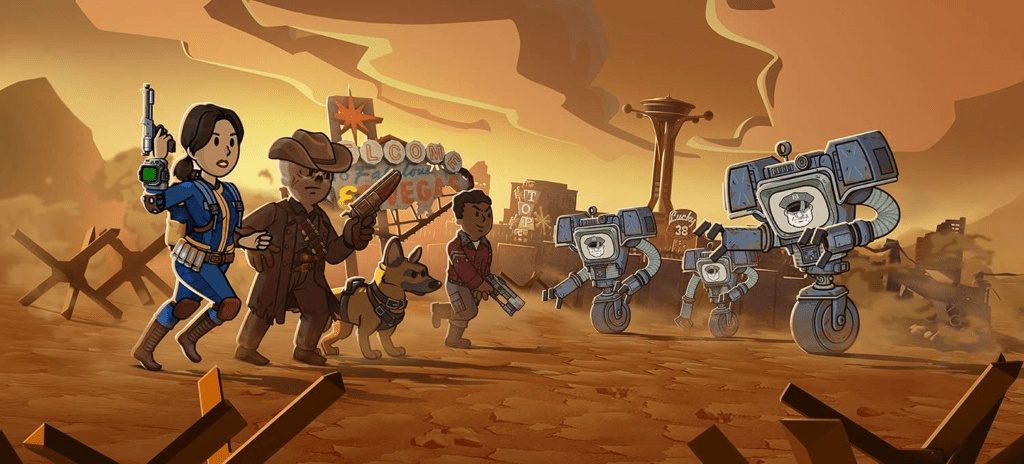
One of Fallout’s biggest strengths is that NPCs are treated as actors within a system, not static props waiting for player interaction.
NPCs typically have:
- Daily routines
- Faction affiliations
- Hostility rules
- Contextual dialogue triggers
They react to:
- Player reputation or faction alignment
- Nearby combat or threats
- World state changes
This means the world doesn’t pause when the player looks away. NPCs exist independently, even if they occasionally make questionable life choices — like walking directly into a gunfight they absolutely did not need to join.
The result is a world that feels less scripted and more autonomous.
Radiant Quests: Freedom with a Catch
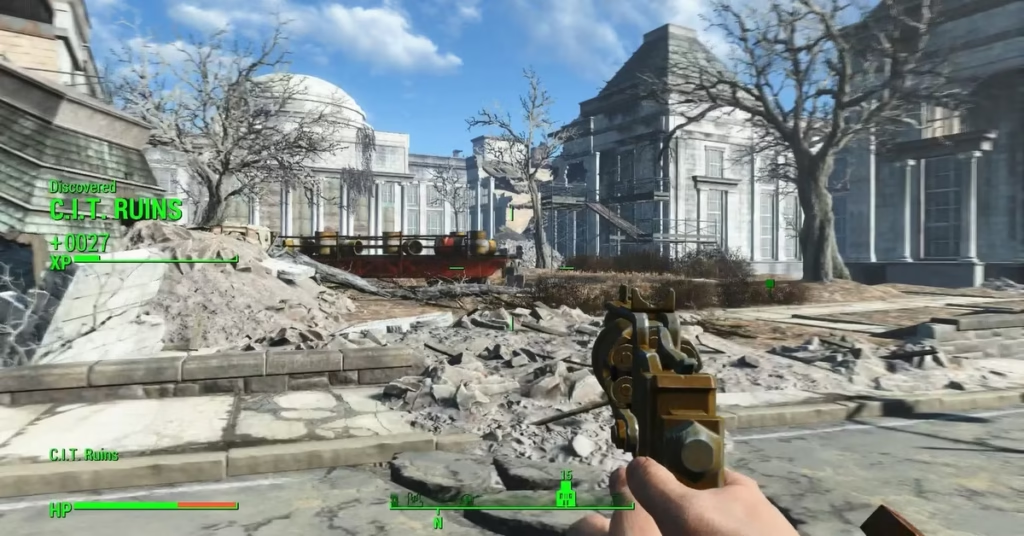
Fallout’s radiant quest system is often criticized, and fairly so.
These quests are generated using:
- Predefined templates
- Location selection logic
- Variable enemy or NPC roles
From a design perspective, radiant quests solve a real problem: they keep the world active and give players something to do almost indefinitely. However, repetition eventually sets in.
At some point, players realize they’re not uncovering new stories — they’re rotating through the same logic in different locations.
This is where Fallout shows both the power and limitation of AI-driven content. Procedural systems can scale content, but they cannot replace authored narrative. The most memorable Fallout quests are still the ones that were written, scripted, and deliberately designed.
Simulated Chaos vs Scripted Perfection
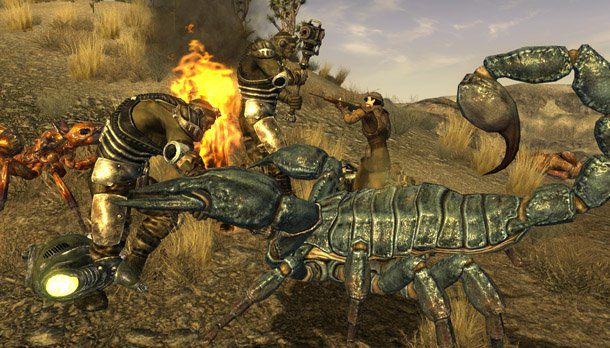
Fallout worlds often feel alive because of emergent behavior.
You’ll regularly see:
- Enemy factions fighting each other without player input
- NPCs reacting dynamically to environmental threats
- Events unfolding that were never explicitly scripted
These moments are not cinematic set pieces. They are side effects of overlapping systems colliding in unpredictable ways.
By contrast, many modern open-world games rely on heavily scripted encounters. Everything works perfectly — and nothing surprises you.
Fallout trades polish for autonomy. Sometimes the result is a bug. Other times, it’s a story you’ll remember far longer than a perfectly animated cutscene.
AI Improves Scale, Not Meaning
AI systems are excellent at managing:
- Large populations
- Dynamic encounters
- Systemic interactions
What they cannot do is create meaning.
Fallout’s moral dilemmas, themes, and emotional weight come from human writers. AI systems provide the stage, not the message. Without strong narrative design, even the most advanced AI-driven world would still feel empty.
This is why chasing “smarter AI” alone won’t fix open worlds. Complexity without intent just creates noise — sometimes entertaining noise, sometimes broken noise.
Why Fallout Still Feels Relevant
Despite its technical rough edges, Fallout remains relevant because it prioritizes reactivity over perfection.
Modern open worlds often focus on:
- Visual fidelity
- Massive maps
- Endless activities
Fallout focuses on:
- World response
- Player consequence
- Systemic interaction
Yes, NPCs glitch. Yes, physics sometimes betray reality. And yes, Todd Howard has heard every joke about it already. But those imperfections are symptoms of a world that is constantly running systems in the background.
A perfect world that does nothing without the player is far less immersive than an imperfect one that refuses to stand still.
The Limits of AI in Open Worlds
AI cannot fix:
- Weak writing
- Shallow mechanics
- Repetitive design
When procedural systems are overused, they inflate content without increasing depth. Fallout works best when AI-driven systems are restrained and supported by strong handcrafted design.
The future of open-world AI is not fully autonomous worlds. It’s better coordination between systems, writing, and player choice.
Final Thoughts
Fallout proves that a living open world isn’t about realism or technical perfection. It’s about reaction, unpredictability, and consequence.
Its AI may be flawed, sometimes hilariously so, but those flaws exist because the world is allowed to behave independently. AI enhances scale and interaction, but meaning still comes from design.
If open-world games want to evolve, they should focus less on making worlds look perfect — and more on letting them behave imperfectly.