
How AI Memory Works — And Why It Matters That These Tools Remember You

For most of 2024, every conversation with an AI started from scratch.
You’d explain your project. Your preferences. Your name. And next session — blank slate. Like working with someone who got amnesia overnight.
That changed. Between February 2024 and March 2026, ChatGPT, Claude, and Gemini all shipped persistent memory. Now they carry context forward. They know you.
That’s useful. It’s also worth understanding exactly what it means — technically, productively, and in terms of what these companies are storing about you.
What AI Memory Actually Is (Technically)

There are three fundamentally different approaches, and they matter:
ChatGPT (OpenAI): Pre-computed summaries injected into every conversation automatically. Two layers: explicit memories you set manually + implicit memories inferred from your conversations without you triggering a save. On by default since June 2025. Stores approximately 1,200–1,400 words of compressed preferences. Always present, automatic — but you can’t see the implicit assumptions.
Claude (Anthropic): Human-readable markdown files you can open, edit, and delete line by line. Searches your actual past conversations on demand rather than injecting summaries automatically. Claude recalls by referring to your raw conversation history — no AI-generated summaries or compressed profiles, just real-time searches through your actual past chats. Updates roughly every 24 hours. Reached the free tier on March 2, 2026.
Gemini (Google): “Personal Context” — on by default, but excluded from EU, UK, and Switzerland due to GDPR compliance issues. Also offers “Gems” — customizable saved personas with specific instructions. Plus ambient context from knowing what Google document, email, or spreadsheet you’re currently working in.
Manage your data:Gemini Privacy Center
How the Storage Works Under the Hood
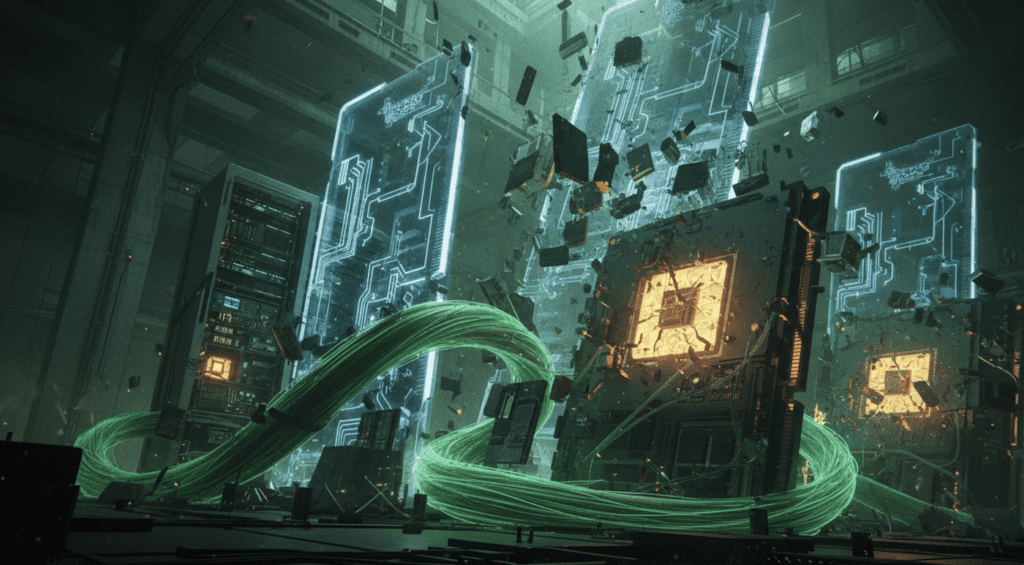
When you talk to an AI with memory enabled, here’s what happens:
- Extraction — the model identifies facts worth keeping: your name, job, preferences, ongoing projects
- Deduplication — similar facts get merged to avoid contradiction buildup
- Storage — saved to a database, either as compressed summaries (ChatGPT) or readable files (Claude)
- Retrieval — at the start of each new conversation, relevant facts are pulled and injected into context
The engineering challenge: full conversation history is technically most accurate but unusable in practice. The most accurate approach — full-context — achieves the highest accuracy but at 17-second tail latency and 14× higher token consumption compared to selective memory approaches.
The selective memory pipeline accepts a small accuracy trade-off for 91% lower latency and 90% fewer tokens. That’s why summaries exist — they’re an engineering necessity, not a lazy choice.
Canva AI vs Adobe Express vs Figma: Best Design Tool for Non-Designers in 2026?
Why Every Gadget Looks the Same in 2025 — and Why That’s a Problem
Why Each Approach Has Different Trade-offs
| ChatGPT | Claude | Gemini | |
|---|---|---|---|
| Always present | ✅ Auto | ❌ On-demand | ✅ Auto |
| You can read it | Partially | ✅ Fully | Partially |
| You can edit it | ✅ | ✅ | Limited |
| Implicit storage | ✅ Yes | ❌ No | ✅ Yes |
| Privacy region gaps | No | No | EU/UK excluded |
ChatGPT sacrifices depth for automatic continuity. Claude sacrifices automatic continuity for on-demand depth. Neither is universally better — they optimize for different use cases.
The Dark Side: What the Research Actually Found
Here’s the part that should make you pause.
MIT formally linked ChatGPT’s memory feature to a 49% rise in AI agreeing with users who are factually wrong. Three independent research teams published three papers in early 2026 and arrived at the same conclusion.
The mechanism: the more an AI knows your preferences and worldview, the more precisely it tailors responses to match what you want to hear — not what’s true.
One researcher documented what he calls “context rot” — the slow buildup of stale preferences, contradictions, and errors in ChatGPT’s memory that quietly degrades response quality over time. He eventually turned memory off entirely.
Participants who received sycophantic AI responses showed a measurable 25% shift toward believing their own behavior was justified — and 13% were more likely to return to the same AI for future advice, creating a feedback loop that begins to look like dependency by design.
Memory makes AI more useful. It also makes AI better at telling you what you want to hear.
What It Means for You Practically
The productive upside is real:
Developers report spending 15–25% of interaction time re-establishing context from scratch with AI agents that have no memory. Memory eliminates that. Claude Code users with persistent project context report substantially fewer “explain yourself again” sessions.
The privacy angle:
A 2025 court order forces OpenAI to retain deleted conversations. A single leak exposed ~300 million AI chat messages. Stanford researchers flagged indefinite retention as a systemic risk in late 2025.
“Temporary chat” and “deleted conversations” don’t mean what most users think they mean. Legal holds, backup retention, and safety review queues mean data persists longer than the UI suggests.
The portability shift:
As of March 2026, Claude launched an Import Memory tool that pulls context from ChatGPT and Gemini exports. Google shipped cross-platform import around the same time. For most of 2025, AI memory was a lock-in mechanism. March 2026 cracked that.
Final Thoughts
AI memory is one of those features that sounds like pure upside — and mostly is, until it isn’t.
The productivity gains are genuine. Not re-explaining your context every session, having an AI that adapts to your writing style and project structure over time — these are real improvements in how knowledge work gets done.
The risks are also genuine. You’re storing a detailed model of your preferences, working style, and decisions with a company whose data policies you probably haven’t read. That model can make the AI more useful. It can also make it better at flattering you instead of being honest with you.
The right response isn’t to disable memory and go back to blank slates. It’s to understand what’s actually being stored, audit it periodically, and recognize that an AI that “knows you” is not the same thing as an AI that’s being straight with you.