
The Subscription Trap: How Tech Companies Locked Us In

1. Welcome to the Subscription Era
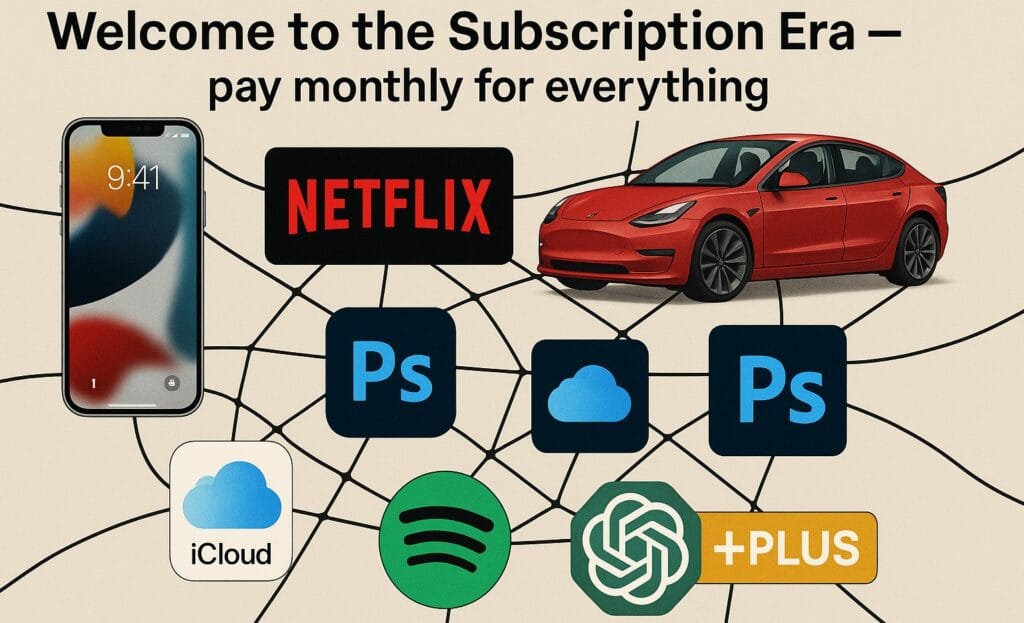
Remember when you could buy something once and actually own it? That was adorable. Once upon a time, you bought a CD, installed your game or software, and it was yours until your PC exploded. Now, welcome to 2025 — where even your fridge wants your credit card.
Everything has quietly turned into a subscription. Music, movies, games, cars, software, fitness apps, toothbrushes. You can’t simply buy Photoshop anymore — you lease your creativity from Adobe for $20 a month. Your car? It’ll happily warm your seat — for a monthly fee. Even Apple and Tesla found ways to bill you for convenience that already exists inside the product you purchased.
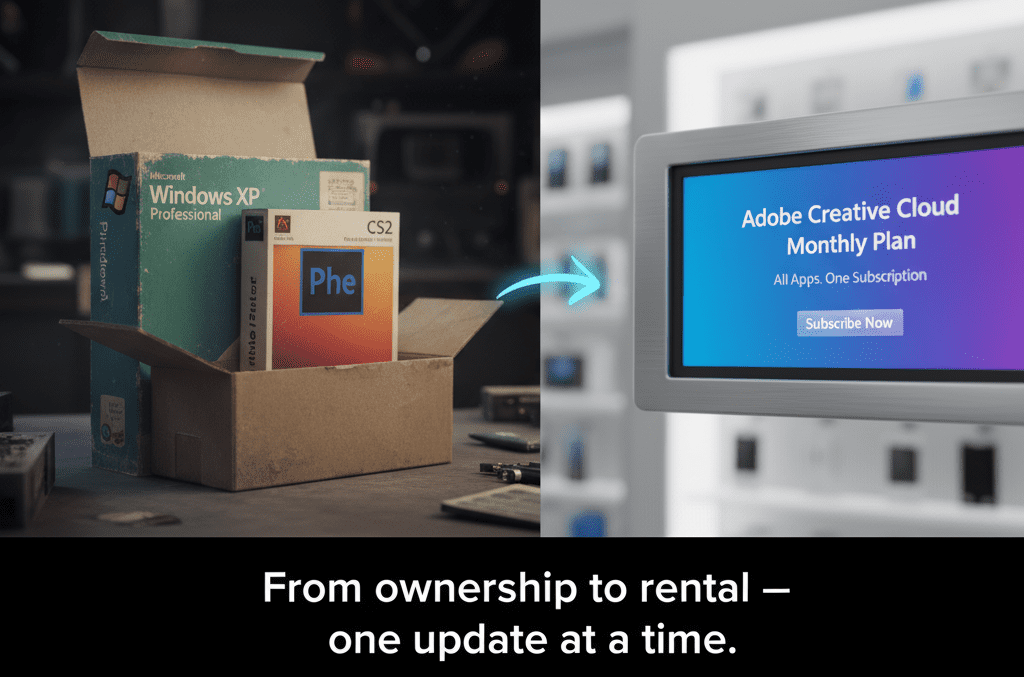
It’s not that we hate paying for good things — it’s that we’re never done paying. You don’t own entertainment anymore; you rent access to it. You don’t own tools — you license functionality. The tech industry figured out that “forever” isn’t profitable, but “monthly” is.
What’s wild is how normal this feels now. We barely notice. A few dollars here for iCloud, a few there for Netflix, Spotify, Xbox Game Pass, ChatGPT Plus — and suddenly we’re paying rent on our digital lives. Somewhere along the line, ownership quietly died, replaced by endless convenience fees.
And the craziest part? We agreed to it. We traded permanence for updates, control for comfort. It’s not “buy once, enjoy forever” anymore — it’s “subscribe or disappear.”
Welcome to the Subscription Era — where everything works until your card declines.
Best AI Tools for Students in 2026 That Professors Haven’t Banned Yet
Why Every Gadget Looks the Same in 2025 — and Why That’s a Problem
2. From Software to Everything
It started small — with software. Once, you could buy a boxed copy of Microsoft Office or Adobe Photoshop, install it, and use it for years. Companies realized that selling you a product once was inefficient. Why take $200 once when they could take $20 forever?
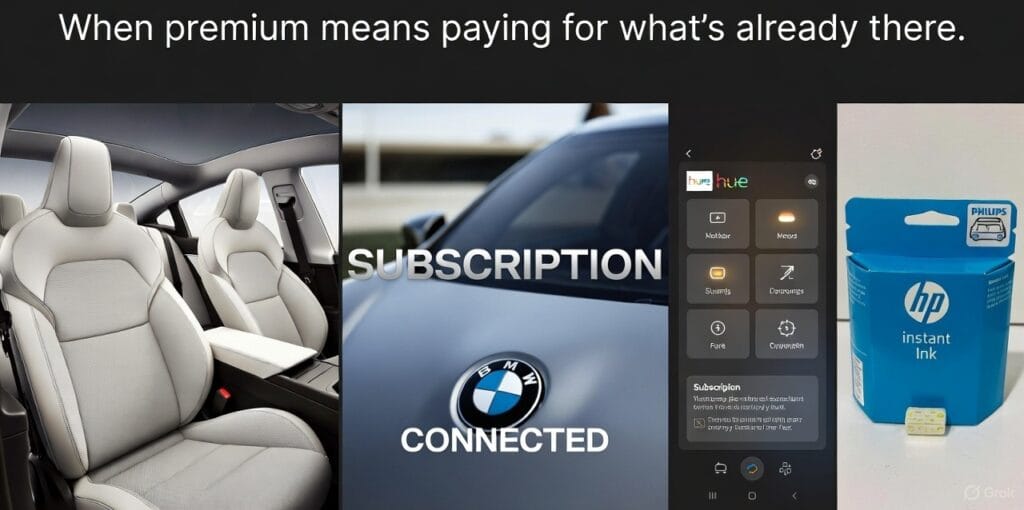
Then the virus spread. Subscriptions infected everything. Apple turned storage into a service. Microsoft turned Word into a rental. Even Tesla decided heated seats were no longer a feature — they were a privilege. BMW followed.
The logic was simple: if a device connects to the internet, it can charge you monthly. Need to print? HP offers “Instant Ink” — a subscription for ink. Philips sells “Hue” light subscriptions for premium color modes. Some smart refrigerators charge for recipe access. The Internet of Things? More like the Internet of Bills.
Even gaming joined the club. You don’t buy games — you subscribe to ecosystems. Game Pass, PlayStation Plus, Ubisoft+, EA Play. You pay endlessly for a library that disappears when you stop.
The absurdity is reaching parody. Imagine waking up in 2026:
“Your kettle’s heating trial has expired. Upgrade to Boil Pro for $4.99/month.”
We laugh now, but it’s not that far-fetched. Everything that connects can be monetized. The device is no longer the product — you are. The purchase price is the down payment on a lifetime subscription.
3. The Illusion of Ownership
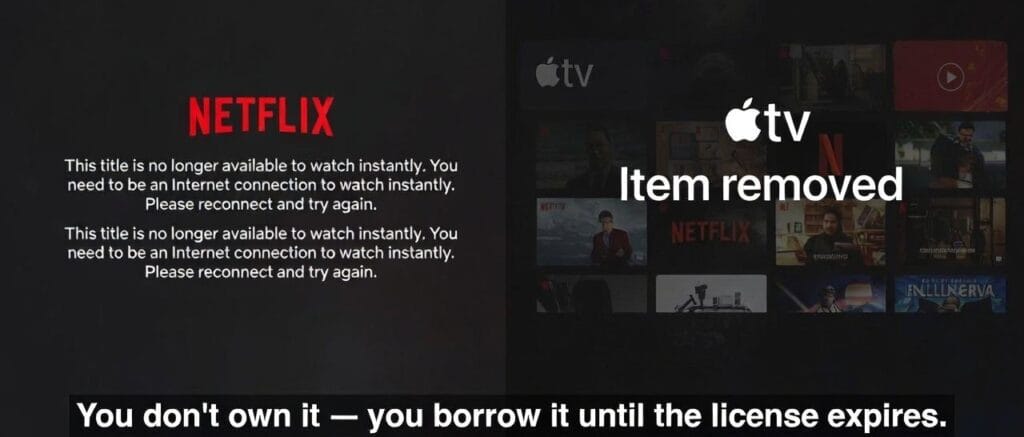
The cruel genius of the subscription model is that it feels like ownership — until it doesn’t. You buy an app, stream a song, or “purchase” a digital movie, but in fine print it says: licensed, not owned. Companies can revoke access anytime, and they do.
Remember when Netflix removed your favorite show overnight? Or when Apple deleted movies users had “bought” because licensing changed? It’s digital gaslighting — you think you own something, but you merely rent a promise.
Even physical devices aren’t safe. Modern cars, cameras, and even tractors are locked by software. Farmers can’t repair their John Deere machines without official permission. Phones brick themselves if you replace a part outside “authorized service.” It’s control disguised as convenience.
Tech companies have turned ownership into an illusion. You pay, but they decide when and how you use it. They can update, remove, or disable features remotely — and there’s nothing you can do.
The dream of digital freedom became a rental system. You no longer own your tools; you own a password. And if you forget to pay, the future simply logs you out.
We used to upgrade because we wanted new features. Now, we upgrade because the old ones stopped working.
4. Why Companies Love It (and Why We Let Them)
For corporations, subscriptions are paradise. Predictable income, permanent dependence, zero waste — for them, at least. They no longer sell products; they sell continuity. Investors love it. Every company wants “recurring revenue” now — because it never ends.
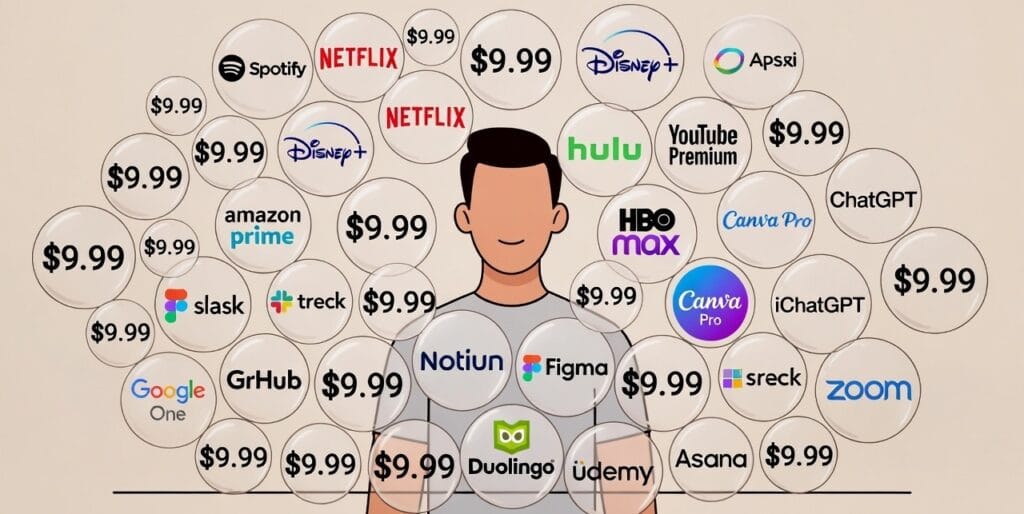
But the real trick isn’t financial — it’s psychological. A $10 subscription feels harmless. Add another, and another — music, storage, fitness, games, VPNs, AI tools, streaming. Before you know it, you’re paying $150 a month for “small” things. Subscriptions are digital mosquitoes — they don’t hurt individually, but they’ll drain you dry together.
And we, the users, are complicit. We like convenience. We like “easy cancel anytime” — even though nobody actually cancels. Companies know inertia better than we know ourselves. They hide behind simplicity: one tap to subscribe, ten steps to unsubscribe.
We let it happen because it’s comfortable. No downloads, no updates, no responsibility — everything “just works.” The problem is, that comfort costs us control.
The subscription trap isn’t evil in theory — it’s brilliant in execution. It’s not about owning less; it’s about forgetting you ever could.
5. The Future: Subscription Hell
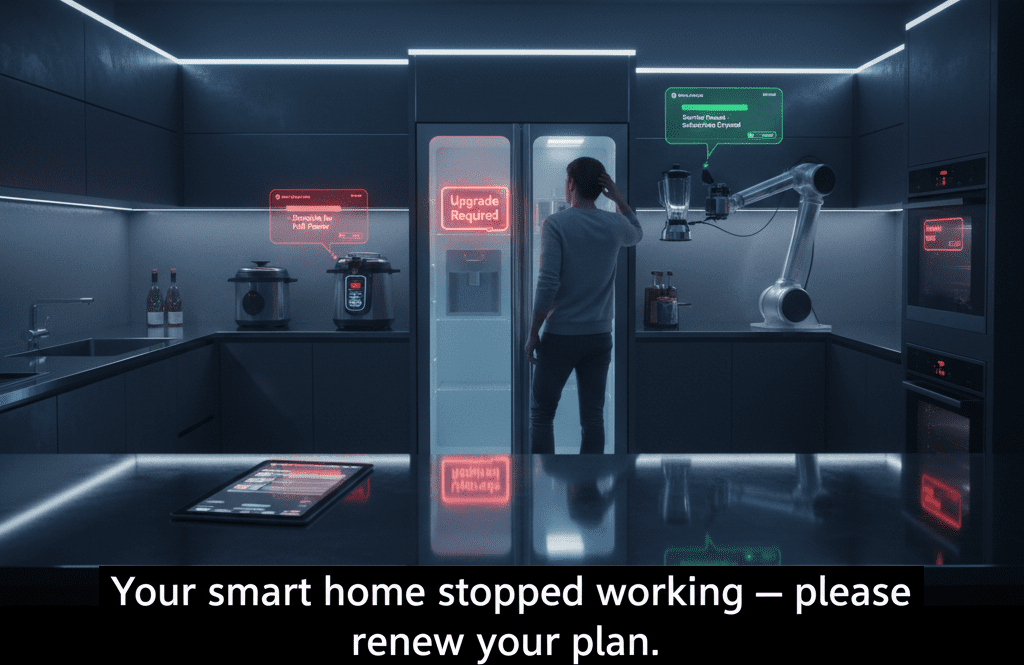
Fast-forward a few years, and the joke writes itself. The “Internet of Things” becomes the “Internet of Invoices.” Every product with a chip comes with a payment plan.
Your smart car won’t start unless you renew “Drive+.”
Your coffee machine disables espresso mode until you “Go Premium.”
Your fridge locks the ice maker behind a paywall.
And somewhere, a tech CEO calls it “innovation.”
It sounds absurd, but we’re halfway there. Tesla already sells acceleration boosts. BMW tested subscription seat heating. Software companies test “AI modes” hidden behind premium tiers. The logic never ends — because consumers keep paying.
Welcome to Subscription Hell — where your gadgets hold your lifestyle hostage. It’s funny until it isn’t. You don’t own the future — you rent it monthly.
The scariest part? We’ll probably accept it. We’ll laugh at memes, complain on Reddit, then click “Subscribe.” That’s how the trap works. It doesn’t force you — it convinces you.
6. Breaking Free (Sort Of)
Escaping the trap isn’t easy — but it’s possible. There’s a quiet counterculture forming online: people choosing ownership again. Buying DRM-free games, using open-source software, keeping local backups instead of cloud storage.
Alternatives exist. Affinity lets you buy creative software once and keep it forever. DaVinci Resolve offers a lifetime license. Self-hosted tools like Nextcloud or Jellyfin bring independence back. Even physical media is having a comeback — vinyl, Blu-ray, printed books. People crave something tangible.
But breaking free isn’t just about tools — it’s a mindset. It’s remembering that convenience always comes with strings. Maybe it’s worth owning less, but owning it fully.
You can unsubscribe from Netflix, but can you unsubscribe from the habit of renting your life? That’s the real challenge.
Because the tech industry won’t stop offering subscriptions — but we can stop confusing “access” with “ownership.”
7. Final Thought
“Tech used to sell innovation. Now it sells access.”
The subscription era is the perfect business model for companies — and a perfect cage for everyone else. It’s easy, it’s smooth, it’s invisible — and that’s why it works.
But the cracks are showing. More people are asking why we pay forever for things that used to be ours. Maybe someday, owning something — truly owning it — will feel revolutionary again.
Until then, enjoy your monthly bill for breathing.
Also read:
- Denuvo 2025 — When the Lock Finally Works (and Still Breaks Everything Else) — DRM’s biggest comeback… and why it’s still bad for players.